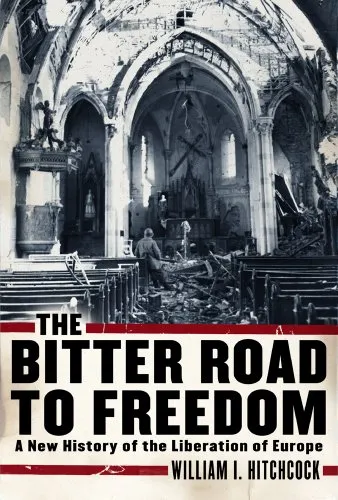
The bitter road to freedom: a new history of the liberation of Europe
William I. Hitchcock
2008
View book
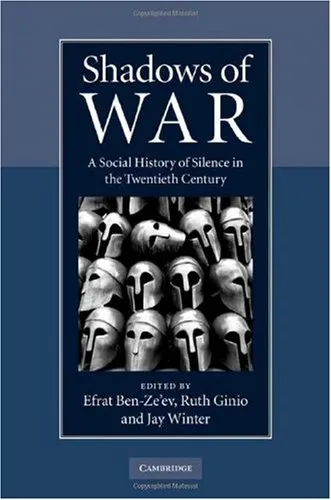
Book guide and evaluation
Efrat Ben-Ze'ev,Ruth Ginio,Jay Winter
0 reviews
Published
pages
views
Introduction to 'Shadows of War: A Social History of Silence in the Twentieth Century' In 'Shadows of War: A Social History of Silence in the Twentieth Century', authors Efrat Ben-Ze'ev, Ruth Ginio, and Jay Winter delve deeply into the often-overlooked role of silence in
Before you read
In 'Shadows of War: A Social History of Silence in the Twentieth Century', authors Efrat Ben-Ze'ev, Ruth Ginio, and Jay Winter delve deeply into the often-overlooked role of silence in the context of war. This profound and meticulously researched book challenges readers to rethink traditional narratives about the impact of war, emphasizing the pivotal role silence plays in shaping historical and contemporary understandings.
The book meticulously explores how silence, in its many forms, has been utilized during and after major conflicts throughout the 20th century. It looks at silence not simply as an absence of speech but as a potent force that shapes and is shaped by social, political, and cultural forces. By examining case studies from various global conflicts, the authors reveal how silence operates in contexts ranging from the personal to the communal and national arenas.
Each chapter focuses on different aspects of silence in wartime, such as political silence enforced by regimes, the personal silence of trauma and memory, and the cultural silences that emerge in the aftermath of conflict. By using a multidisciplinary approach, the authors integrate insights from history, anthropology, sociology, and psychology to provide a comprehensive understanding of how silence functions and how it has influenced the course of history.
"Silence is never absence; it is an active presence, a form of communication that speaks volumes."
"In the shadows of war, silence holds a mirror to history, reflecting truths unspoken and stories untold."
The importance of 'Shadows of War' lies in its ability to make readers reconsider the role of silence in the stories and memories surrounding conflict. While traditional historical narratives often focus on overt actions and declarations, this book highlights the power of what is left unsaid and how these silences shape human experience and societal evolution.
By offering a nuanced exploration of silence, the authors provide a platform for the voices and experiences that have been historically marginalized or forgotten. This perspective is invaluable for historians, sociologists, and anyone interested in the complexities of human memory and the aftermath of conflicts.
This work also contributes to current dialogues about memory, trauma, and healing, underscoring the relevance of understanding silence in our contemporary world. In doing so, it urges a re-evaluation of how we interpret and engage with historical narratives, presenting a powerful argument for the inclusion of silence as a critical component of social history.
Your question is answered in the context of this title and author. Each answer uses 2 points.
0 reviews, 4.4 average out of 5
Sign in to publish a review.
Ask a focused question and learn from the community.
Related references that continue this learning path.
William I. Hitchcock

Worth Books;Morrison, Toni