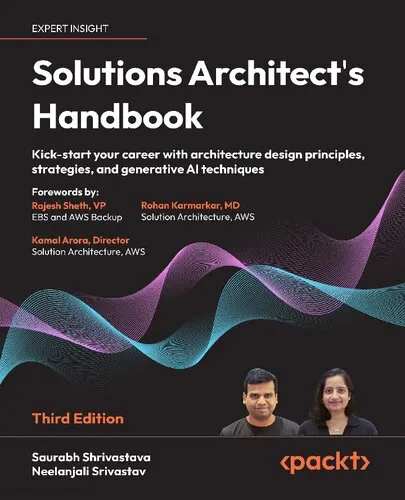
Solutions Architect's Handbook - Third Edition: Kick-start your career with architecture design principles, strategies, and generative AI techniques
Saurabh Shrivastava,Neelanjali Srivastav
2024
View book
Book guide and evaluation
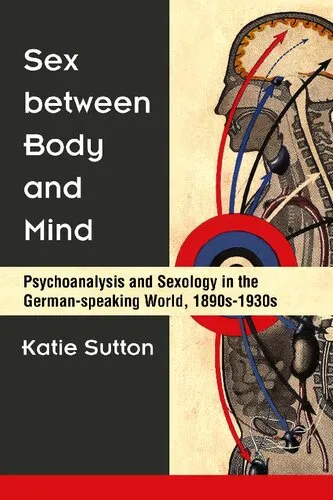
Katie Sutton
0 reviews
Published
pages
views
Ideas about human sexuality and sexual development changed dramatically across the first half of the 20th century. As scholars such as Magnus Hirschfeld, Iwan Bloch, Albert Moll, and Karen Horney in Berlin and Sigmund Freud, Wilhelm Stekel, and Helene Deutsch in Vienna were recog
Before you read
Ideas about human sexuality and sexual development changed dramatically across the first half of the 20th century. As scholars such as Magnus Hirschfeld, Iwan Bloch, Albert Moll, and Karen Horney in Berlin and Sigmund Freud, Wilhelm Stekel, and Helene Deutsch in Vienna were recognized as leaders in their fields, the German-speaking world quickly became the international center of medical-scientific sex research—and the birthplace of two new and distinct professional disciplines, sexology and psychoanalysis. This is the first book to closely examine vital encounters among this era’s German-speaking researchers across their emerging professional and disciplinary boundaries. Although psychoanalysis was often considered part of a broader “sexual science,” sexologists increasingly distanced themselves from its mysterious concepts and clinical methods. Instead, they turned to more pragmatic, interventionist therapies—in particular, to the burgeoning field of hormone research, which they saw as crucial to establishing their own professional relevance. As sexology and psychoanalysis diverged, heated debates arose around concerns such as the sexual life of the child, the origins and treatment of homosexuality and transgender phenomena, and female frigidity. This new story of the emergence of two separate approaches to the study of sex demonstrates that the distinctions between them were always part of a dialogic and competitive process. It fundamentally revises our understanding of the production of modern sexual subjects.
Your question is answered in the context of this title and author. Each answer uses 2 points.
0 reviews, 4.5 average out of 5
Sign in to publish a review.
Ask a focused question and learn from the community.
Related references that continue this learning path.
Saurabh Shrivastava,Neelanjali Srivastav