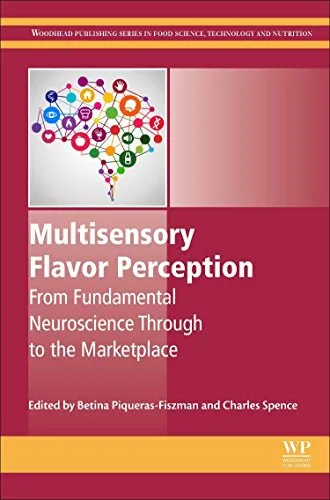
Multisensory Flavor Perception: From Fundamental Neuroscience Through to the Marketplace
Betina Piqueras-Fiszman,Charles Spence
2016
View book
Book guide and evaluation
D.W. Hamlyn
0 reviews
Published
pages
views
Welcome to the comprehensive introduction to "Sensation and Perception: A History of the Philosophy of Perception" by D.W. Hamlyn. This book offers a profound exploration of how human beings have come to understand and articulate the complex relationship between sensation and p
Before you read
Welcome to the comprehensive introduction to "Sensation and Perception: A History of the Philosophy of Perception" by D.W. Hamlyn. This book offers a profound exploration of how human beings have come to understand and articulate the complex relationship between sensation and perception throughout the ages. This detailed introduction invites you to delve into the nuances of philosophical discourse about perception from ancient to modern times.
The philosophical investigation of perception dates back to pre-Socratic times, where the foundations of this inquiry were laid by early thinkers. "Sensation and Perception" meticulously traces the evolution of these ideas, illustrating how they have been shaped by cultural, scientific, and intellectual developments. The text begins with ancient Greek philosophers like Plato and Aristotle, who raised fundamental questions about the nature of reality and how it is perceived by human senses.
Moving through the Renaissance and Enlightenment periods, the book describes how increasing emphasis on empiricism and scientific inquiry recalibrated the philosophy of perception. Here, figures such as Descartes, Locke, and Hume come into focus, each contributing significantly to the dualism of mind and body, and the debate over innate ideas versus learned experience.
Entering the modern era, the book examines advances in psychology and neuroscience, explaining their impact on philosophical thought about perception. Discussions include Kant's theories on the perception of time and space, the phenomenology of Husserl and Merleau-Ponty, and contemporary debates in analytic and continental philosophy. Hamlyn deftly combines historical overview with critical analysis, ensuring readers not only learn the chronology of ideas but also understand alternative interpretations and lingering questions.
"Perception is not simply a passive receipt of data, but an active process of constructing reality."
"The history of philosophy reveals that our understanding of perception is as much an inquiry into the nature of the mind as it is into the external world."
"Sensation and Perception: A History of the Philosophy of Perception" is not merely a historical account; it is a crucial text for anyone seeking to grasp how our understanding of the human condition has been shaped over millennia. It bridges the past and present, contextualizing age-old philosophical dilemmas in light of modern scientific inquiry. For students, scholars, and enthusiasts of philosophy, psychology, or cognitive science, Hamlyn’s work provides essential insights into one of the most fundamental aspects of human life: how we perceive and make sense of the world around us.
This book matters because it challenges readers to reflect on the mechanisms of their own perception, offering a rich tapestry of philosophical ideas that continue to influence contemporary thought and research. As we stand at the crossroads of philosophy and science, "Sensation and Perception" acts as both a guide and a catalyst for deeper reflection and inquiry.
Your question is answered in the context of this title and author. Each answer uses 2 points.
0 reviews, 4.9 average out of 5
Sign in to publish a review.
Ask a focused question and learn from the community.
Related references that continue this learning path.
Betina Piqueras-Fiszman,Charles Spence


Zhenji Zhang,Garma C. C. Chang