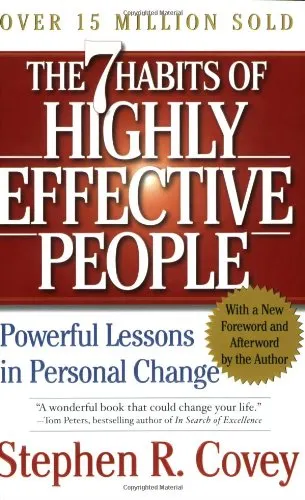
The 7 habits of highly effective people: restoring the character ethic
Stephen R. Covey
2004
View book
Book guide and evaluation
Irwin, Robert;Hockney, David;Weschler, Lawrence
0 reviews
Published
pages
views
Welcome to an intriguing exploration of the intersection between art, perception, and consciousness, carried out through decades of intimate dialogues with one of America's preeminent artists, Robert Irwin. "Seeing is Forgetting the Name of the Thing One Sees: Over Thirty Years
Before you read
Welcome to an intriguing exploration of the intersection between art, perception, and consciousness, carried out through decades of intimate dialogues with one of America's preeminent artists, Robert Irwin. "Seeing is Forgetting the Name of the Thing One Sees: Over Thirty Years of Conversations with Robert Irwin" by Lawrence Weschler offers readers a remarkable window into how art can reshape our understanding of the world.
In this compelling chronicle, Lawrence Weschler brings together over three decades of conversations with Robert Irwin, an artist who defies categorization. Spanning Irwin's early years as a prominent figure in the Los Angeles art scene during the 1960s, the book traces his evolution from abstract expressionism to his later works that blurred the boundaries between art and environment.
Weschler’s narrative serves as much more than a simple biography. It is an examination of how Irwin's work challenges the perception of art as an isolated object, urging viewers to consider it as an experience. Irwin’s philosophy asserts that art is about creating a heightened awareness of our surroundings. Weschler meticulously delves into Irwin's philosophical musings on order, chaos, and the role of the observer, painting a vivid portrait of his intellectual and artistic journey.
"Seeing is forgetting the name of the thing one sees."
"Art has a phenomenological effect on our consciousness, urging us to see the unseen and hear the unheard."
This book is crucial for anyone interested in contemporary art, philosophy, or the interplay between environment and perception. It provides a masterclass in the art of seeing, inviting readers to move beyond conventional boundaries and explore the nuances of perception. Irwin’s insights are profound and transformative, challenging readers to reconsider their relationship with art and the environment.
Weschler's adept chronicling of Irwin's thoughts and processes creates an intimate narrative that is both educational and inspiring. It enables a deep understanding of how Irwin’s subtle manipulations of space and light can shift perceptual paradigms. For artists, art enthusiasts, and philosophers alike, this work offers timeless reflections on creativity, consciousness, and the art of being.
Your question is answered in the context of this title and author. Each answer uses 2 points.
0 reviews, 4.7 average out of 5
Sign in to publish a review.
Ask a focused question and learn from the community.
Related references that continue this learning path.
Stephen R. Covey