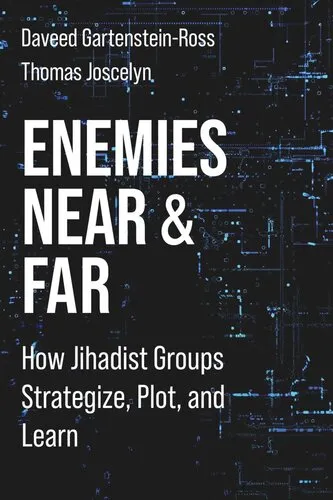
Enemies Near and Far: How Jihadist Groups Strategize, Plot, and Learn
Daveed Gartenstein-Ross;Thomas Joscelyn
2022
View book
Book guide and evaluation
Lawrence Pintak
0 reviews
Published
pages
views
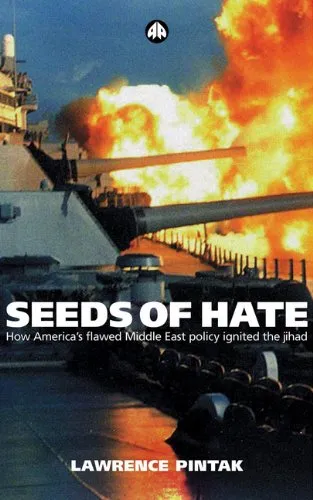
Introduction to "Seeds of Hate: How America's Flawed Middle East Policy Ignited the Jihad" Written by Lawrence Pintak, Seeds of Hate delves deep into the intersection of U.S. foreign policy in the Middle East and the growth of Islamist extremism. In this eye-opening book
Before you read
Written by Lawrence Pintak, Seeds of Hate delves deep into the intersection of U.S. foreign policy in the Middle East and the growth of Islamist extremism. In this eye-opening book, the author unpacks how decades of U.S. actions in the region — often driven by short-term political and economic interests — have fueled resentment, destabilized nations, and inadvertently sown the seeds of radicalism. This work is an unflinching exploration of why America's approach to the region has been not only strategically flawed but also deeply misunderstood.
Published amidst the turbulence of growing anti-American sentiment post-9/11, the book offers a necessary critique of decisions that have shaped the contemporary Middle East. Rather than simply recounting historical events, Pintak connects the dots between policy missteps and the rise of jihadist ideologies, revealing a complex tapestry of betrayal, intervention, and unintended consequences.
This introduction sets the tone for a thought-provoking narrative that challenges conventional wisdom and urges readers to re-evaluate America's role in the Middle East, not through the lens of idealism but in harsh, pragmatic reality.
The book chronicles key moments in American-Middle Eastern relations, illustrating how diplomatic, military, and economic decisions have contributed to the animosity underlying jihadist movements. Lawrence Pintak starts by highlighting American policies during the Cold War, which laid the groundwork for mistrust and manipulation. He examines the blind support for autocratic regimes, the covert operations to destabilize governments, and the glaring contradictions in U.S. rhetoric about democracy and freedom.
The narrative then shifts to the post-World War II era, focusing on U.S. involvement in Iran, the Arab-Israeli conflict, and the Gulf Wars. Pintak carefully unpacks the CIA-backed coup in Iran (1953), the unwavering support for Israel, and the disastrous consequences of arming Afghan Mujahideen during the Soviet invasion — a decision that indirectly set the stage for the rise of groups like al-Qaeda and the Taliban. The book sheds light on how these policies were driven by economic gains, especially related to oil, often at the expense of the people in the region.
Pintak doesn’t stop at government policies but also critiques the American media's portrayal of the Middle East, which he argues perpetuates stereotypes and deepens cultural divides. His account exposes how media narratives shape public opinion, fostering fear and misunderstanding of Islam and its followers.
In an era when headlines are dominated by conflicts in the Middle East, terrorism, and global security concerns, Seeds of Hate remains a crucial resource for understanding the roots of these crises. Lawrence Pintak’s meticulous research and compelling arguments challenge us to think critically about America's role on the world stage. The book underscores the importance of historical context, offering readers a lens through which to view contemporary issues in the region.
More importantly, this book forces readers to confront uncomfortable truths: that America's actions are often driven as much by self-interest as by ideology, and that these actions carry long-term ramifications, many of which are still being felt today. By providing insight into how and why America has gotten it wrong in the Middle East, Pintak not only aids in understanding the “why” but also offers a roadmap for avoiding further mistakes.
Seeds of Hate is an essential read for policymakers, academics, journalists, and anyone seeking to understand the intricate web of history, politics, and culture that connects the United States and the Middle East. It is a call to rethink the narratives and approaches that have defined this fraught relationship for too long.
Your question is answered in the context of this title and author. Each answer uses 2 points.
0 reviews, 4.0 average out of 5
Sign in to publish a review.
Ask a focused question and learn from the community.
Related references that continue this learning path.
Daveed Gartenstein-Ross;Thomas Joscelyn