Book guide and evaluation
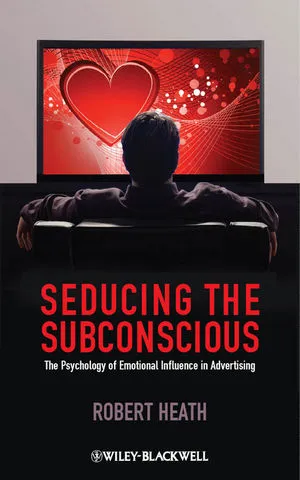
Seducing the Subconscious: The Psychology of Emotional Influence in Advertising
Robert Heath(auth.)
English
Beginner
Brand Management
4.3 / 5
0 reviews
2012
Published
248
pages
516
views
Introduction to "Seducing the Subconscious: The Psychology of Emotional Influence in Advertising" In the modern age where advertisements dominate our everyday lives, understanding how they work has become more critical than ever. "Seducing the Subconscious: The Psychology of E
Before you read
What will you get from this book?
Introduction to "Seducing the Subconscious: The Psychology of Emotional Influence in Advertising"
In the modern age where advertisements dominate our everyday lives, understanding how they work has become more critical than ever. "Seducing the Subconscious: The Psychology of Emotional Influence in Advertising," authored by Robert Heath, delves deep into the often unseen but highly impactful world of emotional advertising. By blending psychology, neuroscience, and marketing strategies, this book lays bare how advertisers bypass the rational mind to target emotions and subconscious impulses, subtly influencing consumer behavior.
Through this book, I explore transformative ideas about how we perceive, process, and respond to advertising messages. It challenges the traditional assumption that advertising is solely about delivering information or persuading through logic. Instead, it reveals how emotions play a significant role, shaping preferences and decisions long before the conscious brain gets involved. This text is not only for marketers but for anyone curious about the covert power of advertising in shaping modern society.
Detailed Summary of the Book
"Seducing the Subconscious" starts by addressing the commonly held belief that advertising influences consumers mainly through rational argument. It redefines this paradigm by presenting a compelling case for "low-involvement processing," a theory suggesting that much of advertising's potency lies in how it subtly interacts with the subconscious mind. Drawing from psychological research and real-world advertisements, I demonstrate how messages can influence us even when we are not actively paying attention.
The book explores the mechanics of memory and attention, explaining how emotional triggers and associations become embedded in the subconscious over time. From jingles we hum unintentionally to images that evoke childhood nostalgia, these subtle cues form powerful, lasting impressions. This often occurs without our conscious awareness, making such influence particularly effective.
With examples ranging from TV commercials to online ads, the book examines a variety of emotional appeals, including humor, fear, and warmth. I dissect how companies use these strategies to target our deepest desires, fears, and aspirations. The narrative is rich with case studies that shed light on both successful and ethically questionable practices, providing a well-rounded view of the advertising industry and its impact on consumers.
Key Takeaways
- Advertising effectiveness often relies on subtle emotional cues rather than overt rational arguments.
- The subconscious mind plays a significant role in decision-making, often bypassing logical reasoning.
- Low-involvement processing allows advertising to influence us even in the absence of focused attention.
- Brands use emotional triggers, such as nostalgia, humor, or fear, to create lasting impressions and loyal customers.
- Understanding these mechanisms can help consumers become more aware of how they are influenced and provide marketers with tools for more ethical and effective advertising.
Famous Quotes From the Book
- "Advertising doesn’t tell us what to think; it tells us what to feel."
- "The most impactful ads are often the ones we barely notice."
- "It is in the quiet moments of distraction that advertising does its loudest work."
- "We are emotional beings first, logical beings second. Advertising thrives on this basic truth."
Why This Book Matters
In a world increasingly dominated by media and consumer culture, "Seducing the Subconscious" provides crucial insights that empower readers to understand the forces shaping their thoughts and choices. It raises important questions about ethics in advertising, encouraging marketers to strike a balance between persuasion and responsibility.
Moreover, it serves as a wake-up call for consumers to recognize how their subconscious is being engaged, fostering greater awareness and critical thinking in the face of constant corporate messaging. Whether you are a professional in the advertising industry, a student of psychology, or someone eager to decode modern media's influence, this book offers an enlightening, thought-provoking experience. Its relevance stretches beyond academia or business—its lessons resonate with anyone living in an age of pervasive advertising.
Ask this book
Your question is answered in the context of this title and author. Each answer uses 2 points.
Sign in to ask the book assistant.
Reader reviews
0 reviews, 4.3 average out of 5
No reviews yet
If you have read this book, help the next reader with your experience.
Write a review
Sign in to publish a review.
Reader questions and answers
Ask a focused question and learn from the community.
Sign in to ask or answer a question.
No questions yet
Be the first to ask a clear, useful question.
What to read next
Related references that continue this learning path.
Firms of Endearment: How World-Class Companies Profit from Passion and Purpose
Rajendra S. Sisodia,David B. Wolfe,Jagdish N. Sheth
2007
View book