Gray’s Anatomy for Students. Flash Cards
Richard L. Drake;A. Wayne Vogl;Adam W.M. Mitchell
2014
View book
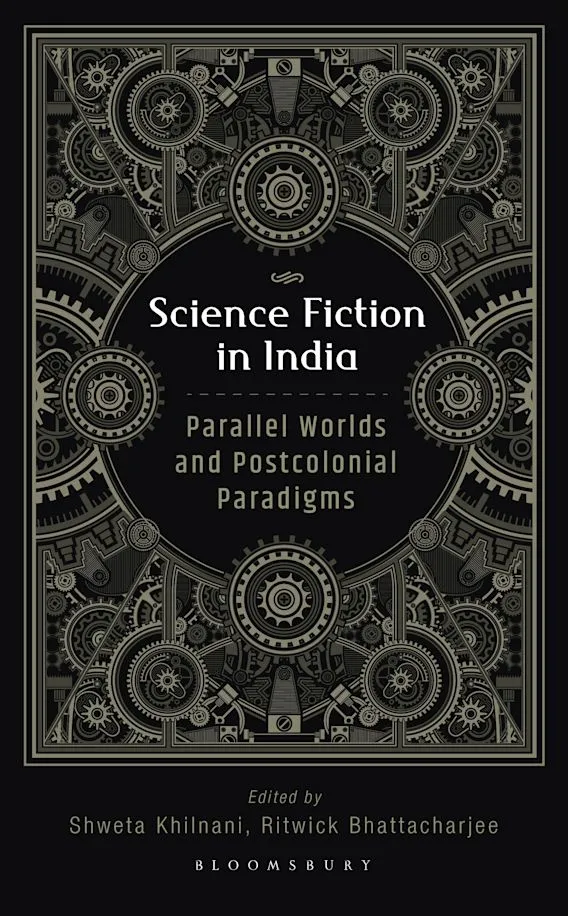
Book guide and evaluation
Shweta Khilnani,Ritwick Bhattacharjee
0 reviews
Published
pages
views
Welcome to the compelling universe of "Science Fiction in India: Parallel Worlds and Postcolonial Paradigms." This book delves into the rich tapestry of India's science fiction literature, exploring its distinctive nuances within the framework of its postcolonial land
Before you read
Welcome to the compelling universe of "Science Fiction in India: Parallel Worlds and Postcolonial Paradigms." This book delves into the rich tapestry of India's science fiction literature, exploring its distinctive nuances within the framework of its postcolonial landscape. Authored by Shweta Khilnani and Ritwick Bhattacharjee, the book serves as both a detailed guide and a critical analysis, forging a new understanding of science fiction in an Indian context.
"Science Fiction in India: Parallel Worlds and Postcolonial Paradigms" embarks on a journey across space and time, tracing the development and distinct attributes of Indian science fiction. From ancient mythologies that offer glimpses of speculative thinking to contemporary narratives that address futuristic and dystopian themes, the book covers a broad spectrum. It examines how Indian authors have woven science fiction elements into their storytelling methods, reflecting the country's diverse cultural and socio-political landscapes.
The text juxtaposes Indian science fiction against the backdrop of Western influences, illustrating how Indian authors have redefined the genre to address local themes, issues, and philosophies. It brings into the spotlight the unique interplay between science, technology, and Indian tradition, navigating through indigenous storytelling techniques while exploring Western literary tropes.
"Science Fiction in India: Parallel Worlds and Postcolonial Paradigms" is a groundbreaking work that fills a significant gap in literary critique by focusing on Indian contributions to a primarily Western-dominated genre. This book is crucial for scholars, enthusiasts of science fiction, and readers interested in postcolonial literature. It not only celebrates the often-overlooked subgenre of Indian science fiction but also challenges the reader to rethink the global contours of the genre.
By presenting Indian science fiction as an authentic and evolving discourse, the authors facilitate a deeper appreciation of literary works that engage with the complexities of identity, cultural renaissance, and technological advancements in postcolonial settings. This book is vital for those seeking to understand how non-Western cultures contribute to global science fiction narratives, enabling diverse voices and perspectives to be heard.
Your question is answered in the context of this title and author. Each answer uses 2 points.
0 reviews, 4.7 average out of 5
Sign in to publish a review.
Ask a focused question and learn from the community.
Related references that continue this learning path.
Richard L. Drake;A. Wayne Vogl;Adam W.M. Mitchell
Juraj Hromkovič