The Art of Electronic Publishing: The Internet and Beyond
Sanford Ressler,Sandy Ressler
1996
View book
Book guide and evaluation
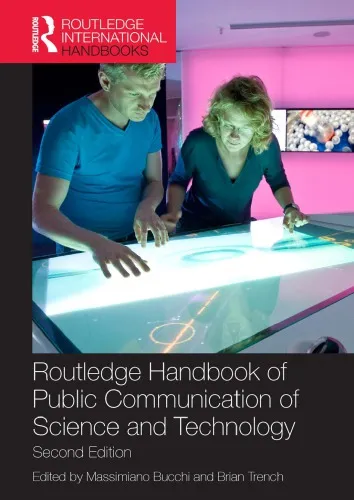
Massimiano Bucchi (ed.),Brian Trench (ed.)
0 reviews
Published
pages
views
Introduction The "Routledge Handbook of Public Communication of Science and Technology," edited by Massimiano Bucchi and Brian Trench, serves as an indispensable resource in understanding the dynamic and evolving interface between science, technology, and society. This com
Before you read
The "Routledge Handbook of Public Communication of Science and Technology," edited by Massimiano Bucchi and Brian Trench, serves as an indispensable resource in understanding the dynamic and evolving interface between science, technology, and society. This comprehensive guide delves into how scientific knowledge is communicated to the public and how this communication impacts societal understanding, policy, and debate surrounding scientific and technological advancements.
The handbook assembles contributions from esteemed scholars and practitioners in the field of public communication of science and technology. It begins with the historical evolution of science communication and progresses into contemporary challenges and frameworks used globally. The book is structured to provide a robust theoretical grounding alongside practical insights, exploring themes such as the role of media, the public perception of science, and the implications of new communication technologies.
Addressing both theoretical and applied aspects, the book covers an array of topics that span from the specific characteristics of science communication in television to the burgeoning role of social media and digital platforms. It emphasizes the importance of cultural contexts and ethos in shaping how science is communicated in different regions and among diverse audiences. Furthermore, it offers insights into the methodologies employed in research and the critical role of science journalists.
The "Routledge Handbook of Public Communication of Science and Technology" provides several key takeaways:
"Effective science communication is not about simplifying, but about conveying complexity in an accessible way."
"The dialogue between science and society is not one-way but a collaborative process that builds mutual understanding."
The importance of this handbook lies in its capacity to bridge the gap between scientific communities and the general public. As scientific and technological advances continue to transform society at an unprecedented rate, the essential role of effective communication cannot be overstated. This handbook highlights the necessity for scientists, journalists, educators, policymakers, and communicators to wield the tools of communication thoughtfully and strategically to advance public engagement with science.
Moreover, the Handbook of Public Communication of Science and Technology stands as a crucial educational resource, helping new learners grasp the complexities of communicating science in the modern world. For seasoned professionals, it provides a reflective space to consider new perspectives and approaches.
The book plays a vital role in guiding the strategic communication efforts necessary to foster an informed and proactive public, especially crucial in times where misinformation can rapidly spread via digital platforms. It reiterates the foundational belief that an informed public contributes valuable insights and asks pertinent questions that drive scientific innovation and ethical considerations.
Your question is answered in the context of this title and author. Each answer uses 2 points.
0 reviews, 4.5 average out of 5
Sign in to publish a review.
Ask a focused question and learn from the community.
Related references that continue this learning path.
Sanford Ressler,Sandy Ressler
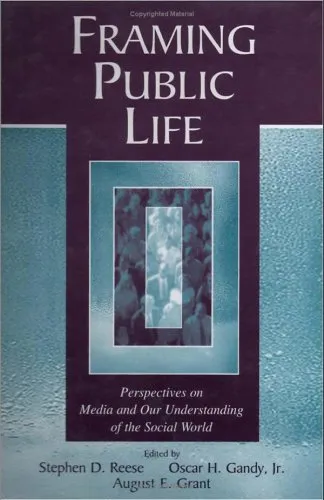
Stephen D. Reese,Oscar H. Gandy Jr.,August E. Grant