
Book guide and evaluation
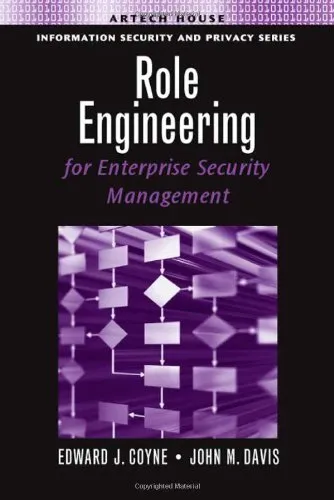
Role engineering for enterprise security management
Edward J. Coyne,John M. Davis
English
Beginner
Business
4.5 / 5
0 reviews
2008
Published
243
pages
212
views
Introduction to "Role Engineering for Enterprise Security Management" "Role Engineering for Enterprise Security Management" serves as a comprehensive guide for professionals seeking to implement secure and efficient role-based access control (RBAC) in their organizations.
Before you read
What will you get from this book?
Introduction to "Role Engineering for Enterprise Security Management"
"Role Engineering for Enterprise Security Management" serves as a comprehensive guide for professionals seeking to implement secure and efficient role-based access control (RBAC) in their organizations. Written by Edward J. Coyne and John M. Davis, this book delves into the complexities and challenges surrounding enterprise security management, offering practical, actionable advice alongside theoretical insights. Whether you are an information security professional, IT manager, or organizational leader, this book provides a solid framework to manage user permissions, access, and roles effectively in dynamic corporate environments.
In today's interconnected world, managing who has access to what within an organization is crucial to safeguarding sensitive data, enforcing compliance, and maintaining operational efficiency. The authors of this book take a holistic approach to role engineering, combining foundational concepts with advanced strategies in security management. By bridging the gap between technology and business processes, the book empowers organizations to adopt scalable, adaptable, and reliable access control systems that grow alongside them.
Detailed Summary of the Book
The book begins by laying the groundwork for understanding the principles of role-based access control (RBAC), explaining its importance in securing enterprise systems while simplifying administrative tasks. It introduces the core concepts of roles, permissions, and users, highlighting how these elements are interconnected to deliver seamless access controls.
As the book progresses, it dives into the methodology of "role engineering"—an analytical process to design, implement, and optimize roles that align with an organization’s goals, workflows, and security policies. The authors stress the need for collaboration between IT and business units to ensure that the roles created are both technically feasible and operationally relevant.
Key chapters address the challenges of role mining, dealing with role explosion, and preventing common pitfalls such as excessive permissions, role conflicts, and unauthorized access. The book also provides step-by-step guidance on transitioning from legacy access control systems to modern RBAC architecture, focusing on minimizing disruption and ensuring user buy-in.
One of the standout features of this book is its real-world case studies. These examples offer valuable insights into how organizations of varying sizes and industries have successfully implemented role engineering to bolster their access control measures. By drawing on these experiences, the authors present proven strategies and practical tools that readers can implement in their own workplaces.
Key Takeaways
- Understand the essentials of role-based access control (RBAC) and its significance in enterprise security management.
- Learn the methodology of role engineering, including role discovery, definition, and optimization.
- Discover effective ways to manage and mitigate challenges like role explosion and privilege creep.
- Explore practical steps to migrate from legacy access control systems to a robust role-based framework with minimal disruption.
- Leverage real-world case studies to gain insights and inspiration for implementing role engineering successfully in your own organization.
Famous Quotes from the Book
"Effective role engineering is not just about securing access; it’s about enabling business processes while minimizing risks."
"Roles should evolve with the organization, reflecting its growth, challenges, and technological advancements."
Why This Book Matters
"Role Engineering for Enterprise Security Management" is a critical resource for organizations looking to improve their security posture without compromising productivity or user experience. By addressing the growing complexities of access control in the digital age, this book offers invaluable guidance for building systems that are both secure and adaptable.
The book stands out for its dual focus on technical precision and practical application. It recognizes the unique challenges faced by businesses in various sectors and provides solutions tailored to their specific needs. This makes it an essential guide not only for IT professionals but also for business leaders striving to align their security strategies with organizational objectives.
At a time when cyber threats are more prevalent than ever, this book equips readers with the tools to design systems that protect critical assets while fostering collaboration and efficiency. It emphasizes the importance of proactive planning, continuous monitoring, and iterative improvement, ensuring that role-based security frameworks remain relevant and effective over time.
Ask this book
Your question is answered in the context of this title and author. Each answer uses 2 points.
Sign in to ask the book assistant.
Reader reviews
0 reviews, 4.5 average out of 5
No reviews yet
If you have read this book, help the next reader with your experience.
Write a review
Sign in to publish a review.
Reader questions and answers
Ask a focused question and learn from the community.
Sign in to ask or answer a question.
No questions yet
Be the first to ask a clear, useful question.
What to read next
Related references that continue this learning path.

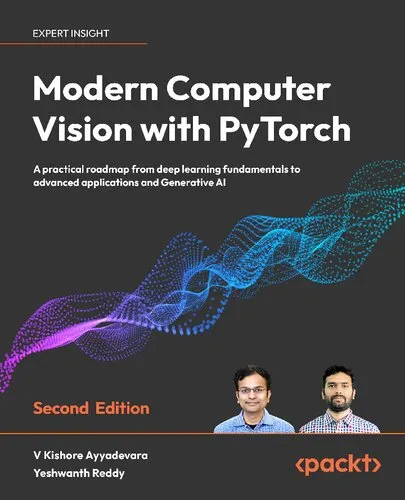
Modern Computer Vision with PyTorch: A Practical Roadmap From Deep Learning Fundamentals to Advanced Applications and Generative AI, 2nd Edition
V Kishore Ayyadevara,Yeshwanth Reddy
2023
View book