
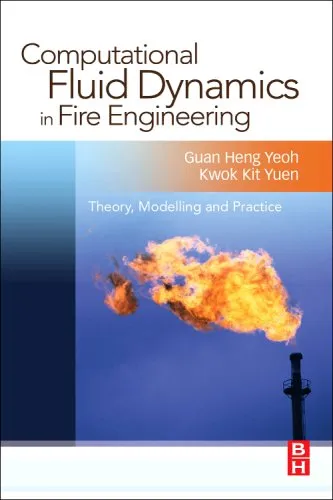
Computational fluid dynamics in fire engineering: theory, modelling and practice
Guan Heng Yeoh,Kwok Kit Yuen
2008
View book
Book guide and evaluation
Henri Lefebvre; Gerald Moore
0 reviews
Published
pages
views
Rhythmanalysis : Space, Time and Everyday Life urban rhythms, spatial theory Explore Rhythmanalysis : Space, Time and Everyday Life, a profound study of how temporal and spatial rhythms shape everyday human experience. Analytical Summary "Rhythmanalysis : Space, Time and Ev
Before you read
"Rhythmanalysis : Space, Time and Everyday Life" represents one of Henri Lefebvre’s most incisive contributions to the study of temporality and urban space, later enriched in English presentation by Gerald Moore. This work takes an innovative approach to understanding how everyday life unfolds within the intricate weave of spatial forms, social interactions, and temporal patterns—collectively known as rhythms.
Rather than analysing space solely in geometric or architectural terms, Lefebvre turns to the cadence of life as a dynamic lens. He examines how repetitive and cyclic rhythms structure our environments, from the movement of people in urban settings to the habitual routines of individuals. In Rhythmanalysis, rhythms are not mere patterns; they are vital signs of social life, revealing tensions, harmonies, and disruptions.
The text bridges philosophical inquiry with applied observation. Lefebvre draws upon Marxist theory, phenomenology, and sociology to illuminate how space and time produce lived experiences that are both patterned and unpredictable. With Moore’s translation and editorial framing, English-speaking readers gain access to a powerful theoretical apparatus that can inform urban studies, architecture, sociology, and cultural theory.
Publication year: Information unavailable, as no reliable public source cites the definitive year for the English edition without risk of inaccuracy. This absence underscores the importance of engaging directly with authentic editions and scholarly discussions surrounding the text.
The book offers clear touchpoints for deeper engagement with the relationship between time and space, especially in everyday contexts. It treats rhythms as analytical tools rather than mere metaphors.
First, it empowers readers to observe environments holistically, recognizing that spatial arrangements cannot be divorced from temporal flow. Second, it encourages a sensitivity to both macro-rhythms—such as economic cycles or seasonal changes—and micro-rhythms—like daily commutes or bodily patterns. Third, it bridges abstract theory with tangible urban realities, making it essential for professionals in planning, design, and cultural studies. Finally, Lefebvre’s approach closes the gap between personal experience and systemic forces, offering methods to critically inhabit our own spaces and times.
"Every rhythm implies a relation. This relation is not simple, but complex and active." Unknown
"To understand a rhythm is to enter into its time, to follow its movement, to grasp its repetitions and variations." Unknown
"Rhythmanalysis : Space, Time and Everyday Life" matters because it addresses a gap in how we think about our environments—not as static containers, but as living processes shaped by overlapping temporalities.
For scholars and professionals in urban design, this book offers a conceptual framework to integrate time into spatial planning. For sociologists and anthropologists, it provides rich tools for interpreting human behavior in context. By asserting the centrality of rhythms, Lefebvre urges us to reconsider the very fabric of everyday life, making this text a cornerstone for interdisciplinary research and practice.
"Rhythmanalysis : Space, Time and Everyday Life" invites serious readers to transform their perception of both space and time in everyday contexts.
By recognising the patterns that infuse our cities, workplaces, and homes, we engage more deeply with the pulse of our lives. Lefebvre’s methodology empowers us to listen to and interpret these rhythms, bridging personal awareness with structural insight. Whether you are an academic, a designer, or simply a curious mind, take the next step—read the book, share its ideas with colleagues, and discuss how its perspective reshapes your own understanding of space, time, and everyday life.
Your question is answered in the context of this title and author. Each answer uses 2 points.
0 reviews, 4.2 average out of 5
Sign in to publish a review.
Ask a focused question and learn from the community.
Related references that continue this learning path.
Guan Heng Yeoh,Kwok Kit Yuen
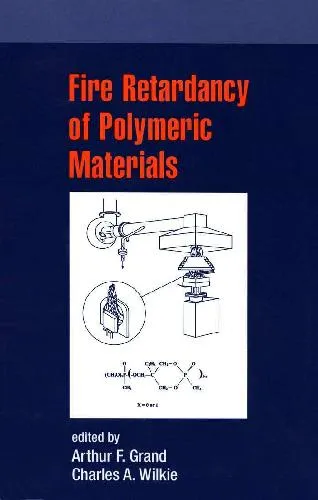

Edited by Peter JacksonandLaurence Lockhart