
The Android Malware Handbook: Detection and Analysis by Human and Machine
Qian Han;Salvador Mandujano;Sebastian Porst;V.S. Subrahmanian;Sai Deep Tetali;Yanhai Xiong
2024
View book
Book guide and evaluation
Robert Messler
0 reviews
Published
pages
views
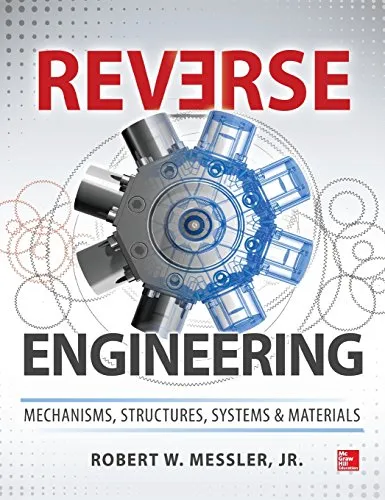
Introduction to Reverse Engineering: Mechanisms, Structures, Systems & Materials Welcome to the intricate world of reverse engineering, where discovery meets innovation. In the ever-evolving landscape of technology and industry, understanding the art and science of reverse eng
Before you read
Welcome to the intricate world of reverse engineering, where discovery meets innovation. In the ever-evolving landscape of technology and industry, understanding the art and science of reverse engineering has become essential for both seasoned engineers and curious enthusiasts. This book, "Reverse Engineering: Mechanisms, Structures, Systems & Materials," serves as a comprehensive guide that unlocks the secrets hidden within existing products to inspire the new.
In "Reverse Engineering: Mechanisms, Structures, Systems & Materials," I delve into the profound significance of reverse engineering as a methodology. The book is structured to provide a step-by-step elucidation of the reverse engineering process, enabling readers from varied backgrounds to appreciate its depth and utility. It begins with an overview of reverse engineering's history and evolution, illustrating its emergence as a pivotal tool in today’s technological advancement.
The initial chapters focus on fundamental principles, including the basic techniques of disassembly, analysis, and understanding of complex systems. Readers are guided through the nuances of mechanical components, intricate structures, robust systems, and advanced materials. Each segment is designed to build upon the last, ensuring readers can practically and theoretically grasp the multifaceted nature of engineering challenges.
As the narrative progresses, the book delves deeper into case studies, showcasing real-world applications and innovations that have stemmed from successful reverse engineering projects. These examples highlight the importance of creativity and critical thinking in uncovering the underlying functions and potential adaptations of engineered products.
"Reverse engineering is not merely about deconstructing a product; it is about reconstructing our understanding of how the world is engineered."
"Every screw and hinge holds a secret, and the reverse engineer is the detective tasked with unveiling the unseen narrative."
In a digital age where new technologies seem to eclipse the old at a breathtaking pace, the art of reverse engineering provides a bridge between what exists and what might be realized. This book matters because it emphasizes the significance of learning from existing structures to foster innovation. It caters to professionals and students, offering frameworks and methodologies that can be applied in various fields such as mechanical engineering, software development, and biotechnology.
The insights provided in this book arm readers with the tools to not only comprehend existing solutions but to innovate and adapt them for future needs. By demystifying complex engineering concepts, "Reverse Engineering: Mechanisms, Structures, Systems & Materials" facilitates a deeper understanding of engineering systems, empowering individuals with the knowledge to shape the future while respecting the legacy of engineered innovations.
Your question is answered in the context of this title and author. Each answer uses 2 points.
0 reviews, 4.4 average out of 5
Sign in to publish a review.
Ask a focused question and learn from the community.
Related references that continue this learning path.
Qian Han;Salvador Mandujano;Sebastian Porst;V.S. Subrahmanian;Sai Deep Tetali;Yanhai Xiong