
Book guide and evaluation
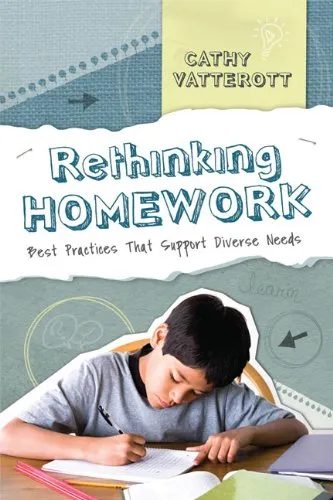
Rethinking Homework: Best Practices That Support Diverse Needs
Cathy Vatterott
English
Unordered
novel
4.5 / 5
0 reviews
2009
Published
194
pages
340
views
Introduction to Rethinking Homework: Best Practices That Support Diverse Needs Rethinking Homework: Best Practices That Support Diverse Needs challenges traditional approaches to homework in today's ever-evolving educational environment. Written for educators, admi
Before you read
What will you get from this book?
Introduction to Rethinking Homework: Best Practices That Support Diverse Needs
Rethinking Homework: Best Practices That Support Diverse Needs challenges traditional approaches to homework in today's ever-evolving educational environment. Written for educators, administrators, and parents alike, this book delves deep into the complex and often controversial topic of homework. By examining its role, purpose, and effectiveness, I aim to provide a practical framework for implementing homework practices that are equitable, meaningful, and adaptable to the diverse needs of students.
This book bridges the gap between research and practice, offering insights, real-world examples, and actionable strategies to help reshape the way homework is assigned, evaluated, and integrated into curriculum planning. Whether you are an experienced teacher seeking to refine your homework policies or a concerned parent looking to better understand the role of homework in your child’s education, this book offers a fresh perspective. Let's rethink homework together and create practices that foster genuine student growth and success.
Detailed Summary of the Book
At its core, Rethinking Homework explores the evolving nature of education and questions whether traditional homework practices align with modern pedagogical goals. The book is divided into several thematic areas, each addressing critical problems and offering evidence-based solutions.
First, the book scrutinizes common myths about homework, such as its presumed role in academic rigor and its impact on students' future success. Research-based analysis reveals that excessive or poorly crafted homework often hinders, rather than helps, student learning. Furthermore, I discuss how rigid traditional policies contribute to achievement gaps, disproportionately affecting students from low-income and diverse cultural backgrounds.
Next, I highlight practical strategies for designing effective homework tasks, emphasizing quality over quantity. Topics include determining the right amount of homework, fostering student ownership, and balancing academic demands with students’ emotional and social well-being.
The final chapters examine the broader implications of rethinking homework, offering guidelines for collaborative conversations among educators, parents, and policymakers. By providing concrete tools like homework policies, grading rubrics, and parent communication templates, the book equips readers to take meaningful action in their educational contexts.
Key Takeaways
- Traditional homework practices are often outdated and inequitable.
- Effective homework prioritizes meaningful, student-centered tasks over rote completion.
- Collaboration among teachers, students, and parents is crucial for creating fair and impactful homework policies.
- Homework should respect students' time and cater to their diverse needs, including socioeconomic, cultural, and learning differences.
- Grading and assessment of homework should align with broader learning outcomes rather than compliance or effort alone.
Famous Quotes from the Book
Here are a few memorable quotes from the book that capture its essence:
“Homework should serve as a bridge between school and home, not a barrier to equity and learning.”
“The question is not whether students are doing their homework, but whether their homework is worth doing.”
“Meaningful homework isn’t about how much is assigned; it’s about how students engage with it.”
Why This Book Matters
In an era where educational systems are striving for inclusivity and effectiveness, the role of homework cannot be ignored. Rethinking Homework addresses one of the most contentious issues in education today with sensitivity and evidence-based guidance.
It is essential because it empowers educators to question the “one-size-fits-all” homework approach and replace it with practices that genuinely support diverse learners. By offering practical strategies, this book paves the way for creating equitable learning experiences that meet students where they are.
Whether you are an educational leader seeking systemic change or a parent advocating for a healthier work-life balance for your child, this book provides the tools and insights needed to advocate for better homework policies. Together, we can ensure that homework becomes a meaningful, inclusive, and effective component of the educational process.
Ask this book
Your question is answered in the context of this title and author. Each answer uses 2 points.
Sign in to ask the book assistant.
Reader reviews
0 reviews, 4.5 average out of 5
No reviews yet
If you have read this book, help the next reader with your experience.
Write a review
Sign in to publish a review.
Reader questions and answers
Ask a focused question and learn from the community.
Sign in to ask or answer a question.
No questions yet
Be the first to ask a clear, useful question.
What to read next
Related references that continue this learning path.

Solutions Architect's Handbook - Third Edition: Kick-start your career with architecture design principles, strategies, and generative AI techniques
Saurabh Shrivastava,Neelanjali Srivastav
2024
View book