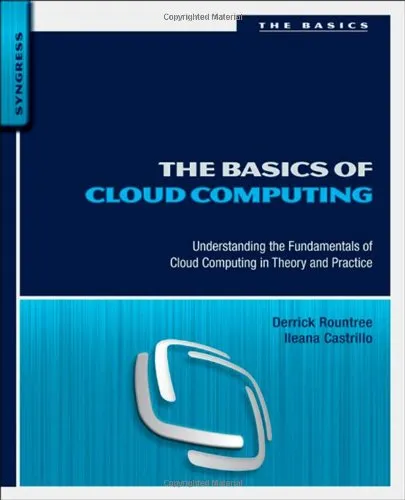
The Basics of Cloud Computing: Understanding the Fundamentals of Cloud Computing in Theory and Practice
Derrick Rountree,Ileana Castrillo
2013
View book
Book guide and evaluation
Karín Lesnik-Oberstein (eds.)
0 reviews
Published
pages
views
Introduction to "Rethinking Disability Theory and Practice: Challenging Essentialism" Disability is often misunderstood and misrepresented due to pervasive societal norms and essentialist thinking. Rethinking Disability Theory and Practice: Challenging Essentialism, ed
Before you read
Disability is often misunderstood and misrepresented due to pervasive societal norms and essentialist thinking. Rethinking Disability Theory and Practice: Challenging Essentialism, edited by Karín Lesnik-Oberstein, invites readers to engage critically with existing disability theories and practices while interrogating concepts of identity, normalcy, and marginalization. This thought-provoking book questions the essentialist frameworks through which disability is traditionally understood and challenges readers to embrace its complex, multifaceted nature.
In this edited volume, contributors from diverse academic and professional backgrounds come together to address one core question: how can we rethink disability beyond essentialist paradigms? Essentialism often reduces multifaceted experiences of disability to static, biologically determined conditions, ignoring the cultural, social, and political dimensions of what it means to belong to the category of "disabled." This book argues that dominant ideas about disability—constructed through historical, medical, and even theoretical lenses—reinforce exclusion and othering.
The chapters collectively critique these dominant models by proposing fluid, intersectional, and context-sensitive perspectives. Through a combination of theory, case studies, and reflections, the book dismantles stereotypes and offers fresh insights into the lived realities of disability. By interrogating language, representation, and power, it seeks to foster a more equitable and inclusive understanding of disability that accounts for the diversity of human experience.
"Disability is not merely a biological reality; it is a social construct shaped by power, privilege, and cultural expectations."
"To challenge essentialism is to expose the ways in which disability is a lived experience that cannot be simplistically defined or confined."
"Rethinking disability requires not just a shift in perspective, but a dismantling of the very systems that perpetuate marginalization."
Rethinking Disability Theory and Practice: Challenging Essentialism is not just a book for academics or practitioners—it is a vital resource for anyone committed to social justice and inclusion. Disability remains an underexplored aspect of identity and oppression, despite being a global experience affecting millions. This book seeks to bridge that gap by encouraging nuanced conversations about what disability is and how society can move toward more equitable practices.
By offering new frameworks for understanding, this book holds significance for policy-makers, educators, healthcare professionals, and advocates striving to dismantle systemic barriers. It equips readers with the tools to critically examine ableism in its many forms, offering a vision for a future that values all bodies, abilities, and experiences. Its commitment to challenging essentialism invites readers to appreciate complexity while working toward meaningful change, making it a transformative addition to the field of disability studies.
Your question is answered in the context of this title and author. Each answer uses 2 points.
0 reviews, 3.8 average out of 5
Sign in to publish a review.
Ask a focused question and learn from the community.
Related references that continue this learning path.
Derrick Rountree,Ileana Castrillo