
Solutions Architect's Handbook - Third Edition: Kick-start your career with architecture design principles, strategies, and generative AI techniques
Saurabh Shrivastava,Neelanjali Srivastav
2024
View book
Book guide and evaluation
Ann E. Fields
0 reviews
Published
pages
views
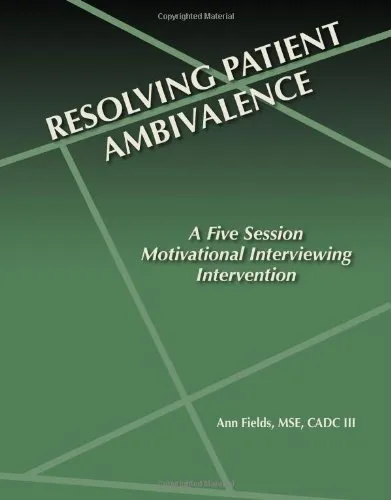
Introduction to "Resolving Patient Ambivalence: A Five Session Motivational Interviewing Intervention" "Resolving Patient Ambivalence: A Five Session Motivational Interviewing Intervention" is a comprehensive and practical guide designed for healthcare professional
Before you read
"Resolving Patient Ambivalence: A Five Session Motivational Interviewing Intervention" is a comprehensive and practical guide designed for healthcare professionals, therapists, counselors, and anyone practicing motivational interviewing (MI) techniques. The book provides a structured yet flexible five-session framework to address ambivalence in patients—an emotional and cognitive state that often inhibits their ability to make meaningful behavioral changes. Whether struggling with addiction, chronic health concerns, or mental health challenges, patients frequently find themselves torn between conflicting desires, and this book emphasizes the vital role professionals play in guiding individuals through this complexity.
Motivational interviewing has proven effective in eliciting behavioral change by helping patients explore their own motivations and minimize resistance. This book goes beyond the surface, addressing the intricacies of ambivalence—the "stuck point" where patients want to change but simultaneously resist it. Through hands-on examples, session-by-session breakdowns, and helpful tools, the book empowers practitioners to confidently implement interventions fostering autonomy, confidence, and readiness in their patients. Written with clarity and grounded in scientific evidence, "Resolving Patient Ambivalence" demystifies MI and makes it accessible to both new practitioners and seasoned professionals.
The book is divided into five structured sessions, each building upon the last and tailored to address the core aspects of patient ambivalence. It begins with the theoretical foundations of motivational interviewing, offering insights into the psychological mechanisms underpinning indecision and resistance to change. By anchoring its approach in empathy, collaboration, and a non-confrontational style, the book ensures that practitioners can immediately connect with their patients, building trust and safety.
Each session is meticulously designed, starting with developing rapport and understanding the patient’s perspective. Gradually, the book transitions into identifying ambivalence, unpacking its root causes, and working through the specific barriers preventing change. The final sessions focus on goal-setting, cultivating commitment, and strategizing actionable steps for long-term success.
Rich in clinical vignettes, reflective exercises, and practitioner tips, the book enables readers to implement interventions across various populations. It highlights the importance of "change talk," the language patients use to signal their readiness for transformation, and provides tools for eliciting and amplifying this language. Additionally, the book emphasizes adaptability, demonstrating how the framework can be tailored to individual patient needs while maintaining its core principles.
"Ambivalence is not a sign of failure; it is the birthplace of transformation."
"Motivational interviewing is not about convincing patients to change; it’s about helping them convince themselves."
"The art of asking the right questions is more powerful than offering the right answers."
"Resolving Patient Ambivalence" matters because it addresses one of the most significant hurdles in the therapeutic process: the patient’s internal conflict about change. While many interventions focus on external solutions, this book delves into the emotional and psychological roadblocks inherent in indecision. By providing a clear roadmap for practitioners, it not only enhances professional confidence but also improves patient outcomes.
With increasing rates of lifestyle-related health issues, addiction, and mental health concerns globally, the demand for evidence-based, patient-centered approaches like motivational interviewing has never been more pressing. This book equips practitioners with the skills to engage patients meaningfully, empower them to own their journeys, and ultimately embrace sustainable, life-altering changes.
Beyond healthcare, the principles in this book can be applied to coaching, education, and leadership—any domain where individuals face a gap between their aspirations and their actions. It is a must-read for anyone committed to fostering growth, transformation, and resilience in others.
Your question is answered in the context of this title and author. Each answer uses 2 points.
0 reviews, 4.5 average out of 5
Sign in to publish a review.
Ask a focused question and learn from the community.
Related references that continue this learning path.
Saurabh Shrivastava,Neelanjali Srivastav