
Book guide and evaluation
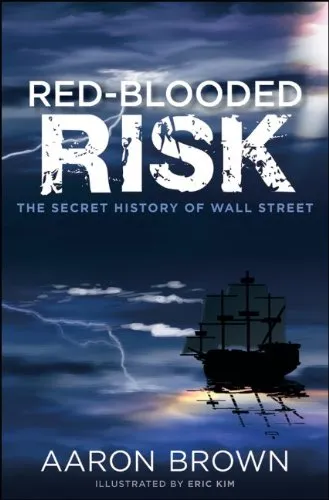
Red-Blooded Risk: The Secret History of Wall Street
Aaron Brown
English
Beginner
Economics
4.4 / 5
0 reviews
2011
Published
431
pages
305
views
Introduction to "Red-Blooded Risk: The Secret History of Wall Street" "Red-Blooded Risk: The Secret History of Wall Street" by Aaron Brown is not just a book about financial markets; it's a deep dive into the psychology, mathematics, and human instincts that drive risk-tak
Before you read
What will you get from this book?
Introduction to "Red-Blooded Risk: The Secret History of Wall Street"
"Red-Blooded Risk: The Secret History of Wall Street" by Aaron Brown is not just a book about financial markets; it's a deep dive into the psychology, mathematics, and human instincts that drive risk-taking. This book explores the evolution of risk management, the essence of decision-making under uncertainty, and the profound impact of risk on both Wall Street and everyday life. Whether you're a seasoned professional in the financial industry or simply interested in the intricate dynamics of risk, this book offers unique insights that challenge conventional thinking.
Unlike traditional books about Wall Street that focus solely on economics or trading strategies, "Red-Blooded Risk" takes a broader approach. It delves into the history of risk, the principles behind its management, and the pivotal role it plays in shaping the markets and society as a whole. It is a book that combines storytelling, technical knowledge, and philosophical musings, making it an invaluable addition to financial literature.
Detailed Summary of the Book
In "Red-Blooded Risk," the author begins by unpacking the concept of risk and its misunderstood nature. Risk, in Brown's view, is not something to be avoided but rather embraced and managed carefully. Through vivid examples from history, mathematics, and Wall Street anecdotes, the book paints a picture of risk-takers who have influenced economic and social landscapes.
The book provides a fresh perspective on the evolution of modern finance. It discusses pivotal events such as the development of risk modeling techniques, the rise of quantitative finance, and the cultural changes on Wall Street over decades. Each chapter blends historical narratives with practical lessons about how risks can be reframed as opportunities when approached intelligently.
Brown also emphasizes that while mathematical models can help quantify risks, human behavior, biases, and emotions often determine the real outcomes. The book challenges "ivory tower" academic approaches to risk and celebrates the gritty, hands-on decision-making that defines real-world risk-taking. Whether you're reading about risk managers, blackjack strategies (a favorite topic of the author), or the influence of iconic figures like Benoit Mandelbrot, Brown keeps the narrative engaging and thought-provoking.
Key Takeaways
- Risk itself is neither good nor bad—it's how we manage and approach it that defines success or failure.
- Wall Street is shaped by a complex interplay of mathematics, psychology, and culture, which often rewards bold yet calculated risk-taking.
- Quantitative tools are crucial, but they are merely tools. Human intuition and decision-making still control outcomes.
- Understanding history and historical patterns of risk-taking can provide valuable insights into modern financial markets.
- Risk management is applicable far beyond Wall Street—it influences technology, innovation, entrepreneurship, and even personal decision-making.
Famous Quotes from the Book
- "Risk is the engine of growth—not just financial growth, but the growth of knowledge, innovation, and progress."
- "To truly understand risk, you have to embrace the fact that uncertainty is not your enemy; it’s a natural state of the world."
- "Financial models and theories are important, but the real action happens when you step outside the comfort zone of spreadsheets."
- "What distinguishes successful traders, investors, and entrepreneurs is not luck but their ability to take intelligent risks."
Why This Book Matters
This book matters because it presents a balanced and comprehensive understanding of risk—something that is integral to the modern world. Aaron Brown’s perspective is unique due to his dual expertise in high-stakes trading and academic research. By addressing risk as more than just a financial concept, "Red-Blooded Risk" expands its relevance to professionals, entrepreneurs, and individuals facing uncertainty in their lives.
With its engaging writing style and blend of technical depth and accessible storytelling, the book successfully bridges the gap between theory and practice. Whether you're looking at risk in the context of trading, personal decisions, or broader societal challenges, "Red-Blooded Risk" equips you with the tools and mindset to better understand and handle uncertainty. Its lessons are timeless, applicable to both Wall Street and Main Street.
In conclusion, "Red-Blooded Risk" is not just a financial book; it is a guide to life in an uncertain world. By the time you finish it, you’ll see risk in a whole new light—not as something to fear but as an opportunity to grow and thrive.
Ask this book
Your question is answered in the context of this title and author. Each answer uses 2 points.
Sign in to ask the book assistant.
Reader reviews
0 reviews, 4.4 average out of 5
No reviews yet
If you have read this book, help the next reader with your experience.
Write a review
Sign in to publish a review.
Reader questions and answers
Ask a focused question and learn from the community.
Sign in to ask or answer a question.
No questions yet
Be the first to ask a clear, useful question.
What to read next
Related references that continue this learning path.

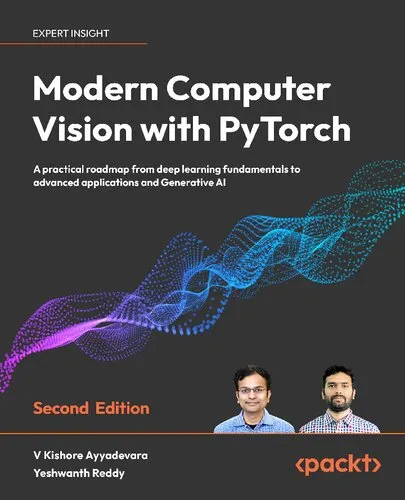
Modern Computer Vision with PyTorch: A Practical Roadmap From Deep Learning Fundamentals to Advanced Applications and Generative AI, 2nd Edition
V Kishore Ayyadevara,Yeshwanth Reddy
2023
View book