

Book guide and evaluation
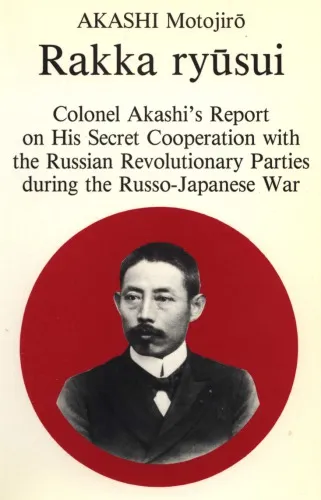
Rakka ryusui: Colonel Akashi's report on his secret cooperation with the Russian revolutionary parties during the Russo-Japanese War (Studia historica)
Motojiro Akashi
English
Beginner
Art
4.9 / 5
0 reviews
1988
Published
199
pages
395
views
Introduction to 'Rakka ryusui: Colonel Akashi's Report' The book 'Rakka ryusui: Colonel Akashi's report on his secret cooperation with the Russian revolutionary parties during the Russo-Japanese War (Studia historica)' offers a compelling narrative of espionage, diplomacy, and
Before you read
What will you get from this book?
Introduction to 'Rakka ryusui: Colonel Akashi's Report'
The book 'Rakka ryusui: Colonel Akashi's report on his secret cooperation with the Russian revolutionary parties during the Russo-Japanese War (Studia historica)' offers a compelling narrative of espionage, diplomacy, and revolutionary fervor. Colonel Motojiro Akashi's memoir provides readers with a rare glimpse into the clandestine operations undertaken during a pivotal moment in history. By unraveling Akashi's accounts, this work sheds light on the intricate web of alliances and betrayals that characterized the early 20th-century geopolitical landscape.
Detailed Summary
In 'Rakka ryusui', Colonel Akashi narrates his strategic involvement in fomenting unrest within the Russian Empire during the Russo-Japanese War (1904-1905). The narrative begins with the historical backdrop of escalating tensions between Japan and Russia over territorial ambitions in East Asia. As the conflict intensifies, Akashi is tasked with liaising with Russian revolutionaries, aiming to destabilize the Tsarist regime from within.
The book intricately details Akashi's covert operations: meetings with revolutionary factions, the exchange of intelligence, and financial support for insurrectionist activities. Each chapter delves into the complexities of aligning Japanese military goals with the revolutionary zeal of Russian dissidents. Akashi's memoir encapsulates a period where the line between friend and foe blurred, driven by the shared objective of undermining a common adversary.
Key Takeaways
- Understanding Geopolitical Intrigue: The narrative highlights how nations leverage internal dissent for strategic gains, a tactic prevalent even today.
- Role of Intelligence in Warfare: Akashi's experiences underscore the profound impact intelligence operations have on military outcomes.
- Cultural and Political Exchanges: The interactions between Japanese officials and Russian revolutionaries reveal the cultural exchanges that occur even amidst conflict.
Famous Quotes from the Book
"A nation's strength lies not just in its armies, but in its ability to exploit the fissures in its rival's armor."
"Revolution, like war, is a fluid force; it knows no boundaries and obeys no masters."
"Our endeavors were not merely acts of sabotage but were seeds of change sown in the fertile grounds of discontent."
Why This Book Matters
'Rakka ryusui' is more than a historical recount; it serves as a cautionary tale about the complexities and moral ambiguities of war. Colonel Akashi's account is invaluable for historians and political analysts interested in understanding the multifaceted nature of early 20th-century geopolitics. The book is a testament to the far-reaching consequences of covert operations and the intricate dance of alliances formed in the shadows of war.
Moreover, it resonates with contemporary audiences by illustrating the enduring nature of espionage and political intrigue in international relations. As such, it provides timeless insights into the dynamics of global power struggles and the perennial quest for dominance that characters global politics.
Ask this book
Your question is answered in the context of this title and author. Each answer uses 2 points.
Sign in to ask the book assistant.
Reader reviews
0 reviews, 4.9 average out of 5
No reviews yet
If you have read this book, help the next reader with your experience.
Write a review
Sign in to publish a review.
Reader questions and answers
Ask a focused question and learn from the community.
Sign in to ask or answer a question.
No questions yet
Be the first to ask a clear, useful question.
What to read next
Related references that continue this learning path.
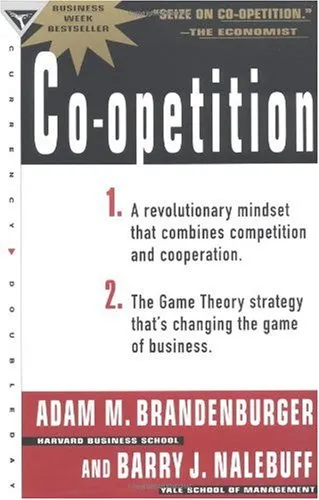
Co-Opetition : A Revolution Mindset That Combines Competition and Cooperation : The Game Theory Strategy That's Changing the Game of Business
Adam M. Brandenburger,Barry J. Nalebuff
1997
View book

In the Light of Evolution V: Cooperation and Conflict issue Proceedings of the National Academy of Sciebces of
Joan E. Strassmann,David C. Queller,John C. Avise,Francisco J. Ayala
2011
View book
