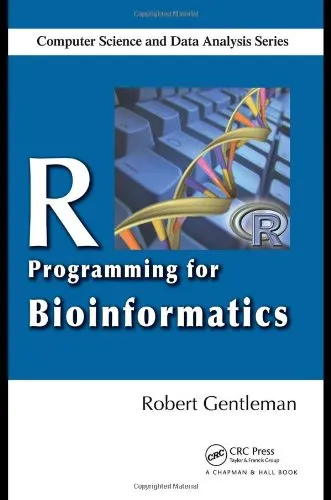
Book guide and evaluation
R Programming for Bioinformatics (Chapman & Hall-CRC Computer Science & Data Analysis)
Robert Gentleman
English
Unordered
Computer Science and Theory
4.3 / 5
0 reviews
2008
Published
327
pages
755
views
Introduction to 'R Programming for Bioinformatics' In the dynamic and complex field of bioinformatics, the ability to handle and analyze vast amounts of data is critical. 'R Programming for Bioinformatics' serves as a comprehensive guide for those seeking to harness the power
Before you read
What will you get from this book?
Introduction to 'R Programming for Bioinformatics'
In the dynamic and complex field of bioinformatics, the ability to handle and analyze vast amounts of data is critical. 'R Programming for Bioinformatics' serves as a comprehensive guide for those seeking to harness the power of R—a powerful, open-source programming language—to address a variety of challenges in the biological sciences.
Detailed Summary of the Book
The book is designed to cater to bioinformatics professionals and researchers with varying levels of experience in R. It starts with the basics, introducing readers to the R environment, syntax, and programming strategies that form the foundation of bioinformatics analysis. As the chapters progress, you will delve into more advanced topics such as statistical programming, graphics, and the extensive libraries available for bioinformatics analysis.
R Programming for Bioinformatics not only provides a solid theoretical understanding but also incorporates practical examples and exercises that reflect real-world bioinformatics challenges. These include sequence analysis, microarray analysis, and the mining of biological datasets, helping to bridge the gap between theory and practice.
Key Takeaways
- Understand the core functionalities of R and its ease of use for computational biology tasks.
- Learn to apply R's statistical capabilities to explore and interpret complex biological data.
- Gain proficiency in visualizing bioinformatics data using R's graphics capabilities for systematic analysis.
- Explore numerous R packages tailored to specific bioinformatics tasks such as Bioconductor.
- Apply R programming to real-world bioinformatics data challenges and develop solutions.
Famous Quotes from the Book
"In bioinformatics, as in life, the goal is to consistently and reliably transform data into knowledge."
"R does not just support analysis; it encourages a collaborative environment where reproducibility is key."
Why This Book Matters
As data becomes increasingly pivotal in biological sciences, the importance of effectively managing and interpreting this data cannot be overstated. 'R Programming for Bioinformatics' equips its readers with the necessary skills and knowledge to transform raw data into meaningful insights. This book encourages a methodological approach to bioinformatics, ensuring that practitioners and students alike are well-prepared to meet the demands of modern biology.
The R programming language, with its powerful analytics and versatile graphical capabilities, is indispensable to the field of bioinformatics. Through this book, professionals and academics can effectively capitalize on R's features to elevate their research and contribute to groundbreaking discoveries in biology. By presenting complex concepts in an accessible manner and providing hands-on exercises, this book stands as an essential resource for anyone committed to excellence in bioinformatics.
Ask this book
Your question is answered in the context of this title and author. Each answer uses 2 points.
Sign in to ask the book assistant.
Reader reviews
0 reviews, 4.3 average out of 5
No reviews yet
If you have read this book, help the next reader with your experience.
Write a review
Sign in to publish a review.
Reader questions and answers
Ask a focused question and learn from the community.
Sign in to ask or answer a question.
No questions yet
Be the first to ask a clear, useful question.
What to read next
Related references that continue this learning path.