


Book guide and evaluation
Quantum Physics in Neuroscience and Psychology A New Theory With Respect to Mind Brain Interactive
Jeffrey M. Schwartz,Henry P. Stapp,Mario Beauregard
English
Beginner
Art
4.8 / 5
0 reviews
-
Published
72
pages
155
views
Introduction to "Quantum Physics in Neuroscience and Psychology: A New Theory With Respect to Mind-Brain Interactive" "Quantum Physics in Neuroscience and Psychology" is a groundbreaking book that explores the intersection of quantum mechanics, neuroscience, and ps
Before you read
What will you get from this book?
Introduction to "Quantum Physics in Neuroscience and Psychology: A New Theory With Respect to Mind-Brain Interactive"
"Quantum Physics in Neuroscience and Psychology" is a groundbreaking book that explores the intersection of quantum mechanics, neuroscience, and psychology to propose a new understanding of the dynamics between the mind and the brain. Written by Jeffrey M. Schwartz, Henry P. Stapp, and Mario Beauregard, this book challenges traditional notions of materialist neuroscience and delves into how quantum physics can offer a scientific basis for mind-brain interaction.
The book is written for a diverse audience, ranging from researchers and professionals in the fields of neuroscience, psychology, and physics, to anyone fascinated by the profound questions about human consciousness. Through a combination of rigorous scientific insights and thought-provoking philosophical discussion, this work provides an innovative framework for unraveling the mysteries of how the mind affects the brain and vice versa.
Detailed Summary of the Book
At its core, the book challenges the classical, deterministic views often upheld in neuroscience and mainstream psychology. By integrating the principles of quantum physics, it illuminates the limitations of materialist paradigms that reduce the mind to mere neural processes. The authors argue that these traditional approaches fail to explain how subjective experiences, free will, and volition influence brain activity.
The authors leverage the theory of quantum mechanics, particularly the Copenhagen interpretation and the notion of quantum collapse, to suggest that consciousness plays an active role in shaping physical brain function. They propose that the mind, as a non-material entity, interacts with the probabilistic nature of quantum events in the brain to influence decisions, behaviors, and thought processes.
The culmination of this theory leads to a profound understanding of the interactive relationship between the mind and the brain. The book articulates a scientific model where mental intention exerts causal influence over neural activity, thus providing a theoretical framework for phenomena such as mindfulness, meditation, and cognitive behavioral therapy. Insights from both neuroscience experiments and quantum mechanics underpin the theoretical arguments laid out in the book.
Key Takeaways
- The traditional materialist approach in neuroscience is insufficient to fully explain consciousness and subjective experience.
- Quantum mechanics offers mechanisms that allow for mind-brain interactions, particularly through processes like quantum collapse.
- Free will and intention are real phenomena with tangible effects on neural circuits, made possible via quantum decision-making processes.
- Theories presented in the book have profound implications for mental health practices, offering scientific support for therapeutic techniques like meditation and mindfulness.
- This book bridges the gap between physics, psychology, and neuroscience to forge a unified understanding of mind and brain dynamics.
Famous Quotes from the Book
"The intersection of mind and brain is not mechanical; it is quantum, uncertain, and enriched by the potentials of consciousness."
"Neuroscience may map the physical landscape of our brain, but it is quantum physics that defines the influence of meaning and intention."
"The human mind is not a passive observer but an active participant in the unfolding of reality."
Why This Book Matters
"Quantum Physics in Neuroscience and Psychology" offers an intellectually stimulating exploration of concepts that have long puzzled researchers, such as free will and consciousness. While the realms of psychology and neuroscience have made great strides in understanding how the brain operates, they often fall short of addressing deeper questions about subjective experience and intentionality. This book fills that gap by integrating quantum mechanics into the conversation, providing a novel approach that respects both scientific rigor and the phenomena of human awareness.
Beyond its scientific contributions, the book matters because of its broader philosophical implications. It challenges us to rethink the nature of reality, the limitations of materialist science, and the profound role of consciousness in shaping ourselves and the world around us. For those seeking answers to life’s most profound mysteries, this book delivers a revolutionary perspective with the potential to redefine modern neuroscience, psychology, and even spiritual understanding.
Ultimately, the insights presented in this book open up new pathways for understanding how mindfulness, therapeutic practices, and personal intention can lead to profound changes in mental and physical health. It sets the stage for future interdisciplinary research and invites readers to engage with the fascinating interplay between science and consciousness.
Ask this book
Your question is answered in the context of this title and author. Each answer uses 2 points.
Sign in to ask the book assistant.
Reader reviews
0 reviews, 4.8 average out of 5
No reviews yet
If you have read this book, help the next reader with your experience.
Write a review
Sign in to publish a review.
Reader questions and answers
Ask a focused question and learn from the community.
Sign in to ask or answer a question.
No questions yet
Be the first to ask a clear, useful question.
What to read next
Related references that continue this learning path.


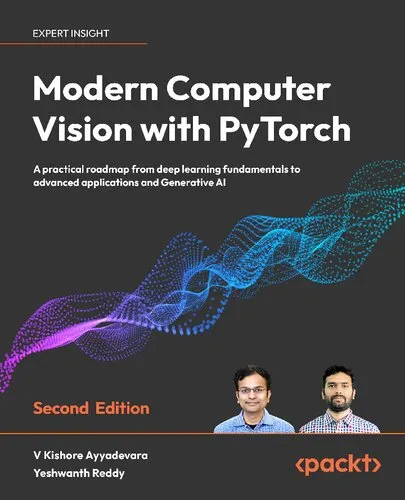
Modern Computer Vision with PyTorch: A Practical Roadmap From Deep Learning Fundamentals to Advanced Applications and Generative AI, 2nd Edition
V Kishore Ayyadevara,Yeshwanth Reddy
2023
View book