
Book guide and evaluation
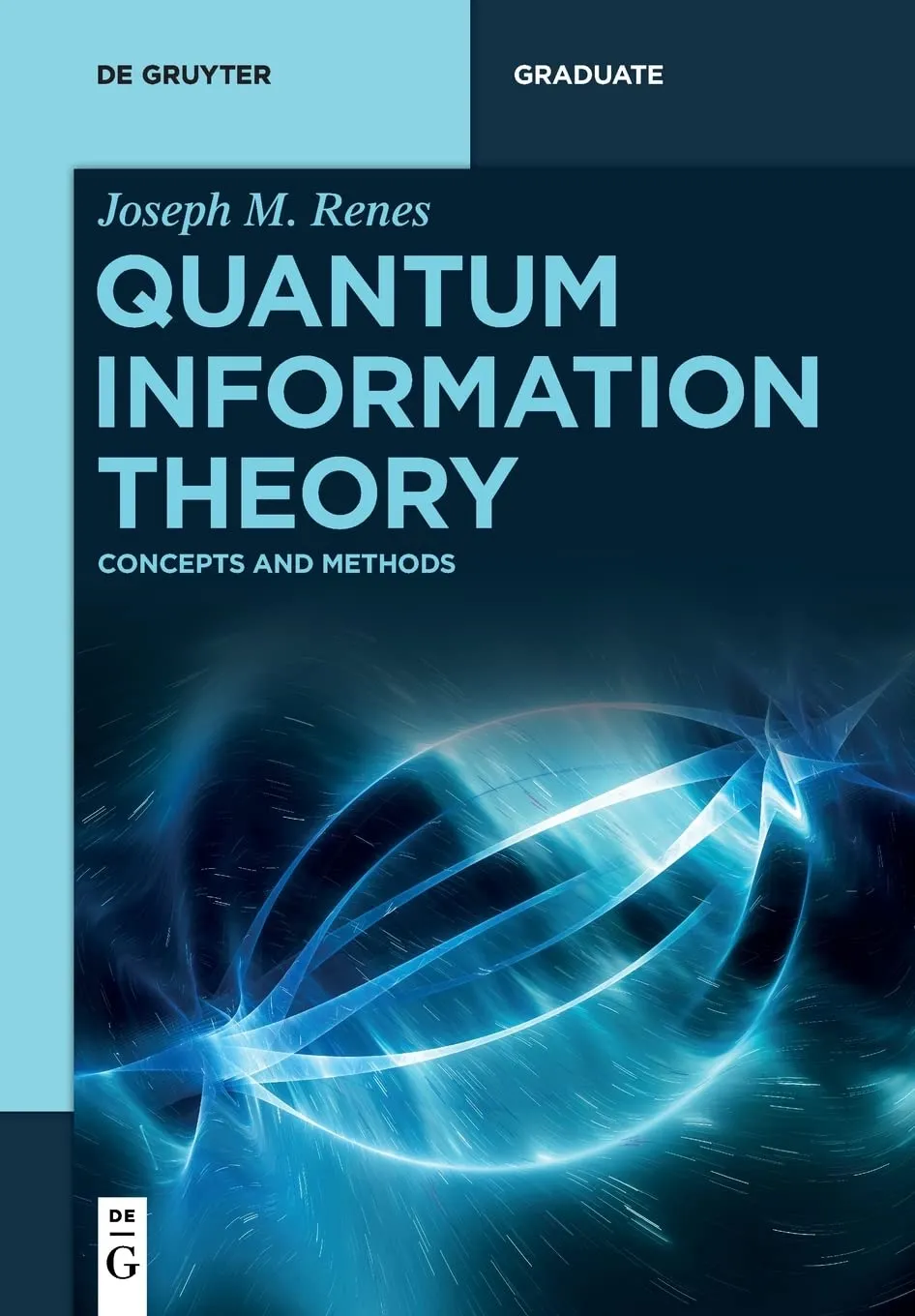
Quantum Information Theory: Concepts and Methods
Joseph M. Renes
English
Beginner
Physics
4.5 / 5
0 reviews
2022
Published
336
pages
174
views
Introduction to "Quantum Information Theory: Concepts and Methods" "Quantum Information Theory: Concepts and Methods" offers a comprehensive and in-depth exploration of one of the most exciting intersections of science and technology: quantum mechanics and informatio
Before you read
What will you get from this book?
Introduction to "Quantum Information Theory: Concepts and Methods"
"Quantum Information Theory: Concepts and Methods" offers a comprehensive and in-depth exploration of one of the most exciting intersections of science and technology: quantum mechanics and information theory. This book is designed to act as both a foundational text for those new to the field and a valuable reference for experts seeking to deepen their understanding. By bridging the abstract mathematical insights of quantum theory with practical applications in computation and communication, this work provides readers with the tools to navigate the rapidly evolving world of quantum information.
Summary of the Book
The book begins by laying down the fundamental concepts at the heart of quantum information theory, including qubits, density matrices, and measurements. These foundational topics are presented in a way that is accessible to readers with a basic understanding of linear algebra and probability theory. From there, it progresses to delve deeper into the core principles of entanglement, decoherence, and quantum channels, while maintaining a balance between rigorous proofs and intuitive explanations.
A significant portion of the book is devoted to discussing the theoretical frameworks that underpin quantum cryptography and quantum algorithms. Key topics include Shor’s algorithm, quantum key distribution (QKD), and the roles of entanglement in secure communication systems. Additionally, the book examines the operational perspectives of quantum information—exploring how information is stored, transmitted, and processed in quantum systems.
"Quantum Information Theory: Concepts and Methods" also explores cutting-edge developments, such as quantum error correction and fault-tolerant quantum computing, which are vital for realizing practical quantum technologies. Each topic is accompanied by illustrative examples, thought-provoking exercises, and discussions on future challenges and opportunities in the field.
Key Takeaways
- Gain a deep understanding of the fundamental principles behind quantum information theory, including qubits, entanglement, and quantum measurements.
- Explore the mathematical tools and frameworks essential for quantum mechanics and its informational aspects, such as the von Neumann entropy and quantum mutual information.
- Develop an appreciation for how quantum computing challenges classical paradigms, with practical examples including quantum teleportation and superdense coding.
- Understand the operational aspects of quantum cryptography and algorithms, and their potential impact on secure communications and computation.
- Build knowledge about the practical challenges of quantum error correction, fault tolerance, and constructing scalable quantum computers.
Famous Quotes from the Book
“Quantum mechanics forces us to rethink the very foundations of how we store, process, and transmit information.”
“The power of quantum computation does not lie in speed alone but in its ability to solve problems that are intractable for classical machines.”
“Entanglement is not just a peculiar feature of quantum mechanics; it is the cornerstone of modern quantum technologies.”
Why This Book Matters
As the second quantum revolution unfolds, the ability to understand and apply quantum information principles has become more critical than ever. This book empowers readers to join this revolution by equipping them with both the theoretical knowledge and practical tools needed to engage with quantum technologies. Whether you are a physicist, computer scientist, or engineer, "Quantum Information Theory: Concepts and Methods" serves as an essential resource for mastering the nuances of quantum information.
Moreover, it bridges the gap between abstract quantum theory and real-world applications, showing how concepts like superposition and entanglement can be harnessed for breakthroughs in computing, cryptography, and beyond. The book is not only a guide to understanding quantum information but also an invitation to participate in shaping the future of this exciting and transformative field.
Ask this book
Your question is answered in the context of this title and author. Each answer uses 2 points.
Sign in to ask the book assistant.
Reader reviews
0 reviews, 4.5 average out of 5
No reviews yet
If you have read this book, help the next reader with your experience.
Write a review
Sign in to publish a review.
Reader questions and answers
Ask a focused question and learn from the community.
Sign in to ask or answer a question.
No questions yet
Be the first to ask a clear, useful question.
What to read next
Related references that continue this learning path.

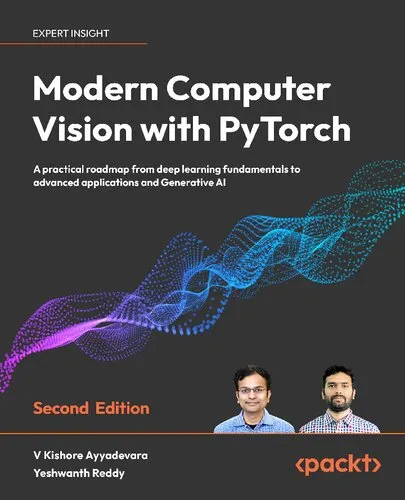
Modern Computer Vision with PyTorch: A Practical Roadmap From Deep Learning Fundamentals to Advanced Applications and Generative AI, 2nd Edition
V Kishore Ayyadevara,Yeshwanth Reddy
2023
View book