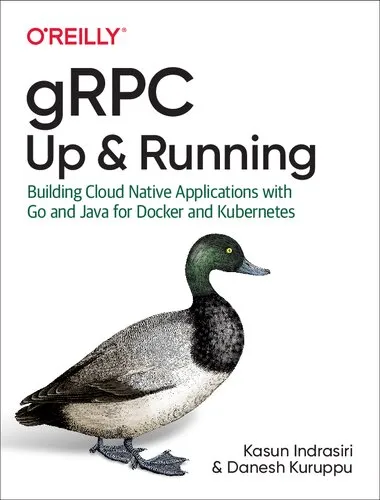
gRPC: Up & Running: Building Cloud Native Applications with Go and Java for Docker and Kubernetes
Kasun Indrasiri;Danesh Kuruppu
2020
View book
Book guide and evaluation
Michael Heydt
0 reviews
Published
pages
views
Introduction to Python Web Scraping Cookbook The Python Web Scraping Cookbook is an essential companion for developers, data analysts, and enthusiasts looking to extract, process, and analyze data from the web efficiently. With over 90 tried-and-tested recipes, it is a practic
Before you read
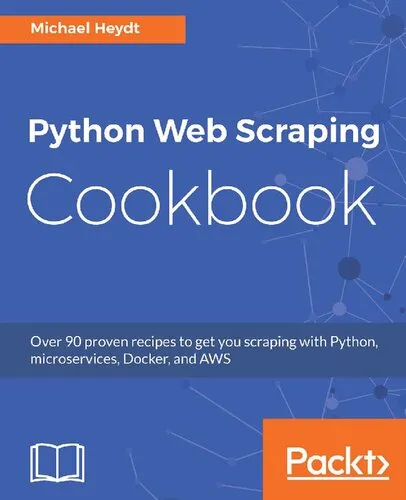
The Python Web Scraping Cookbook is an essential companion for developers, data analysts, and enthusiasts looking to extract, process, and analyze data from the web efficiently. With over 90 tried-and-tested recipes, it is a practical resource covering not only Python-based web scraping but also advanced microservice architectures, Docker workflows, and cloud solutions through AWS.
Whether you are a beginner learning basic scraping techniques or an advanced user striving to scale and optimize your pipelines, this book will guide you every step of the way. By offering actionable and modular recipes, the cookbook empowers you to go beyond theoretical concepts and implement scalable applications in the real world. This is an indispensable resource for anyone planning to harness the power of Python to gather meaningful insights from the vast amounts of data available online.
The Python Web Scraping Cookbook dives deep into the essentials of the web scraping domain, providing a step-by-step approach for tackling common and advanced web scraping challenges. It begins with foundational techniques like HTML parsing, CSS selectors, and using Python's requests and BeautifulSoup libraries to scrape static web pages. You will then progress to handling dynamic content by integrating Selenium for JavaScript-enabled pages.
Some chapters introduce advanced techniques such as dealing with CAPTCHAs, scraping APIs, and executing asynchronous scraping with asyncio. The book also ventures beyond scraping itself, offering insights into processing and cleaning scraped data with Python libraries such as Pandas, NumPy, and regex modules.
The latter sections focus on building scalable scraping systems by employing microservices, containerizing applications with Docker, and deploying resilient setups on AWS cloud. These advanced topics demonstrate how to design scraping pipelines that can handle large-scale tasks, ensuring durability, performance, and compliance with ethical guidelines.
Each recipe is self-contained, making it easy for readers to jump to the solutions they need. The modular nature of the content ensures that the book is not only an educational resource but a practical companion for real-world use cases.
BeautifulSoup and requests."Web scraping is about peeling off the layers of the internet to uncover actionable insights."
"Automation coupled with data-driven insights is the cornerstone of modern-day decision making."
"You don’t just scrape the web; you design ethical, scalable systems capable of transforming raw content into meaningful data."
The Python Web Scraping Cookbook is more than a mere technical guide; it is a solution-driven resource that prepares readers for tackling real-world problems through data collection and processing. With the ever-growing reliance on data, industries ranging from e-commerce to journalism require robust, reliable, and ethical scraping solutions.
What sets this book apart is its emphasis on scalability and practical application. It not only teaches readers how to scrape data but also how to handle challenges such as server limitations, anti-scraping mechanisms, and data cleaning. The introduction of concepts like Docker and AWS in the context of scraping ensures that readers are equipped to build enterprise-grade systems without reinventing the wheel.
Additionally, the cookbook fosters an understanding of the ethical considerations surrounding web scraping, making it a valuable resource for professionals and educators equally. If you aim to transform the way you work with data and leverage Python’s capabilities, this book is your comprehensive guide.
Your question is answered in the context of this title and author. Each answer uses 2 points.
0 reviews, 4.5 average out of 5
Sign in to publish a review.
Ask a focused question and learn from the community.
Related references that continue this learning path.
Kasun Indrasiri;Danesh Kuruppu