

Book guide and evaluation
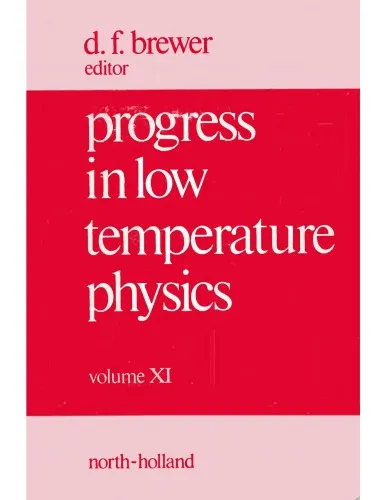
Progress in low temperature physics
Cornelis Jacobus Gorter
English
Beginner
Physics
4.9 / 5
0 reviews
1955-<1986>
Published
327
pages
162
views
Introduction to 'Progress in Low Temperature Physics' "Progress in Low Temperature Physics" by Cornelis Jacobus Gorter is a seminal text that explores the intricate and fascinating domain of low temperature physics. As one of the most authoritative resources in the field,
Before you read
What will you get from this book?
Introduction to 'Progress in Low Temperature Physics'
"Progress in Low Temperature Physics" by Cornelis Jacobus Gorter is a seminal text that explores the intricate and fascinating domain of low temperature physics. As one of the most authoritative resources in the field, this book is a treasure trove of scientific insights, thorough analyses, and theoretical advancements. It serves as both a reference and inspiration for physicists, researchers, and students intrigued by the interplay of extreme conditions and the fundamental physical properties of matter.
With an emphasis on rigor and clarity, this book bridges the historical development of low temperature physics with groundbreaking discoveries and theories of its time. It reflects the rapid advancements in the mid-20th century, consolidating them in an accessible and comprehensive manner. Whether you're a seasoned physicist or a curious learner, this text will guide you through the complexities of the field.
Detailed Summary of the Book
"Progress in Low Temperature Physics" delves into the mechanisms and phenomena that occur when matter approaches absolute zero. The book is structured to address key areas of research, including superfluidity, superconductivity, and the behavior of quantum systems under low thermal energies. Each chapter provides an in-depth analysis backed by experimental evidence and theoretical frameworks.
The book covers topics such as the properties of helium isotopes, thermodynamic principles at low temperatures, and quantum mechanical effects in condensed matter systems. It also highlights the advancements in experimental methods, including cryogenic technology, enabling the exploration of uncharted territories in physics.
This book is not just a presentation of discoveries but also a critical examination of their implications. Gorter masterfully integrates the work of various scientists into a cohesive narrative, making it an invaluable resource for understanding low temperature phenomena and their relevance to broader physical theories.
Key Takeaways
- The behavior of materials at extremely low temperatures reveals fundamental properties that are often masked under normal conditions.
- Low temperature physics is critical for advancing quantum mechanics and understanding superconductivity and superfluidity.
- Experimental techniques in cryogenics are foundational for exploring physical states near absolute zero.
- The theoretical principles outlined in this book have far-reaching implications across fields such as quantum computing, material science, and high-energy physics.
Famous Quotes from the Book
"The mysteries of nature at low temperatures are not an endpoint but a doorway to understanding the complexities of matter and the forces that govern it."
"Superfluidity and superconductivity are not mere anomalies; they are profound revelations of the quantum mechanical world."
"Cryogenics has opened a window into the realm of absolute zero, where the laws of classical physics cease to dominate."
Why This Book Matters
The importance of "Progress in Low Temperature Physics" cannot be overstated. It is not only a detailed account of historical progress but a guiding framework for future research in physics. The book's thorough approach to the subject provides readers with both foundational knowledge and advanced concepts, solidifying its relevance across generations.
Low temperature physics has direct implications for modern technologies like quantum computing, magnetic resonance imaging (MRI), and high-capacity superconducting magnets. By understanding the principles outlined in this text, readers can appreciate the crucial connection between theoretical physics and practical applications that impact our daily lives.
Moreover, the book inspires scientific curiosity and demonstrates the importance of perseverance in research. Low temperature physics epitomizes the spirit of inquiry, pushing the boundaries of what is known and challenging existing paradigms. Cornelis Jacobus Gorter’s work serves as an enduring testimony to humanity’s quest for knowledge, making it an essential read for anyone passionate about science.
Ask this book
Your question is answered in the context of this title and author. Each answer uses 2 points.
Sign in to ask the book assistant.
Reader reviews
0 reviews, 4.9 average out of 5
No reviews yet
If you have read this book, help the next reader with your experience.
Write a review
Sign in to publish a review.
Reader questions and answers
Ask a focused question and learn from the community.
Sign in to ask or answer a question.
No questions yet
Be the first to ask a clear, useful question.
What to read next
Related references that continue this learning path.



Modern Computer Vision with PyTorch: A Practical Roadmap From Deep Learning Fundamentals to Advanced Applications and Generative AI, 2nd Edition
V Kishore Ayyadevara,Yeshwanth Reddy
2023
View book