Book guide and evaluation
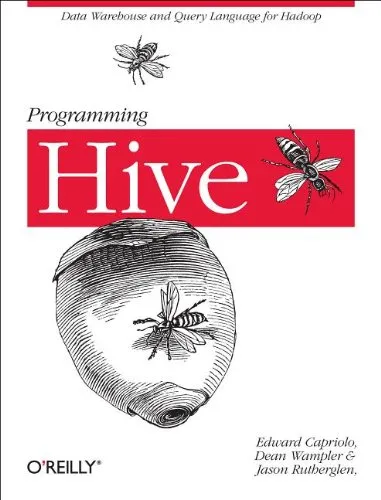
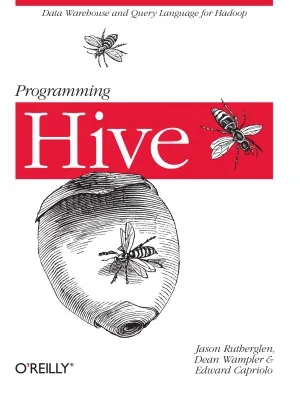
Programming Hive. Data Warehouse and Query Language for Hadoop
Edward Capriolo,Dean Wampler,Jason Rutherglen
English
Beginner
NoSQL
4.0 / 5
0 reviews
2012
Published
350
pages
527
views
Introduction to 'Programming Hive: Data Warehouse and Query Language for Hadoop' Welcome to an in-depth exploration of 'Programming Hive: Data Warehouse and Query Language for Hadoop', a must-have resource for anyone involved in data analytics, big data engineering, or sof
Before you read
What will you get from this book?
Introduction to 'Programming Hive: Data Warehouse and Query Language for Hadoop'
Welcome to an in-depth exploration of 'Programming Hive: Data Warehouse and Query Language for Hadoop', a must-have resource for anyone involved in data analytics, big data engineering, or software development. Co-authored by experts Edward Capriolo, Dean Wampler, and Jason Rutherglen, this book is a comprehensive guide designed to equip readers with the profound knowledge and advanced skills needed to leverage Hive efficiently within Hadoop ecosystems.
Detailed Summary of the Book
This book offers a thorough introduction to Hive, an essential component of the Hadoop ecosystem used to manage and query structured data with a SQL-like interface. It begins by laying a strong foundation, explaining the fundamental concepts of Hive, its installation, and configuration. The introductory chapters ensure that readers, irrespective of their prior experience, can onboard quickly and start utilizing Hive for their data processing needs.
As the chapters unfold, the book delves into advanced topics, including HiveQL, the query language of Hive, and demonstrates how to write efficient queries that can handle and process massive datasets. Readers are taught how to leverage Hive for schema management, perform data serialization and deserialization, and utilize its capabilities for data optimization and partitioning.
The authors tackle complex data transformations and the integration of Hive with other Hadoop components, providing a holistic view of its role within the big data architecture. With detailed examples and real-world scenarios, this book prepares readers to solve practical problems using Hive, making it an indispensable resource for data professionals.
Key Takeaways
- An in-depth understanding of Hive's architecture and its integral role in the Hadoop ecosystem.
- Expertise in writing and optimizing queries with HiveQL.
- Knowledge of data management techniques, including schema design, partitioning, and bucketing.
- Insight into the integration of Hive with other Hadoop components like MapReduce and Pig.
- Proficiency in using Hive for large-scale data analysis and warehousing.
Famous Quotes from the Book
"Hive simplifies the complexities of Hadoop, allowing intricate data operations to be performed with a familiar SQL syntax."
"Understanding Hive is a gateway to mastering Hadoop's technology stack and unleashing the potential of Big Data."
Why This Book Matters
In the era of big data, processing and analyzing massive data sets efficiently and effectively has become a crucial capability for modern enterprises. 'Programming Hive: Data Warehouse and Query Language for Hadoop' provides the essential knowledge and tools to transform raw data into valuable insights, making it a pivotal resource for data engineers and scientists.
This book matters because it decodes one of the most popular data warehousing solutions and scales with Hadoop's unparalleled processing power. The guidance it provides helps enterprises to harness their data in ways that drive innovation and maintain competitive edges in various sectors, from technology to healthcare to finance.
Ask this book
Your question is answered in the context of this title and author. Each answer uses 2 points.
Sign in to ask the book assistant.
Reader reviews
0 reviews, 4.0 average out of 5
No reviews yet
If you have read this book, help the next reader with your experience.
Write a review
Sign in to publish a review.
Reader questions and answers
Ask a focused question and learn from the community.
Sign in to ask or answer a question.
No questions yet
Be the first to ask a clear, useful question.
What to read next
Related references that continue this learning path.