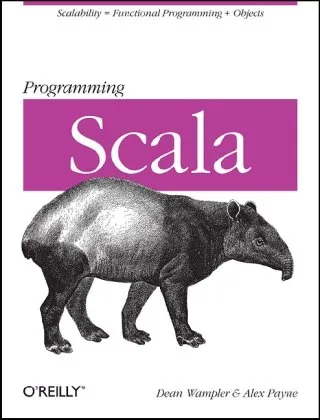
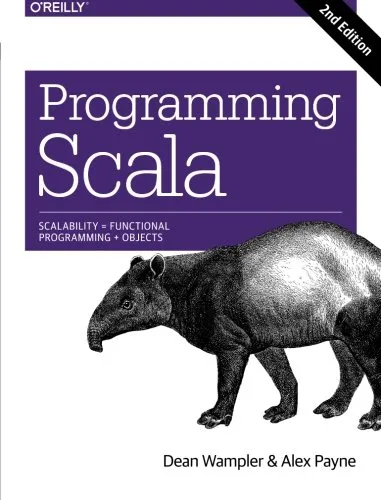
Programming Scala: Scalability = Functional Programming + Objects (Animal Guide)
Dean Wampler,Alex Payne
2009
View book
Book guide and evaluation
Joe Armstrong
0 reviews
Published
pages
views
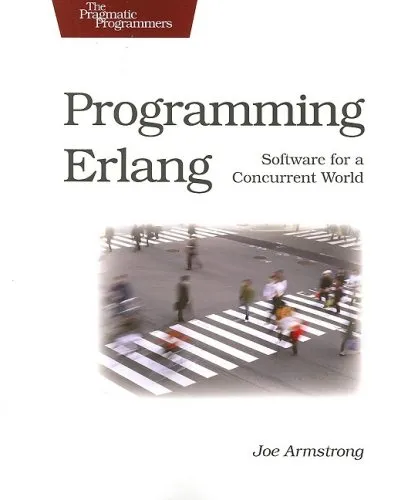
Welcome to a comprehensive introduction to Programming ERLANG: Software for a Concurrent World, a transformative book by Joe Armstrong that delves into the intricacies of programming with Erlang, a language designed for concurrent and fault-tolerant systems. This introduction
Before you read
Welcome to a comprehensive introduction to Programming ERLANG: Software for a Concurrent World, a transformative book by Joe Armstrong that delves into the intricacies of programming with Erlang, a language designed for concurrent and fault-tolerant systems. This introduction aims to provide readers with an insightful overview of what the book offers, including key takeaways, famous quotes, and the significance of this work in today's technology landscape.
Programming ERLANG introduces readers to the powerful Erlang programming language, developed for creating robust, real-time systems that require seamless concurrent processing. The book wisely begins with the basics of Erlang syntax and semantics, constructing a solid foundation for readers who may not have prior experience with the language. It then moves on to more advanced topics, such as process design, error handling, and system architecture.
A significant portion of the book is dedicated to teaching the reader how to think in Erlang's unique paradigms. You will explore how to write programs that can run forever, manage failures gracefully, and instantly adapt to real-world loads with minimal downtime. The book also touches upon techniques for testing, debugging, and optimizing Erlang programs.
Joe Armstrong's insightful examples and clear writing style make complex concepts accessible. The book serves both as a hands-on tutorial and a comprehensive reference, ensuring that readers not only learn how to write Erlang code but understand why coding this way is beneficial.
“Erlang is a language for writing concurrent programs. If you apply sequential thinking to concurrent problems, Erlang and its model of concurrency may seem a mismatch.”
“In a concurrent world, fault-tolerance is not a luxury, it's a necessity.”
“The key to writing robust software is not to write perfect code initially, but to handle errors in a way that the system can gracefully recover.”
The significance of Programming ERLANG cannot be overstated. As the world increasingly leans towards parallel processing and distributed systems, understanding and implementing concurrency becomes crucial. Traditional programming languages often fall short when tasked with such requirements. Erlang’s design, one focused on concurrency, fault tolerance, and distributed computing, makes it exceptionally relevant.
Furthermore, this book is written by Joe Armstrong, one of the creators of Erlang, offering readers unparalleled insights into the language's philosophy and real-world applications. Whether you're a seasoned developer seeking to enhance your skills or a newcomer interested in the future of programming languages, this book provides the knowledge necessary to master the art of building reliable and efficient concurrent systems.
In an era where software systems must be distributed, fault-tolerant, and highly available, the principles and practices elucidated in Programming ERLANG offer foundational learning. It bridges theoretical foundations with practical programming exercises, all while emphasizing a forward-thinking approach to software development.
Your question is answered in the context of this title and author. Each answer uses 2 points.
0 reviews, 4.7 average out of 5
Sign in to publish a review.
Ask a focused question and learn from the community.
Related references that continue this learning path.
Dean Wampler,Alex Payne
Dean Wampler,Alex Payne
Dean Wampler,Alex Payne