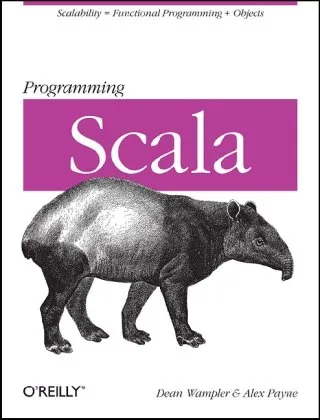
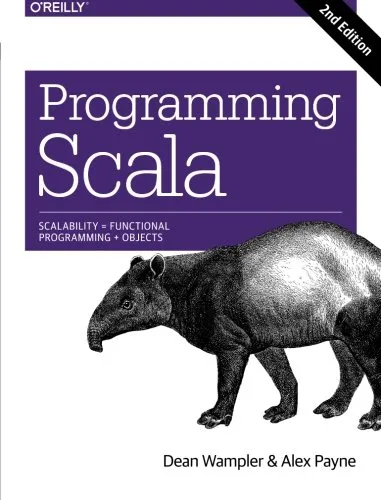
Programming Scala: Scalability = Functional Programming + Objects (Animal Guide)
Dean Wampler,Alex Payne
2009
View book
Book guide and evaluation
Joe Armstrong
0 reviews
Published
pages
views
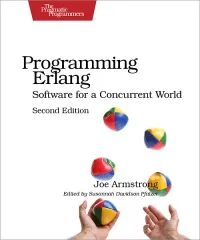
Embark on a journey into the world of concurrent programming with "Programming Erlang, 2nd Edition: Software for a Concurrent World". This book is not just an introduction to a language; it is a comprehensive exploration of the unique capabilities and philosophies that make E
Before you read
Embark on a journey into the world of concurrent programming with "Programming Erlang, 2nd Edition: Software for a Concurrent World". This book is not just an introduction to a language; it is a comprehensive exploration of the unique capabilities and philosophies that make Erlang such a powerful tool for building robust and scalable systems. Whether you are a seasoned developer or new to functional programming, this book offers invaluable insights into the art and science of concurrent software development.
The second edition of "Programming Erlang" serves as both a definitive guide to the Erlang programming language and an essential resource for mastering the art of concurrent programming. Erlang was originally designed for telecommunication systems, but its ability to handle thousands of concurrent processes with ease has broadened its application to a variety of domains. In this book, readers are introduced to the core concepts and constructs of Erlang, including its syntax, data types, pattern matching, and powerful concurrency model.
Joe Armstrong, one of Erlang’s creators, starts by explaining the fundamental principles of functional programming and why they matter in the context of modern software engineering. Readers are guided through the Erlang environment with hands-on examples, practical exercises, and illustrative code snippets. The book also covers error handling, process communication, hot code swapping, and the building of fault-tolerant systems—key aspects of Erlang programming.
Throughout the chapters, Armstrong offers a real-world perspective, showing how Erlang's unique advantages can be leveraged to build applications that require high levels of reliability and uptime. The second edition updates the material to align with the latest Erlang developments, offering modern best practices and tools to make your programming experience smoother and more effective.
Readers of "Programming Erlang, 2nd Edition" will come away with a solid understanding of the following key concepts:
Throughout the book, Joe Armstrong shares insights that resonate with the core philosophy of functional programming and concurrency. Some notable quotes include:
"The world is concurrent, and so is Erlang. This is why Erlang works so well for distributed systems—because it's designed to." - Joe Armstrong
"Errors in programs are inevitable. What's important is to contain and isolate errors, allow systems to fail gracefully, and recover." - Joe Armstrong
"Programming Erlang, 2nd Edition" is a crucial resource for developers aiming to harness the full potential of concurrent programming. As software systems grow increasingly complex and interconnected, the principles espoused in this book are more relevant than ever. Functional programming languages like Erlang offer a way to manage the complexity inherent in concurrent software.
By focusing on concurrency, fault tolerance, and scalability, Armstrong provides a blueprint for building reliable systems that can withstand the challenges of modern computing. Whether you are developing telecoms, financial systems, or any application where uptime and robustness are essential, understanding and applying the principles in this book will be a significant advantage.
Joe Armstrong's passionate and clear explanation of Erlang's strengths ensures that readers not only learn a language but also gain an appreciation for a new way of thinking about software design and architecture. This book matters because it teaches you to write not just code, but resilient and efficient applications capable of meeting the demands of today’s fast-paced technological landscape.
Your question is answered in the context of this title and author. Each answer uses 2 points.
0 reviews, 4.7 average out of 5
Sign in to publish a review.
Ask a focused question and learn from the community.
Related references that continue this learning path.
Dean Wampler,Alex Payne
Dean Wampler,Alex Payne
Dean Wampler,Alex Payne