
Book guide and evaluation
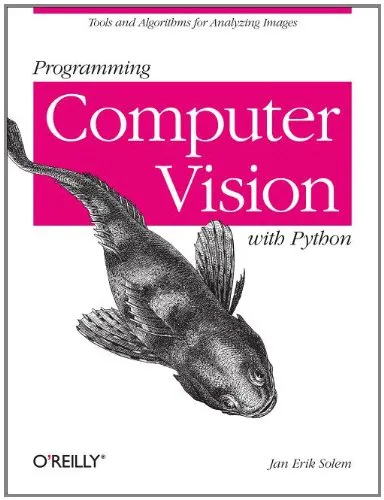
Programming Computer Vision with Python: Tools and algorithms for analyzing images
Jan Erik Solem
English
Beginner
Software Engineering
4.9 / 5
0 reviews
2012
Published
261
pages
254
views
Introduction to Programming Computer Vision with Python The field of computer vision allows machines to interpret and make decisions based on visual data. With the emergence of ever-advancing technology, understanding image processing, feature recognition, and
Before you read
What will you get from this book?
Introduction to Programming Computer Vision with Python
The field of computer vision allows machines to interpret and make decisions based on visual data. With the emergence of ever-advancing technology, understanding image processing, feature recognition, and machine learning has become more critical than ever. Programming Computer Vision with Python: Tools and Algorithms for Analyzing Images is your gateway into this fascinating domain.
In this book, I aim to provide a practical, Python-powered approach to computer vision. Instead of overwhelming you with theoretical intricacies, the content emphasizes implementation-driven learning, supported by powerful libraries and algorithms. Whether you’re an aspiring researcher, engineer, or simply an enthusiast, this book equips you with the tools to analyze, process, and understand images through Python and its ecosystem of libraries.
Detailed Summary of the Book
This book is structured to take you from the basics of image processing to advanced topics in computer vision. It begins by introducing foundational concepts, such as image representation, pixel manipulation, and grayscale conversion. Gradually, the book progresses to more sophisticated areas, including feature detection, object recognition, and even approaches to integrating machine learning techniques.
Here’s what you can expect:
- Handling and transforming images using libraries like Pillow, NumPy, and OpenCV.
- Real-world applications of feature descriptors like SIFT, SURF, and ORB.
- Harnessing clustering algorithms, such as K-means, for image segmentation.
- A deep dive into matching templates and finding objects within complex scenes.
- Applying dimensionality reduction techniques like Principal Component Analysis (PCA) for high-dimensional visual data.
- Building machine learning solutions capable of recognizing and classifying objects in images.
This comprehensive guide builds your expertise step by step, presenting every concept with ample Python examples and ready-to-execute code.
Key Takeaways
- Understand the core principles of image processing and computer vision.
- Learn to preprocess, analyze, and manipulate visual data using Python.
- Grasp the implementation of feature extraction algorithms for different use cases.
- Explore ways to integrate computer vision tools into real-world projects.
- Gain practical insights into combining computer vision with machine learning models.
- Equip yourself with problem-solving skills tailored for visual data challenges.
Each chapter includes engaging exercises and code samples that encourage hands-on involvement, enhancing retention and understanding.
Famous Quotes from the Book
“Computer vision isn't just about making machines 'see'; it’s about interpreting, understanding, and making decisions based on what they observe.”
“To truly master image processing, one must think not just in terms of pixels, but the information hidden between them.”
“Python, with its libraries and community support, serves as an unparalleled ally in unraveling the complexities of computer vision.”
Why This Book Matters
The relevance of computer vision is undeniable in today’s tech-driven world. From autonomous vehicles and facial recognition to healthcare imaging and augmented reality, the applications of this domain are reshaping industries. However, entering the field without prior knowledge can be daunting, particularly due to its mathematical underpinnings and algorithmic complexity.
Programming Computer Vision with Python simplifies the journey, offering a clear roadmap to understanding and applying computer vision concepts. With Python as its foundation, the book leverages the accessibility of the language and its extensive libraries. You don’t need to be a veteran programmer or mathematician; the book is designed to allow anyone with a grasp of programming basics to dive into computer vision.
The hands-on, practical approach ensures that readers can create tangible projects while learning the underlying algorithms. This not only fosters a deeper comprehension of the material but also equips readers with skills directly applicable to modern-day problems. The meticulous balance between theory and practice makes the book an essential read for programmers, engineers, entrepreneurs, and hobbyists.
Ask this book
Your question is answered in the context of this title and author. Each answer uses 2 points.
Sign in to ask the book assistant.
Reader reviews
0 reviews, 4.9 average out of 5
No reviews yet
If you have read this book, help the next reader with your experience.
Write a review
Sign in to publish a review.
Reader questions and answers
Ask a focused question and learn from the community.
Sign in to ask or answer a question.
No questions yet
Be the first to ask a clear, useful question.
What to read next
Related references that continue this learning path.
Modern Computer Vision with PyTorch: A Practical Roadmap From Deep Learning Fundamentals to Advanced Applications and Generative AI, 2nd Edition
V Kishore Ayyadevara,Yeshwanth Reddy
2023
View book