
Book guide and evaluation
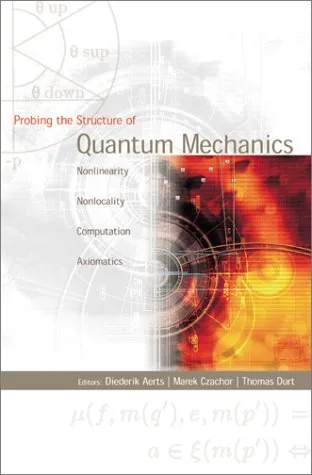
Probing the structure of quantum mechanics: nonlinearity, nonlocality, computation, axiomatics: Brussels, Belgium, June 2000
Diederik Aerts
English
Beginner
Physics
5.0 / 5
0 reviews
2002
Published
401
pages
133
views
Introduction The book “Probing the Structure of Quantum Mechanics: Nonlinearity, Nonlocality, Computation, Axiomatics” provides a rigorous exploration of quantum mechanics, delving deeply into some of the most complex and fundamental aspects of the quantum world. Based on
Before you read
What will you get from this book?
Introduction
The book “Probing the Structure of Quantum Mechanics: Nonlinearity, Nonlocality, Computation, Axiomatics” provides a rigorous exploration of quantum mechanics, delving deeply into some of the most complex and fundamental aspects of the quantum world. Based on the foundational workshop held in Brussels, Belgium, in June 2000, this book consolidates groundbreaking discussions and insights from physicists and researchers around the globe. Emphasizing the critical facets of quantum mechanics such as nonlinearity, nonlocality, computation, and its axiomatic underpinnings, it challenges the boundaries of contemporary understanding while offering thought-provoking perspectives on the unexplored territories of quantum theory.
This interdisciplinary collection presents novel ideas and rigorous analysis to address fundamental questions: Is the structure of quantum mechanics complete? How do computational phenomena intersect with quantum nonlocality? And what happens when we approach quantum mechanics from different axiomatic standpoints? Written with the intent of probing not only the structure but also the broader implications of quantum theory, this book will invite you to rethink foundational principles in light of nonlinear and nonlocal phenomena as they shape quantum computation and beyond.
Whether you are a researcher, philosopher of science, or simply a curious mind intrigued by the mysteries of quantum mechanics, this book provides valuable insight into one of the most fascinating developments in modern science.
Summary of the Book
Spanning multiple domains of quantum mechanics, this book organizes its content around pivotal themes. The central objective is to examine how nonlinearity and nonlocality—two hallmarks of quantum theory—interact with computation and axiomatic thinking.
The book opens by questioning the linear framework traditionally associated with quantum mechanics, offering alternative models that highlight the effects of introducing nonlinear dynamics. It explores whether such nonlinearities might provide a deeper explanation for certain phenomena or extend the theory beyond its current predictive power.
A key section is also devoted to nonlocality, a cornerstone in the quantum description of reality demonstrated vividly in Bell's theorem and entanglement experiments. Researchers discuss the implications of nonlocal phenomena for quantum computation, as well as its impact on our conceptualization of space and time.
Computation plays a significant role in the discourse, particularly in the context of how quantum systems perform information processing tasks. Can quantum computational models inspire new methods to overcome the limitations of classical computation? The book entertains these questions by investigating both practical applications and philosophical implications.
Finally, from the perspective of axiomatic approaches, the book scrutinizes whether the mathematical and logical foundations of quantum mechanics are the most appropriate or whether alternative foundational frameworks could drive the theory beyond its current success. This section is rich with cross-disciplinary dialogue, pushing boundaries to consider how other fields, such as mathematics and computer science, might synergize with quantum physics.
Key Takeaways
- Nonlinearity in quantum mechanics could redefine classical assumptions and offers alternative interpretations of quantum systems.
- Nonlocality remains central to our understanding of quantum theory and quantum computation, presenting unique challenges and opportunities.
- Quantum computation has the potential to revolutionize technology, yet it also poses deep philosophical questions about nature's computational limits.
- Axiomatic approaches help us reconsider the logical structure and completeness of quantum mechanics, presenting an opportunity for interdisciplinary synergy.
Famous Quotes from the Book
“Quantum mechanics does not describe reality directly; it describes the way knowledge of reality materializes through interaction.”
“Nonlocality is not merely a strange artifact of quantum theory but a profound aspect of nature, challenging our intuitions about space and causality.”
Why This Book Matters
As quantum mechanics continues to shape modern science and technology, understanding its foundational principles is more important than ever. This book offers a comprehensive framework for interrogating the nuances of quantum mechanics, making it invaluable for anyone seeking to deepen their grasp of this revolutionary field.
By addressing key themes such as nonlinearity and nonlocality, it pushes the reader to think differently about well-established paradigms. Featuring contributions from some of the foremost thinkers in quantum theory, this book serves as both a reflection on past achievements and a beacon for future breakthroughs in physics, computation, and beyond.
Whether you are looking to advance your research, broaden your academic horizons, or simply appreciate the beauty of quantum mechanics, “Probing the Structure of Quantum Mechanics” offers the inspiration and intellectual rigor necessary to embark on your journey.
Ask this book
Your question is answered in the context of this title and author. Each answer uses 2 points.
Sign in to ask the book assistant.
Reader reviews
0 reviews, 5.0 average out of 5
No reviews yet
If you have read this book, help the next reader with your experience.
Write a review
Sign in to publish a review.
Reader questions and answers
Ask a focused question and learn from the community.
Sign in to ask or answer a question.
No questions yet
Be the first to ask a clear, useful question.
What to read next
Related references that continue this learning path.


Modern Computer Vision with PyTorch: A Practical Roadmap From Deep Learning Fundamentals to Advanced Applications and Generative AI, 2nd Edition
V Kishore Ayyadevara,Yeshwanth Reddy
2023
View book