
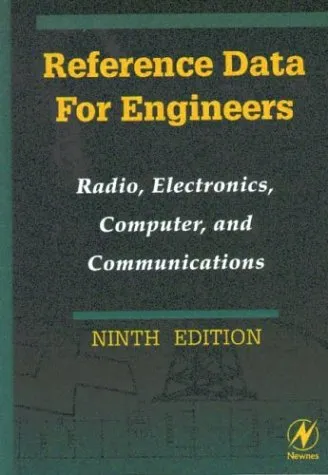
Reference Data for Engineers: Radio, Electronics, Computer, and Communications
Mac E. Van Valkenburg,Wendy M. Middleton
2001
View book
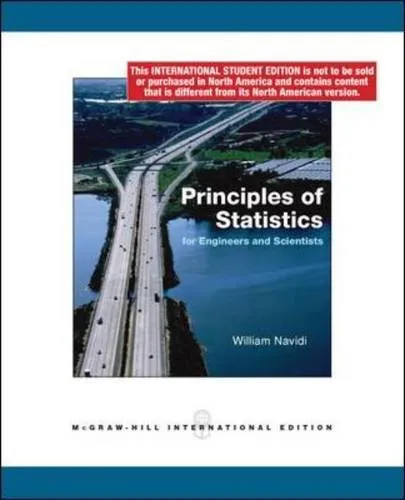
Book guide and evaluation
William Navidi
0 reviews
Published
pages
views
Introduction to 'Principles of Statistics for Engineers and Scientists' The book Principles of Statistics for Engineers and Scientists provides a comprehensive, practical, and accessible approach to understanding statistics, specifically designed for engineers and scientis
Before you read
The book Principles of Statistics for Engineers and Scientists provides a comprehensive, practical, and accessible approach to understanding statistics, specifically designed for engineers and scientists. Written by William Navidi, this text bridges the gap between theoretical concepts and real-world applications. With a strong emphasis on clarity, precision, and problem-solving skills, this book equips readers with the tools they need to make informed decisions based on data analysis, modeling, and statistical reasoning.
This book is not just about learning formulas and methods; it’s about using statistical thinking as a powerful resource in engineering and scientific disciplines. Whether working in quality control, product design, or system optimization, the principles outlined in this book are essential for professionals aiming to leverage data efficiently and effectively.
Principles of Statistics for Engineers and Scientists carefully balances the theoretical and practical aspects of statistics. The book begins with foundational topics such as data collection, classification, and graphical representation. From there, it dives into descriptive statistics, probability, random variables, and fundamental probability distributions. These initial chapters create the basis for more advanced topics, such as inferential statistics, hypothesis testing, regression analysis, and analysis of variance (ANOVA).
One of the standout features of this book is its applicability. Each chapter is reinforced with engineering and scientific examples that show how statistical methods are used to address real-world challenges. From quality control in manufacturing to reliability analysis in product design, the examples are directly relevant to professionals in technical disciplines. Furthermore, a variety of end-of-chapter exercises allows readers to practice and apply the concepts they’ve learned.
Advanced topics, such as multivariate data analysis and nonparametric methods, are also covered in the latter part of the book, offering depth to those aiming to specialize in statistics. Throughout its chapters, the book fosters a deep understanding of how statistical tools integrate with engineering models, making it an indispensable resource for students and professionals alike.
"Statistics is not just about numbers; it’s about understanding the story behind the data and deriving actionable insights."
"In engineering, precision and reliability are not mere goals—they are necessities. Statistics provides the path to achieve them."
"Probability and uncertainty are not the enemies of certainty; they are the pillars of informed decision-making."
In the modern era, engineering and scientific fields are increasingly driven by data. Whether in robotics, environmental science, or biomedical engineering, statistical tools are indispensable for designing and improving systems. Principles of Statistics for Engineers and Scientists addresses this need by providing a robust foundation in statistical methods, tailored specifically to the needs of technical professionals.
The book matters because it focuses not only on the "how" of statistics but also on the "why." It instills a deep appreciation for the relevance and power of statistics in solving complex problems. Engineers and scientists are uniquely positioned to harness the power of data, and this book provides them with the means to do so with confidence and accuracy.
In an age where data-driven decisions dominate industries, this book ensures that readers are not just passive users of software tools but active thinkers who understand the statistical reasoning behind those tools. It transforms what can sometimes be seen as an intimidating subject into a practical and engaging guide, making it highly valuable for students, instructors, and working professionals alike.
Your question is answered in the context of this title and author. Each answer uses 2 points.
0 reviews, 4.6 average out of 5
Sign in to publish a review.
Ask a focused question and learn from the community.
Related references that continue this learning path.
Mac E. Van Valkenburg,Wendy M. Middleton
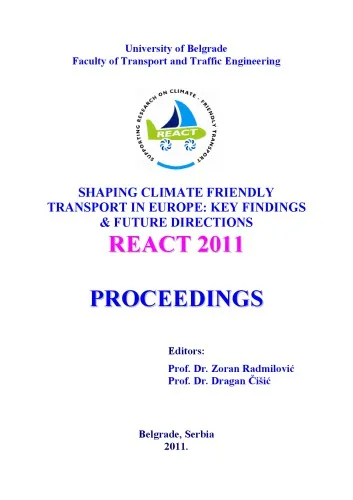
Zoran Radmilović,Dragan Čišić (eds.)
ALAN. FRANKLIN AGRESTI (CHRISTINE. KLINGENBERG,BERNHARD.),Christine Franklin,Bernhard Klingenberg