
Discriminative Stimulus Properties of Drugs
Albert Weissman (auth.),Harbans Lal (eds.)
1977
View book
Book guide and evaluation
Robert Simion Feldman,Jerrold S. Meyer,Linda F. Quenzer
0 reviews
Published
pages
views
Introduction to "Principles of Neuropsychopharmacology" "Principles of Neuropsychopharmacology" is a comprehensive and authoritative text that delves deep into the foundational and advanced concepts of neuropsychopharmacology—a field that explores the interactions between drug
Before you read
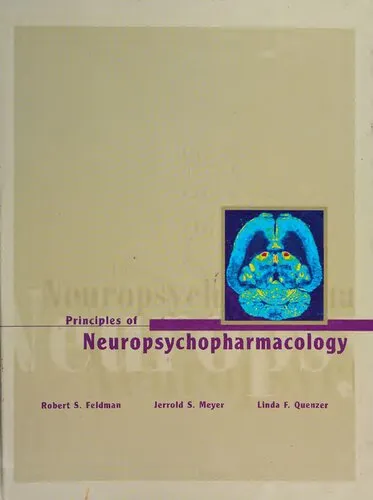
"Principles of Neuropsychopharmacology" is a comprehensive and authoritative text that delves deep into the foundational and advanced concepts of neuropsychopharmacology—a field that explores the interactions between drugs, brain function, and behavior. Authored by Robert Simion Feldman, Jerrold S. Meyer, and Linda F. Quenzer, this book serves as an invaluable resource for students, researchers, and professionals striving to understand the intricate workings of the mind and how pharmacological interventions can affect mental processes and health.
Developed with a dual focus on the biological principles underlying neuropsychiatric conditions and the pharmacological treatments available, the book bridges the gap between basic neuroscience and clinical applications. Written in clear, accessible language, it provides readers with scientifically accurate content supported by illustrative diagrams and detailed explanations. This book remains a cornerstone in the field, catering equally to those with a background in neuroscience and those newly venturing into the world of psychopharmacology.
At its core, the book aims to provide an in-depth understanding of how drugs act on the nervous system to influence behavior and mental states. Topics are structured to progressively guide the reader from foundational concepts to more specialized areas of study.
The book begins by introducing the basics of neurobiology, including the structure and function of neurons, neurotransmitters, synaptic communication, and the organization of the central nervous system. These early chapters establish a solid foundation for understanding how drugs can interact with these systems. The authors then focus on the molecular mechanisms of drug action and how these mechanisms result in changes at the synaptic and behavioral levels.
Subsequent sections delve into the specific neurochemical systems involved in mood, cognition, addiction, and psychiatric disorders. For instance, the dopaminergic, serotonergic, noradrenergic, and glutamatergic systems are detailed in relation to their roles in conditions such as depression, schizophrenia, and anxiety. The book also covers the pharmacological treatments available for these disorders, outlining how drugs like antidepressants, antipsychotics, and anxiolytics interact with these neural networks.
Advanced topics such as drug development, polypharmacy, and personalized medicine are also explored in the context of emerging trends in neuropsychopharmacology. The authors emphasize not only the therapeutic potential of drugs but also their limitations, side effects, and ethical considerations. The inclusion of case studies, research highlights, and practical insights ensures that readers gain both theoretical knowledge and applied understanding.
"Understanding the biology behind psychiatric disorders is the first step toward designing rational and effective therapeutic interventions."
"The most powerful drugs are those that not only alter brain chemistry but also have the potential to reshape human experience."
"Principles of Neuropsychopharmacology" is an essential text for anyone involved in neuroscience, psychology, psychiatry, or pharmacology. Its importance lies in its ability to integrate complex scientific knowledge with practical applications, making it not only a valuable academic resource but also a guide for clinical practitioners.
The book’s emphasis on understanding drug mechanisms and their impact on mental health fits perfectly in today’s paradigm of personalized and targeted medicine. As mental health issues remain a significant global concern, the insights and knowledge contained in this book are more relevant than ever. The authors' ability to clarify complex concepts and address the multifaceted challenges of neuropsychopharmacology make it a touchstone for anyone seeking to deepen their understanding of how drugs interact with the brain and behavior.
Whether you are a student building a foundation in neuroscience or a clinician seeking to update your knowledge of psychopharmacological treatments, "Principles of Neuropsychopharmacology" stands as a timeless resource that will enrich your understanding and practice. This is a book that not only educates but inspires further inquiry into the fascinating intersections of drugs, the brain, and human behavior.
Your question is answered in the context of this title and author. Each answer uses 2 points.
0 reviews, 4.5 average out of 5
Sign in to publish a review.
Ask a focused question and learn from the community.
Related references that continue this learning path.
Albert Weissman (auth.),Harbans Lal (eds.)

Travis Thompson,Roy Pickens (auth.),Travis Thompson,Roy Pickens (eds.)