

The Perception of Stimulus Relations. Discrimination Learning and Transposition
Hayne W. ReeseandDavid S. Palermo (Auth.)
1968
View book
Book guide and evaluation
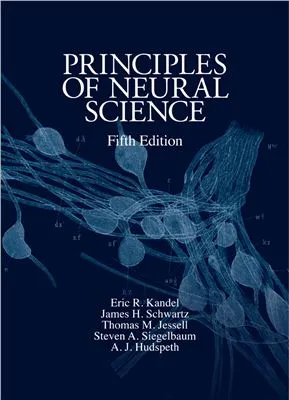
Kandel E.R.,Schwartz J.H.,Jessell T.M.,Siegelbaum S.A.,Hudspeth A.J.
0 reviews
Published
pages
views
Introduction to 'Principles of Neural Science (Part II)' Welcome to the captivating world of neural science, where the intricate dance of neurons orchestrates the symphony of human experience. 'Principles of Neural Science (Part II)' embarks on a profound journey through t
Before you read
Welcome to the captivating world of neural science, where the intricate dance of neurons orchestrates the symphony of human experience. 'Principles of Neural Science (Part II)' embarks on a profound journey through the brain's astonishing complexities, unraveling the secrets of perception, cognition, emotion, and behavior.
Part II of 'Principles of Neural Science' delves into the intricacies of neural circuits and systems, expanding on the foundational knowledge established in Part I. This volume explores the physiological basis of perception and movement, offering an enriched understanding of how our brains interpret sensory information and govern our actions. Through a meticulous examination of sensory processes, this part highlights how various modalities—such as vision, hearing, and touch—are represented and processed at the neuronal level.
The book further investigates higher-order functions such as learning, memory, and consciousness. It illustrates the molecular mechanisms underlying synaptic plasticity and how these mechanisms translate into behaviorally relevant phenomena like language and thought. This section also addresses the developmental aspects of neuroscience, discussing how neural networks are formed and refined from conception to adulthood.
"The brain is the body's chief executive, interpreting the external world and dictating our responses."
"Understanding the brain requires unraveling the intricacies of its structures and the dynamic interactions within."
The significance of 'Principles of Neural Science (Part II)' lies not only in its comprehensive examination of neural processes but also in its ability to bridge the gap between basic neuroscientific research and everyday experiences. As our understanding of the brain advances, this book serves as a vital resource for students, educators, and practitioners in the field, offering detailed insights and fostering critical thinking. It equips readers to navigate the complex landscape of neural science with confidence and curiosity.
Moreover, the book emphasizes the interdisciplinary nature of neuroscience, connecting it with psychology, biology, and even artificial intelligence, thereby highlighting its central role in various scientific and practical domains. By providing a holistic view of the brain's functions, 'Principles of Neural Science (Part II)' inspires ongoing exploration and discovery, contributing to the evolving narrative of how we comprehend ourselves and the world around us.
Whether you are a seasoned neuroscientist or an enthusiastic novice, this book provides essential knowledge, fostering a deeper appreciation for the incredible journey that is understanding the brain.
Your question is answered in the context of this title and author. Each answer uses 2 points.
0 reviews, 4.8 average out of 5
Sign in to publish a review.
Ask a focused question and learn from the community.
Related references that continue this learning path.
Hayne W. ReeseandDavid S. Palermo (Auth.)

Peggy McCardle (editor),Nancy Gee (editor),Dr. Sandra McCune (editor),Layla Esposito (editor),Lisa Freund (editor)