Loading
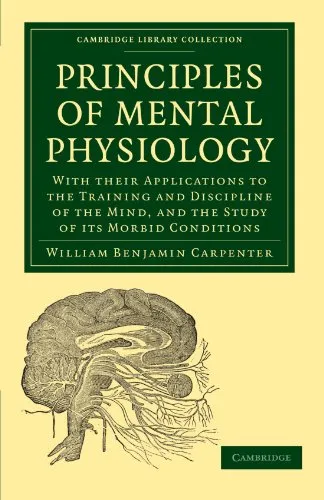
Cover of Principles of Mental Physiology: With their Applications to the Training and Discipline of the Mind, and the Study of its Morbid Conditions

Book guide and evaluation

Principles of Mental Physiology: With their Applications to the Training and Discipline of the Mind, and the Study of its Morbid Conditions

William Benjamin Carpenter

English Beginner Medical
4.5 / 5

0 reviews

2009

Published

764

pages

400

views

William Carpenter (1813-85) was trained as a doctor; he was apprenticed to an eye surgeon, and later attended University College London and the University of Edinburgh, obtaining his M. D. in 1839. Rather than practising medicine, he became a teacher, specialising in neurology, a

Before you read

What will you get from this book?

William Carpenter (1813-85) was trained as a doctor; he was apprenticed to an eye surgeon, and later attended University College London and the University of Edinburgh, obtaining his M. D. in 1839. Rather than practising medicine, he became a teacher, specialising in neurology, and it was his work as a zoologist on marine invertebrates that brought him wide scientific recognition. His Principles of Mental Physiology, published in 1874, developed the ideas he had first expounded in the 1850s, and expounds the arguments for and against the two models of psychology then current - automatism, which assumed that the mind operates under the control of the physiology of the body for all human activity, and free will, 'an independent power, controlling and directing that activity.' Drawing on animal as well as human examples, his arguments, especially on the acquisition of mental traits in the individual, are much influenced by Darwin.

Ask this book

Your question is answered in the context of this title and author. Each answer uses 2 points.

Sign in to ask the book assistant.

Reader reviews

0 reviews, 4.5 average out of 5

No reviews yet

If you have read this book, help the next reader with your experience.

Write a review

Sign in to publish a review.

Reader questions and answers

Ask a focused question and learn from the community.

Sign in to ask or answer a question.

No questions yet

Be the first to ask a clear, useful question.