
Book guide and evaluation
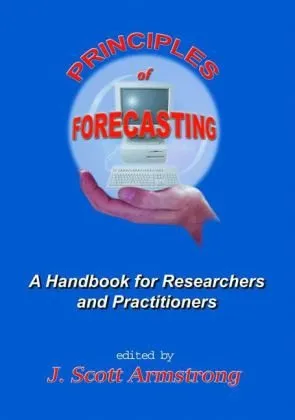
Principles of Forecasting A Handbook for Researchers and Practitioners
J. Scott Armstrong
English
Beginner
Economics
5.0 / 5
0 reviews
2001
Published
862
pages
204
views
Introduction to "Principles of Forecasting: A Handbook for Researchers and Practitioners" Forecasting is an essential tool for decision-making in business, economics, and countless other domains. Whether you're predicting economic trends, sales figures, or the likely out
Before you read
What will you get from this book?
Introduction to "Principles of Forecasting: A Handbook for Researchers and Practitioners"
Forecasting is an essential tool for decision-making in business, economics, and countless other domains. Whether you're predicting economic trends, sales figures, or the likely outcomes of strategic decisions, foresight creates an indispensable advantage. "Principles of Forecasting: A Handbook for Researchers and Practitioners," edited by J. Scott Armstrong, serves as the definitive resource for reliable and science-driven methods to improve forecasting accuracy.
The book integrates decades of research and practice in forecasting, bringing together experts from various fields to create a comprehensive reference work. Its principles are drawn from evidence-based findings and are designed to help practitioners and researchers achieve better results while avoiding common pitfalls. This handbook bridges the gap between theory and application, presenting proven frameworks and practical tools for anyone involved in forecasting processes.
Detailed Summary of the Book
The core of "Principles of Forecasting" revolves around the development, evaluation, and application of forecasting methods. It comprises 30 chapters, each contributed by industry and academic leaders in their specific area of forecasting. These chapters delve into various forecasting approaches, including judgmental forecasting, time series analysis, and econometric modeling.
The book opens with an introduction to the fundamental principles of forecasting, emphasizing the importance of adopting structured methods to reduce bias and error. Following this, the authors explore the differences between quantitative and qualitative methods, discussing when and how to use each effectively. The principles laid out in the book are supported by hundreds of real-world examples, making concepts relatable and easy to apply in practice.
A recurring theme in the book is the importance of validating forecasting models. Rigorous evaluations, cross-validation techniques, and error metrics are discussed to ensure that forecasts remain reliable across differing datasets and scenarios. Additionally, the book highlights how technological advancements and tools—such as machine learning—can further enhance forecasting when used appropriately.
The handbook not only provides insights into method development but also offers readers guidelines for effectively communicating forecasting results to stakeholders. It insists on transparency in forecasting processes, ensuring that decisions based on predictions align with organizational goals.
Key Takeaways
- Adopt structured, evidence-based methods to improve forecasting accuracy.
- Combine quantitative and qualitative approaches for more robust predictions.
- Clearly define your objective before selecting a forecasting method.
- Validate and test forecasting models rigorously to minimize errors.
- Communicate forecasting results with clarity and transparency to support informed decision-making.
- Apply principles across a variety of industries, ranging from marketing and logistics to public policy.
Famous Quotes from the Book
"Forecasts are never perfect, but a clear adherence to evidence-based principles can significantly improve their reliability."
"The distinction between good and bad forecasting is not the precision of numbers but the rigor of the method."
"Transparency in forecasting builds trust, especially when decisions impact many lives or large investments."
Why This Book Matters
"Principles of Forecasting" is not just an academic text—it provides actionable strategies for effectively forecasting in real-world scenarios. Given the growing complexity of data and decision-making processes, having a clear understanding of forecasting is more critical than ever. This handbook equips readers with the tools and methodologies to navigate the complexities of prediction in any field.
Organizations often rely on forecasts to allocate resources, manage risks, and plan for the future. This book helps stakeholders make data-informed decisions, preventing the over-reliance on intuition and gut feelings—which can often lead to costly errors. Moreover, its structured approach builds confidence in decision-making by providing a reliable framework for evaluating uncertainty and risk.
For researchers, the book lays the foundation for advancing forecasting models and techniques. For practitioners, it offers straightforward advice on implementing proven methods to achieve tangible results. Ultimately, "Principles of Forecasting" is a timeless resource for anyone seeking to improve their foresight, allowing them to anticipate challenges and seize opportunities in an increasingly unpredictable world.
Ask this book
Your question is answered in the context of this title and author. Each answer uses 2 points.
Sign in to ask the book assistant.
Reader reviews
0 reviews, 5.0 average out of 5
No reviews yet
If you have read this book, help the next reader with your experience.
Write a review
Sign in to publish a review.
Reader questions and answers
Ask a focused question and learn from the community.
Sign in to ask or answer a question.
No questions yet
Be the first to ask a clear, useful question.
What to read next
Related references that continue this learning path.


Modern Computer Vision with PyTorch: A Practical Roadmap From Deep Learning Fundamentals to Advanced Applications and Generative AI, 2nd Edition
V Kishore Ayyadevara,Yeshwanth Reddy
2023
View book