Book guide and evaluation
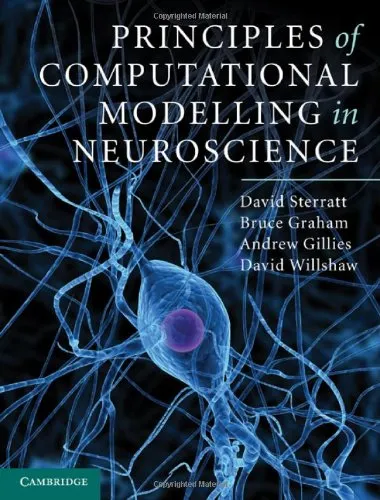
Principles of Computational Modelling in Neuroscience
David Sterratt,Bruce Graham,Andrew Gillies,David Willshaw
English
Unordered
Computer Science and Theory
4.7 / 5
0 reviews
2011
Published
404
pages
393
views
The nervous system is made up of a large number of interacting elements. To understand how such a complex system functions requires the construction and analysis of computational models at many different levels. This book provides a step-by-step account of how to model the neuron
Before you read
What will you get from this book?
The nervous system is made up of a large number of interacting elements. To understand how such a complex system functions requires the construction and analysis of computational models at many different levels. This book provides a step-by-step account of how to model the neuron and neural circuitry to understand the nervous system at all levels, from ion channels to networks. Starting with a simple model of the neuron as an electrical circuit, gradually more details are added to include the effects of neuronal morphology, synapses, ion channels and intracellular signaling. The principle of abstraction is explained through chapters on simplifying models, and how simplified models can be used in networks. This theme is continued in a final chapter on modeling the development of the nervous system. Requiring an elementary background in neuroscience and some high school mathematics, this textbook is an ideal basis for a course on computational neuroscience.
Ask this book
Your question is answered in the context of this title and author. Each answer uses 2 points.
Sign in to ask the book assistant.
Reader reviews
0 reviews, 4.7 average out of 5
No reviews yet
If you have read this book, help the next reader with your experience.
Write a review
Sign in to publish a review.
Reader questions and answers
Ask a focused question and learn from the community.
Sign in to ask or answer a question.
No questions yet
Be the first to ask a clear, useful question.
What to read next
Related references that continue this learning path.