Book guide and evaluation
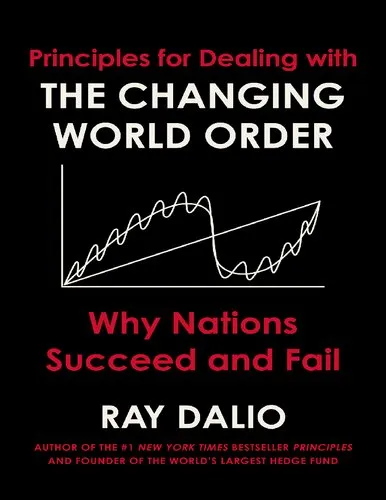
Principles for Dealing with the Changing World Order: Why Nations Succeed and Fail
Ray Dalio
English
Intermediate
Personal Development
4.5 / 5
0 reviews
2021
Published
523
pages
731
views
Welcome to a comprehensive exploration of 'Principles for Dealing with the Changing World Order: Why Nations Succeed and Fail' by Ray Dalio. This book offers profound insights into understanding the cyclical nature of global economic and political dynamics. Dive into this rich
Before you read
What will you get from this book?
Welcome to a comprehensive exploration of 'Principles for Dealing with the Changing World Order: Why Nations Succeed and Fail' by Ray Dalio. This book offers profound insights into understanding the cyclical nature of global economic and political dynamics. Dive into this rich tapestry of historical analysis intertwined with practical principles that shed light on the rise and fall of nations.
Detailed Summary of the Book
Ray Dalio's 'Principles for Dealing with the Changing World Order' delves into the underlying mechanics that influence the trajectory of nation-states through history. Drawing from a lifetime of experience in financial markets and deep analysis of historical trends, Dalio examines the patterns that lead to the ascendancy and decline of empires and countries. Through this book, Dalio introduces a framework for understanding how and why shifts occur in global power. Anchored in empirical data and enriched with animated charts, the book illustrates historical parallels while offering actionable insights. By examining past and current events, Dalio invites readers to understand pivotal economic indicators, social tensions, and technological innovations that herald change. Ultimately, the book underscores the importance of adaptability and foresight in navigating the complexities of an ever-evolving world order.
Key Takeaways
- The cyclical nature of empires and nation-states can be observed historically: understand the phases of rise, peak, decline, and renewal.
- Economic health, military strength, and innovation are critical pillars influencing a nation's trajectory.
- The role of debt cycles, financial markets, and the interplay of inflation and deflation are crucial in shaping economic stability.
- Lessons from history are instrumental in forming strategies to tackle contemporary challenges in global governance and economics.
- Building resilience and adaptability is essential in addressing the unpredictability of changing world orders.
Famous Quotes from the Book
"History doesn't repeat itself, but it often rhymes." - Ray Dalio
"Watching patterns over time has taught me that what passes for good times and what passes for bad times is largely a reflection of one's individual perspective." - Ray Dalio
Why This Book Matters
In today's rapidly changing global landscape, understanding the forces that drive national prosperity and failure is more relevant than ever. With his methodical analysis and a lifetime of empirical experience, Ray Dalio presents a compelling narrative that informs policymakers, economists, investors, and the general public. The book's analytical framework equips readers to better forecast economic and political trends, making it a valuable tool for strategic planning. Furthermore, 'Principles for Dealing with the Changing World Order' encourages readers to recognize and prepare for the signs of shifting paradigms, thus fostering a proactive approach to global challenges.
Ask this book
Your question is answered in the context of this title and author. Each answer uses 2 points.
Sign in to ask the book assistant.
Reader reviews
0 reviews, 4.5 average out of 5
No reviews yet
If you have read this book, help the next reader with your experience.
Write a review
Sign in to publish a review.
Reader questions and answers
Ask a focused question and learn from the community.
Sign in to ask or answer a question.
No questions yet
Be the first to ask a clear, useful question.
What to read next
Related references that continue this learning path.