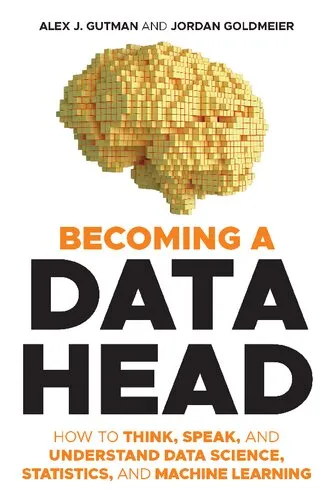
Becoming a Data Head: How to Think, Speak, and Understand Data Science, Statistics, and Machine Learning
Alex J. Gutman,Jordan Goldmeier
2021
View book
Book guide and evaluation
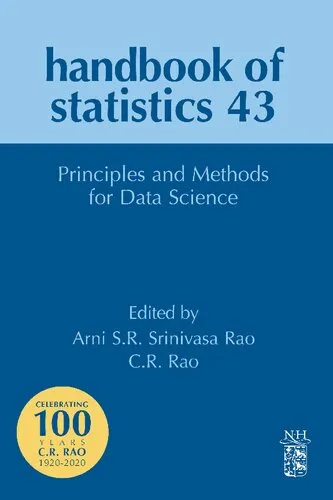
Arni S.R. Srinivasa Rao (editor),C.R. Rao (editor)
0 reviews
Published
pages
views
Introduction to "Principles and Methods for Data Science (Volume 43)" "Principles and Methods for Data Science (Volume 43)" from the renowned Handbook of Statistics series is an essential resource dedicated to exploring the rapidly growing field of Data Scie
Before you read
"Principles and Methods for Data Science (Volume 43)" from the renowned Handbook of Statistics series is an essential resource dedicated to exploring the rapidly growing field of Data Science. Curated by editors Arni S.R. Srinivasa Rao and C.R. Rao, two leading figures in the domain of statistical and mathematical sciences, the book provides an in-depth examination of the principles, techniques, and emerging methodologies shaping modern data science. With every chapter written by accomplished experts in their respective fields, this volume bridges foundational theories with cutting-edge practices, making it an invaluable resource for academics, professionals, and students alike.
As the 43rd installment in the prestigious Handbook of Statistics series, it delves into fundamental aspects of Data Science, including statistical principles, machine learning methods, computational approaches, and real-world applications. It goes beyond simply cataloging techniques by engaging readers in understanding the mathematical and statistical underpinnings of data. The book is designed to empower readers with the knowledge needed to make informed decisions in data-driven environments.
This book is a treasure trove of knowledge, meticulously organized into thematic sections to ensure a holistic understanding of Data Science. The early chapters lay a strong theoretical foundation, covering statistical principles that are indispensable in understanding data characterization, hypothesis testing, and predictive learning. From there, the text transitions seamlessly into the practical realm of machine learning algorithms, such as supervised and unsupervised learning methods, as well as advanced topics in neural networks and deep learning frameworks.
Additional sections explore data pre-processing, computational models, and big data technologies, including distributed systems and scalable analytics tools. The book also addresses complex challenges frequently encountered in the domain, such as handling high-dimensional data, imbalanced datasets, and strategies to mitigate biases in decision-making processes. Contributions from multiple disciplines add richness, connecting data science with epidemiology, economics, business, and environmental science.
A distinctive feature of "Principles and Methods for Data Science" is its focus on interpretability and ethical considerations. The text emphasizes the importance of transparency in algorithmic decision-making and guides readers on implementing solutions that respect privacy, fairness, and accountability. By providing a balanced mix of theory and application, the book equips its audience to not only master existing technologies but also to pioneer innovations in the field.
"Data Science is not just about crunching numbers; it’s the art of transforming data into wisdom that drives real-world action."
"In the era of big data, the greatest value lies not in the overwhelming volume of information but in discerning hidden insights buried within it."
"Transparency, accountability, and fairness should be the cornerstones of every algorithm engineered to analyze human data."
In an age where data influences nearly every aspect of our lives, from healthcare to policymaking, "Principles and Methods for Data Science (Volume 43)" stands as an essential guide. Unlike many textbooks that either focus exclusively on theoretical concepts or specific tools, this volume integrates both, making it a well-rounded resource. It not only provides a strong foundation for those new to the field but also excels as a reference for seasoned practitioners seeking to deepen their knowledge.
Furthermore, its discussion on ethical issues and interpretability lends the book a unique relevance in today’s data-driven society. As concerns about data misuse, biases, and privacy breaches grow, this book equips readers with the frameworks and methodologies needed to address such challenges responsibly. At a time when Data Science is powering advancements in artificial intelligence, healthcare, automation, and beyond, this book empowers its readers to play a key role in shaping these innovations.
For students aiming to build a career in Data Science or professionals seeking to expand their understanding, "Principles and Methods for Data Science" is not just a book—it’s a roadmap to mastering the science and art of interpreting and leveraging data for meaningful impact.
Your question is answered in the context of this title and author. Each answer uses 2 points.
0 reviews, 4.5 average out of 5
Sign in to publish a review.
Ask a focused question and learn from the community.
Related references that continue this learning path.
Alex J. Gutman,Jordan Goldmeier
Murtaza Haider