
Talent Conversations: What They Are, Why They're Crucial, and How to Do Them Right
Roland SmithandMichael Campbell
2011
View book
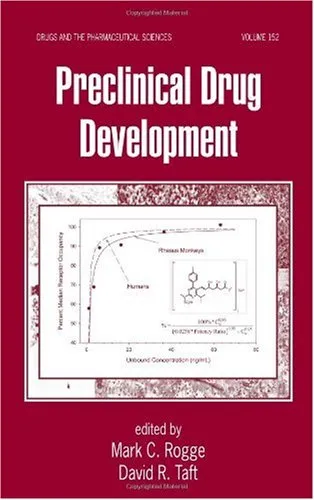
Book guide and evaluation
by Mark C. Rogge (Editor),David R. Taft (Editor)
0 reviews
Published
pages
views
Introduction to "Preclinical Drug Development" Preclinical Drug Development (Drugs and the Pharmaceutical Sciences: a Series of Textbooks and Monographs) is an authoritative and comprehensive resource designed to equip researchers, professionals, and students with cutting-
Before you read
Preclinical Drug Development (Drugs and the Pharmaceutical Sciences: a Series of Textbooks and Monographs) is an authoritative and comprehensive resource designed to equip researchers, professionals, and students with cutting-edge knowledge and insights into the intricacies of preclinical testing in pharmaceutical sciences. Edited by Mark C. Rogge and David R. Taft, this book delves deep into the essential stages of drug discovery, with a particular focus on preclinical research as the critical step in translating scientific innovation into potential therapeutic solutions.
With the ever-growing complexity of drug development and the rising demands for thorough, reliable preclinical studies, this book serves as a practical guide for understanding the nuances of how chemical entities are tested for safety, efficacy, and viability, before proceeding to clinical trials. Designed to meet the intellectual and practical needs of scientists, it offers a rich blend of theoretical frameworks, experimental techniques, case studies, and regulatory insights.
The field of preclinical drug development is an integral part of the pharmaceutical sciences that bridges basic scientific research with clinical application. This book comprehensively covers the tools, processes, methodologies, and regulations that shape modern preclinical drug testing. Spanning topics from pharmacokinetics and toxicology to bioavailability studies and predictive modeling, the text explains the multifaceted challenges in designing and interpreting experiments.
Additionally, readers are introduced to contemporary practices that integrate emerging technologies such as machine learning, genomics, and in silico simulations. Emphasis is placed on designing ethical and efficient animal studies while exploring alternative non-animal models to meet the stringent requirements of regulatory bodies worldwide. Through practical examples and expert opinions woven throughout its chapters, the book serves as a vital resource to foster scientific curiosity, innovation, and rigor within a dynamic and competitive industry.
"The bridge from discovery to the clinic is paved with rigorous testing, ethical oversight, and patient-centric innovation."
"Preclinical drug development is not just a phase—it is the foundation on which the safety of patients and success of therapies are built."
"Science is a journey of questions and answers; preclinical studies ensure that the answers we provide today won't result in unforeseen consequences tomorrow."
The significance of Preclinical Drug Development cannot be overstated in the context of today's pharmaceutical landscape. With global healthcare challenges and increasing scrutiny on the safety and efficacy of new drugs, this book offers much-needed clarity and direction for researchers and practitioners. Its relevance extends beyond the laboratory, addressing regulatory requirements, ethical considerations, and the application of innovative technologies to streamline preclinical workflows.
The editors' expertise, coupled with the contributions of leading professionals in the field, ensures that this book not only highlights scientific rigor but also explains practical methods for improving the drug discovery pipeline. From students embarking on their pharmaceutical science careers to experienced researchers working on drug innovations, this text is indispensable for those seeking to bridge the gap between discovery and application.
In a rapidly evolving industry, Preclinical Drug Development remains a cornerstone reference, emphasizing the importance of robust preclinical strategies as the keystone of successful drug development.
Your question is answered in the context of this title and author. Each answer uses 2 points.
0 reviews, 4.0 average out of 5
Sign in to publish a review.
Ask a focused question and learn from the community.
Related references that continue this learning path.
Roland SmithandMichael Campbell


Pharmaceutical Press