Samsul Alam
2024/12/23
4 / 5
It is good for solution architects because of the detailed explanation of the infrastructure, monolithic and microservices architecture patterns
Book guide and evaluation
Binildas Christudas
1 reviews
Published
pages
views
Introduction Welcome to the world of microservices architecture, where the agility of designing modular, scalable, and resilient software applications comes to life. "Practical Microservices Architectural Patterns - Event-Based Java Microservices with Spring Boot and Spr
Before you read
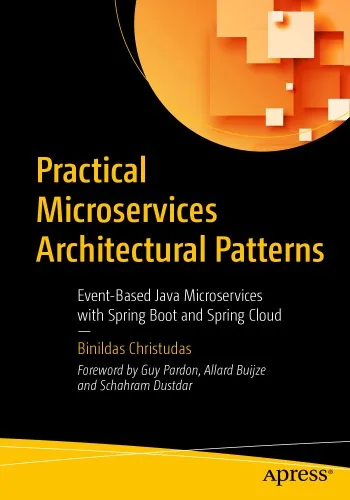
Welcome to the world of microservices architecture, where the agility of designing modular, scalable, and resilient software applications comes to life. "Practical Microservices Architectural Patterns - Event-Based Java Microservices with Spring Boot and Spring Cloud" is a comprehensive guide that delves deeply into the intricacies of microservices, tailored specifically for Java developers. With the power of Spring Boot and Spring Cloud, this book equips readers with the knowledge to design, implement, and orchestrate microservices with precision and efficiency.
Microservices architecture has revolutionized the way software applications are developed and maintained. This book begins by laying a strong foundation on the principles of microservices, exploring the various aspects that distinguish them from traditional monolithic architectures. As you turn the pages, you'll discover how to leverage the Spring Boot framework to simplify the process of building standalone, production-grade Spring-based applications with ease.
The book places a special emphasis on event-driven architectures, highlighting the benefits of asynchronous communication in microservices. With the integration of Spring Cloud, developers can achieve a seamless microservices experience, utilizing powerful tools for configuration management, service discovery, and more. The narrative is rich with practical examples, illustrating how these technologies can be used to solve real-world challenges.
Readers will also explore advanced topics such as API gateways, circuit breakers, and distributed tracing, all essential for building robust enterprise applications. With clear explanations and detailed code snippets, the book offers invaluable insights into designing a microservices ecosystem that is both flexible and maintainable.
"Microservices are all about building applications that are easier to scale, manage, and extend."
"Spring Boot and Spring Cloud harmonize to create a perfect symphony for developing modern microservices."
"Event-driven architectures empower developers to build systems that are not only highly scalable but also resilient to change."
In the rapidly evolving technological landscape, staying ahead means embracing architectures that support dynamic scalability, continuous deployment, and easy maintenance. This book makes a significant contribution to the field by demystifying the process of building complex systems with microservices. It serves as an indispensable resource for developers seeking to enhance their expertise in Java microservices, particularly those who wish to adopt an event-driven approach.
What sets this book apart is its practical orientation. The examples and exercises included guide readers through the entire development process, alleviating the steep learning curve associated with microservices. Furthermore, it emphasizes the experiential learning model, promoting a deeper understanding through hands-on practice. For anyone committed to mastering microservices architecture, this book is an essential read that bridges the gap between theory and practical implementation.
Your question is answered in the context of this title and author. Each answer uses 2 points.
1 reviews, 4.0 average out of 5
2024/12/23
4 / 5
It is good for solution architects because of the detailed explanation of the infrastructure, monolithic and microservices architecture patterns
Sign in to publish a review.
Ask a focused question and learn from the community.
Related references that continue this learning path.