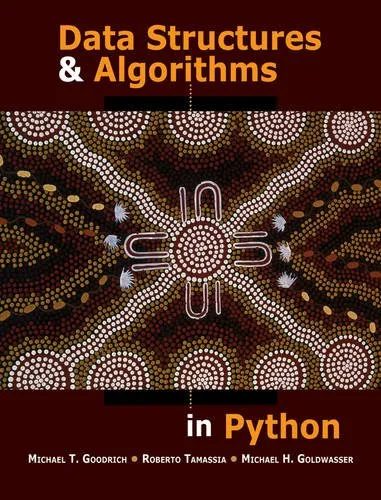
Data Structures and Algorithms in Python
Michael T. Goodrich,Roberto Tamassia,Michael H. Goldwasser
2013
View book
Book guide and evaluation
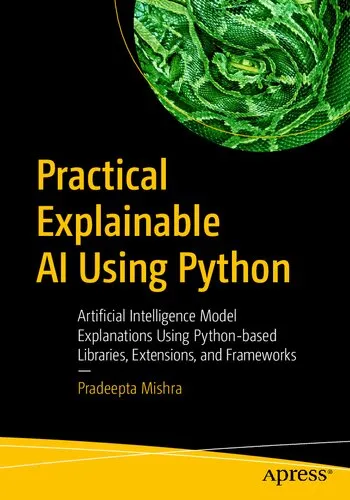
Pradeepta Mishra
0 reviews
Published
pages
views
Introduction to "Practical Explainable AI Using Python" Welcome to the world of Explainable Artificial Intelligence (XAI), a crucial domain that bridges the gap between the opacity of AI algorithms and the diverse understanding of their human users. In today's rapidly evolving
Before you read
Welcome to the world of Explainable Artificial Intelligence (XAI), a crucial domain that bridges the gap between the opacity of AI algorithms and the diverse understanding of their human users. In today's rapidly evolving landscape of Artificial Intelligence, the need for explainability and interpretability has grown manifold. "Practical Explainable AI Using Python" serves as a comprehensive guide for data scientists, machine learning practitioners, and AI enthusiasts to decode the complex inner workings of AI models using hands-on Python-based tools and techniques.
With the growing adoption of machine learning and AI in high-stakes domains such as finance, healthcare, and law, the need for transparent and accessible models has never been more pressing. This book offers readers an easy-to-follow, practical approach to understanding and implementing Explainable AI using popular Python libraries, frameworks, and extensions. Whether you are just starting your journey in AI or are an experienced professional looking to boost your skill set, the concepts and strategies outlined in this book will provide actionable insights and solutions to real-world problems.
The book is designed to cater to a wide spectrum of audiences, from beginners diving into explainability to experts aiming to fine-tune their models for interpretability.
It begins with a foundational understanding of the critical need for XAI, diving into key questions such as: What makes AI explainable? Why is interpretability vital in supervised and unsupervised models? It presents a seamless blend of theory and practice, ensuring readers not only grasp concepts but also learn how to implement them.
One of the highlights of the book is its focus on practical demonstrations. The chapters are packed with Python-based code walkthroughs using libraries like SHAP (Shapley Additive Explanations), LIME (Local Interpretable Model-agnostic Explanations), and ELI5, alongside other domain-specific tools for building explainable dashboards and visualizations. Topics such as feature importance extraction, partial dependence plots, counterfactual examples, and global vs. local interpretability are covered in detail.
The book concludes with real-world case studies, showcasing how these methodologies can be applied to various domains, including healthcare diagnostics, fraud detection, and predictive maintenance. These examples demonstrate how explainable solutions can lead to responsible AI systems that are fair, unbiased, and trustworthy.
"The most intelligent AI system is incomplete if humans can’t trust its outcomes."
"Explainability isn’t a luxury; it is the foundation for adopting machine learning in socially sensitive applications."
"AI interpretability bridges the gap between model accuracy and real-world accountability."
Artificial Intelligence holds immense potential to transform industries and lives, but its true power can only be unlocked if its workings are understood and trusted by all stakeholders. This is where this book becomes invaluable.
By elucidating the techniques and tools to make AI models interpretable, the book ensures that practitioners, researchers, and domain experts are equipped to build systems that aren't just intelligent but also transparent and fair. In a world where concerns about biased AI, ethical dilemmas, and lack of accountability are widespread, this book provides a roadmap for creating explainable solutions that align with regulatory demands and societal expectations.
Moreover, "Practical Explainable AI Using Python" empowers decision-makers to better understand AI's impact, enabling them to make informed choices grounded in evidence and rationale. In doing so, the book lays the foundation for responsible AI development, where explainability isn't an afterthought but an integral part of the process.
Your question is answered in the context of this title and author. Each answer uses 2 points.
0 reviews, 4.0 average out of 5
Sign in to publish a review.
Ask a focused question and learn from the community.
Related references that continue this learning path.
Michael T. Goodrich,Roberto Tamassia,Michael H. Goldwasser
Kent Lee,Steve Hubbard
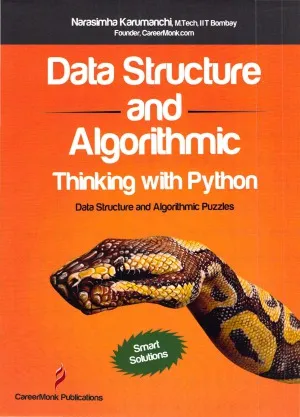
Narasimha Karumanchi