![Cover of Unleashing the Power of UX Analytics: Proven techniques and strategies for uncovering user insights [Team-IRA] [True PDF]](https://s3.refhub.ir/images/thumb/Unleashing_the_Power_of_UX_Analytics__Proven__9372.webp)
Book guide and evaluation
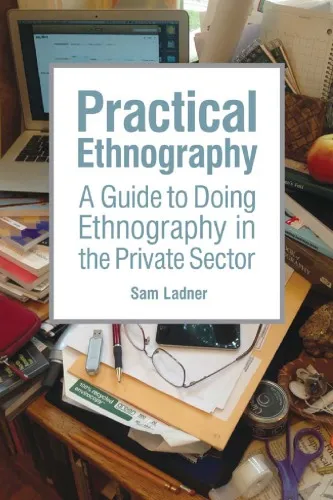
Practical Ethnography: A Guide to Doing Ethnography in the Private Sector
Sam Ladner
English
Beginner
User Research
4.5 / 5
0 reviews
2014
Published
212
pages
424
views
Introduction to 'Practical Ethnography: A Guide to Doing Ethnography in the Private Sector' Written by Sam Ladner, Practical Ethnography: A Guide to Doing Ethnography in the Private Sector is a cutting-edge resource for researchers and practitioners working in the realms
Before you read
What will you get from this book?
Introduction to 'Practical Ethnography: A Guide to Doing Ethnography in the Private Sector'
Written by Sam Ladner, Practical Ethnography: A Guide to Doing Ethnography in the Private Sector is a cutting-edge resource for researchers and practitioners working in the realms of business and industry. The book provides a comprehensive understanding of how ethnography, a method deeply rooted in the study of human cultures and behaviors, can be effectively employed in the private sector to generate actionable insights and innovation. This guide demystifies ethnographic research methods and tailors them specifically to meet the demands of private organizations, startups, and product teams.
In a world increasingly dominated by data and analytics, organizations often struggle to uncover the human stories behind the numbers. Ethnography, with its immersive and contextual approach, allows experts to understand how people use, adapt to, and integrate products and services into their lives. This book bridges the gap between academic ethnographic practices and the fast-paced requirements of private-sector research, focusing on practical, scalable, and impactful methods. Whether you are a seasoned researcher or new to ethnography, this book is an invaluable resource to help you navigate real-world applications and transform your findings into tangible business value.
Detailed Summary of the Book
Divided into clear and actionable sections, Practical Ethnography provides a roadmap for conducting ethnographic research in the private sector. It begins by defining ethnography in a business context, explaining its relevance and revealing why it is increasingly being adopted by organizations to stay competitive in a fast-changing consumer environment.
The book then steps readers through the process of designing effective ethnographic research. Ladner provides specific techniques for planning, recruiting participants, and setting fieldwork goals. Each chapter includes practical tips, checklists, and guidelines tailored to solve common challenges researchers face when working with clients or stakeholders.
One of the book's standout features is its nuanced discussion of data analysis and interpretation within the business context. Unlike academic ethnography, which often emphasizes theory-building, Ladner teaches readers how to extract actionable insights, create compelling narratives, and deliver findings in an impactful way that executives and stakeholders will understand and value.
Finally, the book closes with advice on how to build stakeholder trust, ensure ethical research practices, and make ethnographic research an integral part of organizational strategy. It combines theoretical foundations with practical examples and anecdotes, making it both a scholarly resource and a field guide for professionals.
Key Takeaways
- Ethnography can be adapted to dynamic business challenges to deliver deep insights about user behavior, needs, and motivations.
- A well-structured ethnographic study prioritizes both rigorous methodology and flexibility to accommodate real-world settings.
- In the private sector, delivering research findings in a way that resonates with stakeholders is as important as the research itself.
- The ethical complexities of ethnography in business need to be acknowledged and navigated to balance commercial goals with participants’ well-being.
- Ethnography, when done right, can move organizations beyond superficial metrics to authentic, human-centered understanding and innovation.
Famous Quotes from the Book
"Ethnography is an opportunity to see the world as others see it, to be startled by their behavior and inspired by what they create."
"The goal of ethnography in the private sector is not just to describe, but to influence change in meaningful and ethical ways."
"Ethnography is more than just a methodology; it is a way of being curious about the human condition."
Why This Book Matters
Amid increased competition in modern markets, organizations can no longer rely solely on quantitative data to understand their customers. They need ethnography to uncover the contextual and cultural factors that numbers overlook. This book enables professionals to harness the power of qualitative research, making it accessible to businesses without sacrificing its depth or integrity.
By blending academic rigor with practical advice, Practical Ethnography allows researchers to create actionable results that drive better products, services, and strategies. It fosters a mindset of curiosity, empathy, and critical thinking—all essential traits for success in today's customer-focused businesses.
Beyond its professional utility, the book also raises essential ethical concerns, encouraging researchers to think critically about the impact of their work. In doing so, it not only guides the practice of ethnography but also shapes its broader role in building responsible businesses and fostering positive change.
Ask this book
Your question is answered in the context of this title and author. Each answer uses 2 points.
Sign in to ask the book assistant.
Reader reviews
0 reviews, 4.5 average out of 5
No reviews yet
If you have read this book, help the next reader with your experience.
Write a review
Sign in to publish a review.
Reader questions and answers
Ask a focused question and learn from the community.
Sign in to ask or answer a question.
No questions yet
Be the first to ask a clear, useful question.
What to read next
Related references that continue this learning path.

Remote and Rural Dementia Care: Policy, Research and Practice
Anthea Innes (editor);Debra Morgan (editor);Jane Farmer (editor)
2020
View book