

Book guide and evaluation
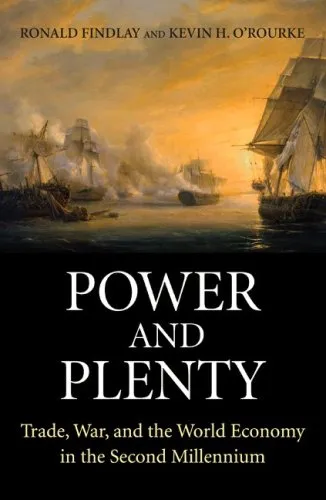
Power and Plenty: Trade, War, and the World Economy in the Second Millennium (Princeton Economic History of the Western World)
Ronald Findlay,Kevin H. O'Rourke
English
Beginner
Economics
4.7 / 5
0 reviews
2007
Published
648
pages
257
views
Introduction to "Power and Plenty: Trade, War, and the World Economy in the Second Millennium" "Power and Plenty: Trade, War, and the World Economy in the Second Millennium" by Ronald Findlay and Kevin H. O'Rourke offers a comprehensive analysis of the intersections between gl
Before you read
What will you get from this book?
Introduction to "Power and Plenty: Trade, War, and the World Economy in the Second Millennium"
"Power and Plenty: Trade, War, and the World Economy in the Second Millennium" by Ronald Findlay and Kevin H. O'Rourke offers a comprehensive analysis of the intersections between global trade, power struggles, conflict, and economic development over the past millennium. The book delves deeply into how political and military power have influenced the rise and fall of global economies, connecting events such as wars and colonialism to economic transformations. It traces the evolution of trade routes, diplomatic relations, and technological advancements that have shaped the world economy as we know it today.
This book is part of the esteemed Princeton Economic History of the Western World series and masterfully blends global history with economic analysis. With its broad scope and sharp insights, "Power and Plenty" provides a foundational understanding of why the global economy operates the way it does, while underscoring the often-overlooked links between conflict and commerce.
Detailed Summary of the Book
The core narrative of "Power and Plenty" involves a chronological exploration of a thousand years of trade and commerce. Beginning with the medieval period, the book highlights the significant role of the Silk Road and other ancient trade networks that connected Europe, Asia, and Africa. From there, it tracks the rise of maritime trade during the age of exploration, colonial ventures, and the profound economic shifts of the industrial revolution.
Through this historical journey, Findlay and O'Rourke explain how economic and political power have co-evolved. Global trade is presented not as a peaceful exchange of goods but as an arena often defined by conflicts, empires, and the unequal distribution of resources. The analysis explores economic institutions, mercantilism, the emergence of capitalism, and the eventual dominance of Western economies in the modern era.
The authors also emphasize the dark sides of this history, such as slavery, imperial exploitation, and war, painting a holistic picture of a deeply interconnected world. The book concludes with reflections on globalization, offering valuable lessons for understanding modern economic policies, global inequality, and the challenges of today’s interconnected economies.
Key Takeaways
- The global economy has been shaped by power dynamics, from ancient empires to modern nations.
- Trade routes and economic integration are often driven by conflict and competition rather than peaceful cooperation.
- Technological advancements and industrial revolutions have repeatedly transformed global trade flows.
- Globalization is not a modern phenomenon but a process spanning centuries, with deep historical roots.
- Understanding the history of trade provides valuable insights into current economic and geopolitical challenges.
Famous Quotes from the Book
"Trade has always been inseparable from power, with stronger states and empires historically using their might to shape the world economy in their favor."
"Economic history is the study of struggles, of victories and defeats in the pursuit of power and plenty."
Why This Book Matters
In an era where globalization is often discussed from a contemporary perspective, "Power and Plenty" is crucial for understanding the historical foundations of the global economy. Its detailed and thought-provoking narrative highlights the enduring connections between trade, political power, and conflict, offering a nuanced perspective on economic history. For academics, policy makers, and general readers curious about the forces shaping our globalized world, this book serves as both a scholarly resource and an accessible guide.
Furthermore, "Power and Plenty" stands out for its ability to link past and present. By analyzing historical events through the lens of modern economic theory, the book offers timeless lessons that continue to resonate in today’s geopolitical and economic landscape. Whether you're delving into the consequences of colonialism, the impact of industrial revolutions, or the patterns of globalization, this work provides valuable insights into why history matters when charting the future of global economies.
Ask this book
Your question is answered in the context of this title and author. Each answer uses 2 points.
Sign in to ask the book assistant.
Reader reviews
0 reviews, 4.7 average out of 5
No reviews yet
If you have read this book, help the next reader with your experience.
Write a review
Sign in to publish a review.
Reader questions and answers
Ask a focused question and learn from the community.
Sign in to ask or answer a question.
No questions yet
Be the first to ask a clear, useful question.
What to read next
Related references that continue this learning path.



Modern Computer Vision with PyTorch: A Practical Roadmap From Deep Learning Fundamentals to Advanced Applications and Generative AI, 2nd Edition
V Kishore Ayyadevara,Yeshwanth Reddy
2023
View book