

Big Data Bootcamp: What Managers Need to Know to Profit from the Big Data Revolution
David Feinleib (auth.)
2014
View book
Book guide and evaluation
Ariel Dinar,Jose Albiac
0 reviews
Published
pages
views
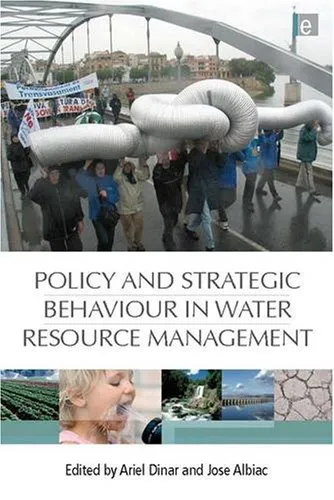
Introduction to "Policy and Strategic Behaviour in Water Resource Management" Water is one of the world's most vital and limited natural resources, and its management has never been more critical. "Policy and Strategic Behaviour in Water Resource Management" serves as a si
Before you read
Water is one of the world's most vital and limited natural resources, and its management has never been more critical. "Policy and Strategic Behaviour in Water Resource Management" serves as a significant contribution to the complex domain of managing water resources in a rapidly changing world. Written by Ariel Dinar and Jose Albiac, this book meticulously explores the intertwined dynamics of policy-making, economic incentives, and strategic behaviour among stakeholders in the water sector. It bridges the gap between theoretical insights and practical implementations, unveiling how cooperation, competition, and institutional frameworks shape the allocation and governance of water resources.
Chronic water scarcity and growing demand for freshwater are pressing global challenges of the 21st century. Through this book, the authors shed light on these complexities and offer an interdisciplinary perspective anchored in economic theory, game theory, and policy research. The book is not only a resource for academics and policymakers but also for students, environmentalists, and anyone invested in understanding and addressing the intricacies of water resource management.
The book comprehensively addresses the economic, institutional, and behavioural dimensions of water resource management. It delves into the role of public policies, regulations, and incentives in influencing the strategic behaviour of stakeholders—ranging from governments and large corporations to individual farmers and local communities. The authors use a blend of case studies, mathematical modeling, and theoretical frameworks to explore how economic tools such as pricing, trading, and subsidies impact water allocation systems.
Beyond economics, the book applies game theory to analyze interactions among stakeholders with competing interests. Water sharing agreements, cross-border issues, and the collective management of aquifers are all scrutinized through game-theoretic lenses. The work also highlights how climate change exacerbates existing challenges and introduces new dynamics to water management, emphasizing the need for adaptive and resilient policies.
A recurring focus of the book is the interplay between cooperation and competition. It examines how stakeholders negotiate, form coalitions, or attempt to outmaneuver each other for access to scarce resources. By integrating these concepts, the authors point out pathways to enhance efficiency, equity, and sustainability in water systems.
"Water resource management is not only a technical or economic problem; it is fundamentally a human and institutional challenge."
"Cooperation is not always the result of harmony; often, it is the product of conflicting interests resolved by negotiation and trust-building."
"Policies that fail to consider the strategic behaviour of stakeholders are doomed to be ineffective at best or harmful at worst."
The importance of "Policy and Strategic Behaviour in Water Resource Management" lies in its ability to address one of the most critical issues of our time. Water scarcity affects everyone, from marginalized communities to global economies, and finding equitable and sustainable solutions is paramount. This book stands out by combining theoretical rigor with practical insights to tackle real-world water management challenges.
Its interdisciplinary approach provides diverse audiences—including policymakers, researchers, and students—with a deeper understanding of the nexus between policy, human behaviour, and economic incentives. Recognizing that water conflicts often occur at the intersection of competing interests, the book provides actionable strategies for fostering cooperation and balancing competing demands.
Ultimately, this book is a call to action for sustainable water governance. By detailing the interconnections among stakeholders, institutions, and environmental pressures, it offers a compelling vision for managing water resources effectively in an increasingly uncertain world.
Your question is answered in the context of this title and author. Each answer uses 2 points.
0 reviews, 4.0 average out of 5
Sign in to publish a review.
Ask a focused question and learn from the community.
Related references that continue this learning path.
David Feinleib (auth.)
Olivier Blanchard

Fred R David;Forest R David

David La Piana,Michaela Hayes