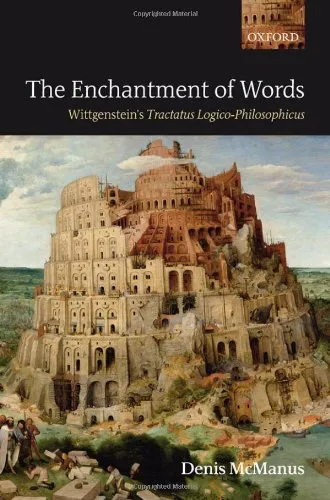
The Enchantment of Words: Wittgenstein's Tractatus Logico-Philosophicus
Denis McManus
2006
View book
Book guide and evaluation
Sermey Khensur Lobsang Tharchin Rinpoche,Vincent Montenegro
0 reviews
Published
pages
views
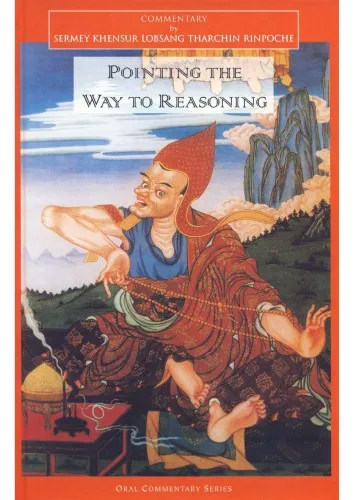
Introduction to "Pointing the Way to Reasoning: Commentaries to Compendium of Debates, Types of Mind, Analysis of Reasons" "Pointing the Way to Reasoning: Commentaries to Compendium of Debates, Types of Mind, Analysis of Reasons" is a comprehensive philosophical and analyt
Before you read
"Pointing the Way to Reasoning: Commentaries to Compendium of Debates, Types of Mind, Analysis of Reasons" is a comprehensive philosophical and analytical guide that delves deep into the heart of Buddhist logic, reason, and debate. Written to make complex intellectual concepts accessible, this book serves as a bridge between ancient scholastic traditions and modern methods of critical thinking. Authored with precision, this work is an invaluable resource for readers seeking clarity, insight, and tools to examine the nature of their own minds, the principles of reasoning, and the dynamics of constructive debate.
The book is rooted in the esteemed tradition of Tibetan Buddhist philosophy, drawing extensively from classical texts while presenting them in a manner that resonates with contemporary audiences. It covers three core topics: the techniques and frameworks essential for meaningful debate (Compendium of Debates), the taxonomy of cognition and mental states (Types of Mind), and the foundational principles of reasoning (Analysis of Reasons). With detailed commentary throughout, this work gives students, practitioners, and intellectuals a roadmap to engage in rational discourse and inner exploration.
The book is divided into sections that explore three interrelated themes, each critical to understanding the Buddhist tradition of debate and reasoning. The first section, Compendium of Debates, introduces the art and science of debate as practiced in Buddhist monasteries. Using logical structures, syllogisms, and critical questioning, this section provides readers with tools to refine their reasoning skills and effectively engage in discourse.
In the second section, Types of Mind, the text dives into the different categories and functions of mental states. It elaborates on how the mind perceives, interprets, and reacts to the world. This exploration of mental phenomena not only enhances philosophical rigor but also provides practical insight into mindfulness and self-awareness.
The final section, Analysis of Reasons, focuses on the core principles of reasoning and logical analysis. Readers are guided through the mechanics of identifying valid reasoning, exposing fallacies, and understanding the nature of dependent origination. These teachings culminate in a deeper comprehension of how interdependence governs the way we think and interact with the world.
Throughout, the book offers clear examples, relatable analogies, and insightful commentary to connect technical philosophical concepts with everyday reasoning and spiritual growth.
"Reasoning is not a tool for winning debates but a path to uncovering truth and dispelling ignorance."
"The mind, when left unchecked, becomes its own deceiver. To examine the mind is to untangle the snares of delusion."
"Through understanding dependent origination, one sees that all phenomena arise in dependence, and thus, nothing exists inherently."
In an age dominated by information overload, polarization, and hasty conclusions, "Pointing the Way to Reasoning" offers a much-needed antidote. It reinvigorates the timeless practice of logical inquiry, equipping readers to think more clearly and compassionately. By synthesizing centuries of wisdom and grounding it in methods applicable to modern life, this book provides timeless lessons for intellectuals, spiritual seekers, and anyone committed to personal growth.
Beyond its appeal to Buddhist scholars, this book addresses universal questions: How can we know what is true? What role does reason play in our pursuit of meaning? How can we learn to see beyond our cognitive biases to gain a clearer understanding of reality? These are pressing questions in any field—philosophy, science, or daily living—and this book serves as a dependable guide to answering them.
Ultimately, "Pointing the Way to Reasoning" is not merely an academic treatise, but a manual for transforming the way we think, relate to others, and perceive the interconnected world in which we live.
Your question is answered in the context of this title and author. Each answer uses 2 points.
0 reviews, 4.7 average out of 5
Sign in to publish a review.
Ask a focused question and learn from the community.
Related references that continue this learning path.
Denis McManus