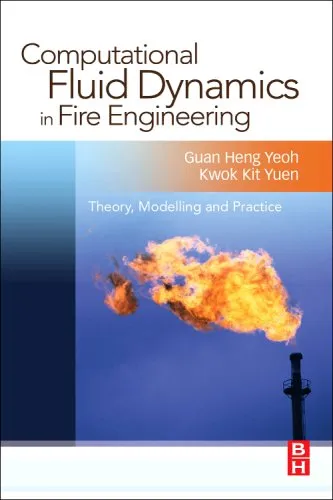
Computational fluid dynamics in fire engineering: theory, modelling and practice
Guan Heng Yeoh,Kwok Kit Yuen
2008
View book
Book guide and evaluation
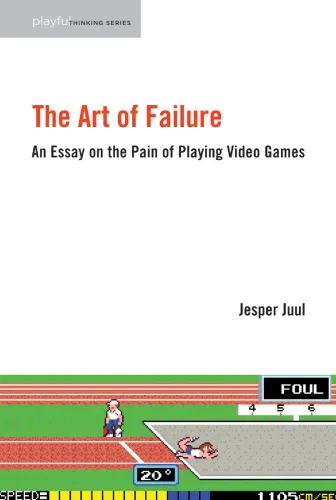
Jesper Juul
0 reviews
Published
pages
views
Playful Thinking series game studies, creative cognition Discover the Playful Thinking series, an authoritative exploration of games, play, and innovative thought for scholars and professionals. Analytical Summary The Playful Thinking series offers a finely tuned
Before you read
The Playful Thinking series offers a finely tuned intersection between rigorous academic inquiry and the joy of playful creativity. Designed for scholars, educators, and industry professionals, it investigates the cultural, psychological, and philosophical dimensions of games and play in contemporary society.
Emerging from a growing demand for scholarly works that treat play seriously, the series compiles contributions from leading experts in game studies, media theory, and creative cognition. Each installment balances approachable writing with theoretical depth, making it equally appropriate for coursework in higher education and independent intellectual exploration.
Rooted in interdisciplinary thought, this body of work advances our understanding of how playful activities shape human interaction, creativity, and problem-solving frameworks. While information on its first publication date is unavailable due to the absence of a verified public source, the series has steadily earned recognition in academic circles for its methodological rigor and intellectual accessibility.
The Playful Thinking series distills complex ideas about games and creativity into actionable insights for research, teaching, and practice.
Firstly, play is not merely recreational—it is a serious, structured experience that can inform design thinking, innovation strategies, and cognitive development. Secondly, the series emphasizes that understanding play requires crossing disciplinary boundaries, integrating perspectives from sociology, psychology, and art.
Thirdly, it highlights game studies as a legitimate and rich field of inquiry. By connecting theory to everyday playful experiences, it bridges the gap between academic knowledge and cultural practice. Finally, the works within the series invite readers to challenge assumptions and embrace curiosity as an intellectual tool.
Play is our brain’s favorite way of learning.Unknown
Games mirror the cultures that create them, reflecting aspirations and anxieties alike.Unknown
The rules we choose to follow—and those we choose to bend—define the boundaries of our play.Unknown
As global culture becomes increasingly intertwined with interactive media, the need for nuanced analysis of play has never been greater.
The Playful Thinking series responds to this need by equipping readers with frameworks that demystify the role of play in shaping both individual cognition and collective identity. Its scholarly yet accessible nature makes it suitable for academic adoption and for professional development in creative industries.
Moreover, by embedding play within a broader cultural and intellectual context, the series validates the contribution of game studies to the social sciences and humanities, elevating discussions beyond entertainment to engage with philosophical, educational, and sociological concerns.
The Playful Thinking series challenges us to reconsider what we think we know about games, creativity, and human interaction.
For academics seeking robust theory, professionals aiming to harness play for innovation, or curious readers eager to deepen their understanding of creative cognition, these works offer a valuable gateway. They remind us that play is not the opposite of seriousness—it is a form of seriousness in its own right.
Engage with the series, share its insights, and discuss its implications within your networks. Let the Playful Thinking series inspire new ideas and approaches, and take the next step toward integrating the philosophy of play into your scholarly or professional journey.
Your question is answered in the context of this title and author. Each answer uses 2 points.
0 reviews, 4.3 average out of 5
Sign in to publish a review.
Ask a focused question and learn from the community.
Related references that continue this learning path.
Guan Heng Yeoh,Kwok Kit Yuen

Edited by Peter JacksonandLaurence Lockhart