
Piseth Chhourm
2025/07/22
4 / 5
This is a good book for game design.
Book guide and evaluation
Zack Hiwiller
1 reviews
Published
pages
views
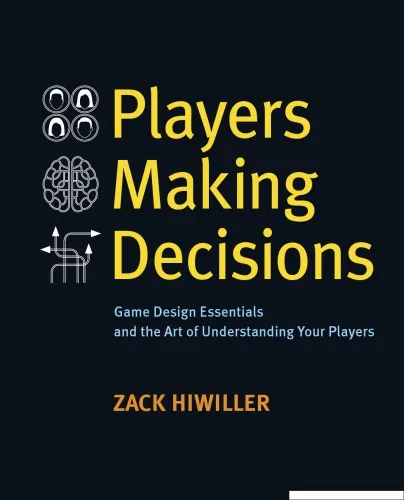
Introduction to "Players Making Decisions" Video games are not just fleeting moments of entertainment—they are interactive experiences built on design, psychology, and the understanding of human behavior. "Players Making Decisions: Game Design Essentials and the Art of Underst
Before you read
Video games are not just fleeting moments of entertainment—they are interactive experiences built on design, psychology, and the understanding of human behavior. "Players Making Decisions: Game Design Essentials and the Art of Understanding Your Players" serves as a foundational guide for aspiring and seasoned game designers alike, diving deeply into what makes games not just functional, but engaging and impactful.
Crafted to bridge the gap between game mechanics and player psychology, this book empowers readers to explore the intricate and rewarding process of designing games. Whether you're creating your first indie project or refining a AAA title, this book offers essential insights into developing games that resonate with players on every level. Through its detailed examples, frameworks, and case studies, it transforms abstract concepts into actionable knowledge, all while keeping players' experiences at the heart of the conversation.
One of the central ideas of the book is that great game design stems from understanding how players interact with and interpret the mechanics of a game. "Players Making Decisions" explores the interconnected disciplines of systems thinking, narrative design, cognitive science, and aesthetics to illustrate how designers can create meaning and satisfaction through gameplay. It demystifies the various elements of game design such as feedback loops, pacing, and progression, while constantly tying them back to their impact on players.
The book is divided into chapters that address core topics such as player motivation, learning systems, challenge vs. frustration, and balancing risk and reward. Each chapter is enriched with practical advice and real-world examples pulled from classic and modern video games. These examples aren't just about mechanics—they also explore emotional resonance, pacing, and the often invisible rules that govern players' immersion.
Additionally, the book emphasizes the importance of iteration and testing. It doesn’t just tell you to listen to player feedback; it shows you how to evaluate it, interpret it, and use it to refine your work. By the time you finish the book, you’ll have a deeper appreciation for how each decision in a game—no matter how small—has the potential to create ripples that shape the player's journey.
"Game design is fundamentally about giving players interesting decisions to make."
"Your target is not simply to create 'fun'; your target is to create an experience that resonates deeply with players."
"Every design decision you make is a statement about the kind of experience you hope to share with your players."
"Players Making Decisions" fills a critical gap in the world of game design literature. While many texts focus on the technical side of game development—programming, physics engines, or art pipelines—this book dives into the often-overlooked but essential aspects of designing for players. It challenges designers to think beyond surface-level mechanics and instead consider the human element that makes games meaningful.
In an era where the gaming industry is more competitive than ever, this book serves as a crucial resource for anyone looking to create truly immersive and impactful experiences. By focusing not just on what games are, but how they are played and perceived, "Players Making Decisions" equips developers with the tools needed to forge emotional connections with their audience. Whether you are an indie designer or part of a large studio, the principles in this book will transform the way you approach your craft.
Ultimately, this book is not only a celebration of game design but a call to action for designers to elevate their work and push the boundaries of what games can achieve. By putting players at the center of the design process, it ensures that games remain a unique and versatile medium for storytelling, learning, and entertainment.
Your question is answered in the context of this title and author. Each answer uses 2 points.
1 reviews, 4.0 average out of 5
2025/07/22
4 / 5
This is a good book for game design.
Sign in to publish a review.
Ask a focused question and learn from the community.
Related references that continue this learning path.



V Kishore Ayyadevara,Yeshwanth Reddy