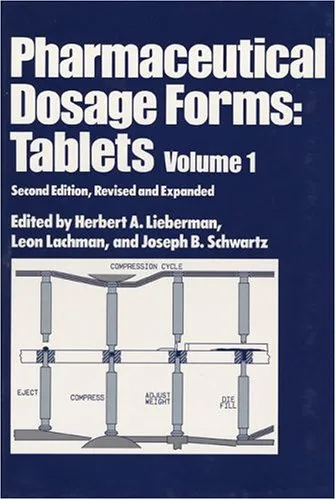
Pharmaceutical Dosage Forms: Tablets, Vol. 1
Herbert Lieberman,Leon Lachman,Joseph B. Schwartz
1989
View book
Book guide and evaluation
Philip Denton (editor)
0 reviews
Published
pages
views
Introduction to "Pharmaceutics: The Science of Medicine Design" Welcome to the intricate and fascinating world of pharmaceutics, an essential cornerstone of pharmacy and medical science. "Pharmaceutics: The Science of Medicine Design" serves as a comprehensive guide, bridging
Before you read
Welcome to the intricate and fascinating world of pharmaceutics, an essential cornerstone of pharmacy and medical science. "Pharmaceutics: The Science of Medicine Design" serves as a comprehensive guide, bridging the gap between theoretical science and practical application in the field of drug development. This book is an integral volume in the "Integrated Foundations of Pharmacy" series, providing in-depth insights into the multifaceted processes involved in the formulation, design, and dispensing of pharmaceutical drugs.
Covering a broad spectrum of topics, this book meticulously explores the science behind developing effective, safe, and patient-friendly pharmaceutical formulations. It delves into the principles of dosage form design, understanding physicochemical properties of drugs, and innovative delivery systems. With a focus on new technologies, such as nanotechnology and personalized medicine, the text illustrates how these advancements are shaping the future of pharmaceutics.
The book is structured to guide readers through key concepts, beginning with the fundamental principles of drug action and pharmacokinetics, extending to the critical roles of excipients, and the methodologies involved in ensuring stability and bioavailability. It also ventures into regulatory aspects, underlining the importance of compliance and quality assurance in pharmaceutical manufacturing.
"The art of pharmaceutics lies not just in the science of medicine design but in the empathy towards patient care."
"A formulation is only as effective as its delivery system; we are architects of routes, not just ingredients."
"Pharmaceutics: The Science of Medicine Design" is not merely a textbook; it is a gateway to understanding the delicate balance between science and artistry in pharmaceutical development. In a world where medicines play a pivotal role in healthcare, this book addresses the critical need for a structured and thoroughly vetted approach to drug formulation. It offers diverse perspectives on overcoming challenges in the medication development process, emphasizing innovation and patient-centered care.
This book is particularly vital for pharmacy students, researchers, and professionals aiming to deepen their understanding of drug development. By meticulously mapping out the journey from molecule to medicine, it equips readers with the knowledge to improve existing therapies and to contribute to the creation of new ones, ultimately enhancing patient outcomes and public health.
Your question is answered in the context of this title and author. Each answer uses 2 points.
0 reviews, 4.6 average out of 5
Sign in to publish a review.
Ask a focused question and learn from the community.
Related references that continue this learning path.
Herbert Lieberman,Leon Lachman,Joseph B. Schwartz
Larry, L.A.andLieberman, H.andSchwartz, J.B.