Book guide and evaluation
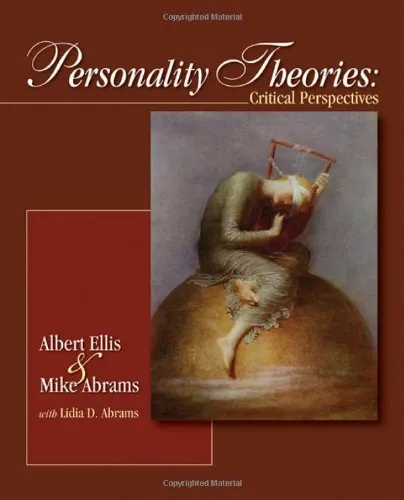
Personality Theories: Critical Perspectives
Albert Ellis,Mike Abrams,Lidia Dengelegi Abrams
English
Unordered
Psychiatry & Psychology
4.5 / 5
0 reviews
2008
Published
720
pages
214
views
Introduction to "Personality Theories: Critical Perspectives" By Albert Ellis, Mike Abrams, and Lidia Dengelegi Abrams Understanding personality is one of the most intriguing facets of psychology, as it allows us to analyze and comprehend the dynamic nature of hum
Before you read
What will you get from this book?
Introduction to "Personality Theories: Critical Perspectives"
By Albert Ellis, Mike Abrams, and Lidia Dengelegi Abrams
Understanding personality is one of the most intriguing facets of psychology, as it allows us to analyze and comprehend the dynamic nature of human behavior. "Personality Theories: Critical Perspectives" serves as a comprehensive guide to the most influential and revolutionary theories of personality. Authored by a trio of renowned psychologists—Albert Ellis, Mike Abrams, and Lidia Dengelegi Abrams—this work is both a scholarly resource and a practical tool for students, professionals, and all readers seeking a deeper understanding of personality development.
The book offers a critical lens, comparing, contrasting, and evaluating major personality theories, including psychoanalysis, behavioral theories, humanistic approaches, existential perspectives, and modern cognitive frameworks. By providing engaging discussions of the key principles and assumptions underlying each theory, the authors push readers to critically analyze the structure, implications, and applications of these frameworks in psychology and beyond.
The integration of traditional psychological texts with contemporary critiques sets this book apart. The authors adeptly combine rigorous scholarship with accessible writing to create a resource capable of enlightening both beginners and seasoned professionals. If you are eager to explore the intricate maze of human personality, this book is an essential guide to expanding your intellectual horizons.
Detailed Summary of the Book
An In-depth Exploration of Personality Frameworks
The book is divided into several distinct chapters, each dedicated to a specific theory or group of theories. The foundational topics include traditional psychological frameworks such as Freudian and Neo-Freudian psychoanalysis, behaviorism, and social cognitive theory. These classical theories are critically examined against their historical and cultural backdrops, enabling readers to understand both their strengths and shortcomings.
In addition to classical perspectives, the authors delve deeply into contemporary and alternative approaches. Humanistic and existential theories receive special attention, as they address questions related to free will, personal growth, and meaning-making. Likewise, modern research-based perspectives, such as trait and biological theories, are dissected to highlight their relevance in today's scholarly and therapeutic domains.
Throughout the book, the emphasis is placed on critical engagement. The authors encourage readers not to take the material at face value but instead to examine each theory in light of scientific rigor, practical usability, and humanistic ethics. This critical evaluation not only empowers readers to assess these theories but also to apply them constructively across various contexts, from counseling to organizational psychology.
Key Takeaways
What You Will Learn from This Book
- A comprehensive understanding of major personality theories, from classical to contemporary approaches.
- Critical comparisons of theories, highlighting their strengths and limitations.
- Insights into the historical development of personality psychology and its cultural influences.
- Practical applications of personality theories in clinical, organizational, and everyday settings.
- Encourages scientific and ethical evaluation of psychological principles.
Famous Quotes from the Book
Thought-provoking Statements
"To understand personality is to uncover the deepest motivations, fears, and potentials that drive humanity forward, one decision at a time."
"Theories of personality are not static truths but evolving narratives that reflect the complexity and diversity of the human mind."
"Critical thinking is the bridge between knowledge and wisdom, and this book emphasizes it as the cornerstone of personality psychology."
Why This Book Matters
Its Relevance and Importance in Psychology
"Personality Theories: Critical Perspectives" holds immense significance for several reasons. Firstly, it provides a balanced perspective by combining classical theories with modern insights, which is crucial at a time when psychological science continues to evolve. By fostering critical thinking, the book challenges traditional authoritarian views in psychology, encouraging readers to embrace a more balanced, evidence-based, and ethical understanding of human behavior.
Secondly, it serves as an invaluable resource for students, educators, and professionals alike. That is due to its dual focus on academic rigor and practical applicability. It bridges the gap between theoretical knowledge and real-world application, a feature that makes this book both timeless and highly relevant for diverse audiences.
In summary, "Personality Theories: Critical Perspectives" is more than a textbook; it’s a gateway into a better understanding of what it means to be human. Whether you are studying to be a psychologist, seeking personal insight, or delving into personality for professional pursuits, this book will undoubtedly enrich your comprehension and engagement with the dynamic field of personality psychology.
Ask this book
Your question is answered in the context of this title and author. Each answer uses 2 points.
Sign in to ask the book assistant.
Reader reviews
0 reviews, 4.5 average out of 5
No reviews yet
If you have read this book, help the next reader with your experience.
Write a review
Sign in to publish a review.
Reader questions and answers
Ask a focused question and learn from the community.
Sign in to ask or answer a question.
No questions yet
Be the first to ask a clear, useful question.
What to read next
Related references that continue this learning path.
Solutions Architect's Handbook: Kick-start your career as a solutions architect by learning architecture design principles and strategies, 2nd Edition
Saurabh Shrivastava,Neelanjali Srivastav
2022
View book
Solutions Architect's Handbook - Third Edition: Kick-start your career with architecture design principles, strategies, and generative AI techniques
Saurabh Shrivastava,Neelanjali Srivastav
2024
View book