Function Architecture Optimization and Co-Design of Embedded Systems
Bassam Tabbara,Abdallah Tabbara,Alberto Sangiovanni-Vincentelli (auth.)
2000
View book
Book guide and evaluation
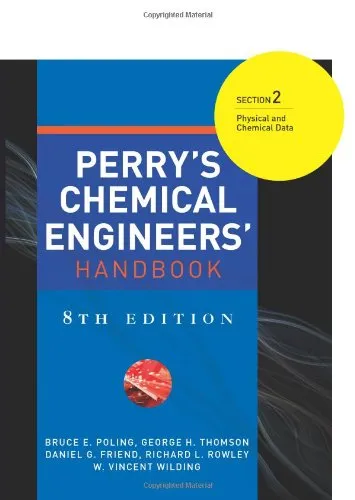
George H. Thomson,Daniel G. Friend,Richard L. Rowley,W. Vincent Wilding Bruce E. Poling
0 reviews
Published
pages
views
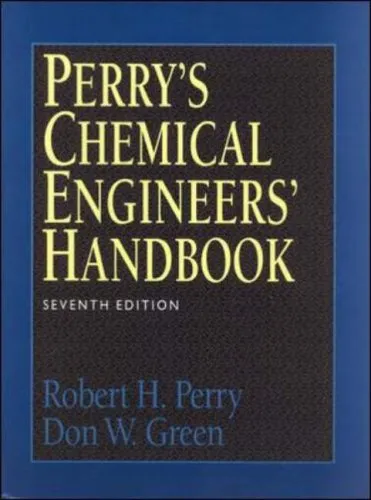
Welcome to an essential guide for chemical engineers, scientists, and researchers: Perry's Chemical Engineers' Handbook Section 2: Physical and Chemical Data. This comprehensive resource is a cornerstone in the field of chemical engineering, offering invaluable insights and dat
Before you read
Welcome to an essential guide for chemical engineers, scientists, and researchers: Perry's Chemical Engineers' Handbook Section 2: Physical and Chemical Data. This comprehensive resource is a cornerstone in the field of chemical engineering, offering invaluable insights and data that serve as the backbone for both practical applications and theoretical research.
This section of Perry's Chemical Engineers' Handbook delves deep into the world of physical and chemical data—key elements that are imperative for the successful execution of chemical processes. Section 2 is meticulously crafted to provide an exhaustive collection of data, covering a wide range of materials, compounds, and elements, and presenting them in a format that is accessible for practical use. It includes thermodynamic, thermophysical, transport properties, and other relevant data, serving as a vital tool for engineers in the design, optimization, and analysis of chemical processes. The section is characterized by its clarity, accuracy, and comprehensive nature, making it an irreplaceable reference for professionals working in a wide array of industries.
“In the realm of chemical engineering, accurate data is not just a guideline—it is a necessity.”
“To understand the world of chemical processes, one must first understand the fundamental data that govern those processes.”
Perry's Chemical Engineers' Handbook, particularly Section 2, stands out as a cornerstone in the chemical engineering community. The book's critical compilation of data serves as the bedrock for sound engineering judgments, efficient process design, and innovative research and development. For industry professionals and academics alike, the handbook provides not only foundational understanding but also drives advancements in technology and processes. With ever-evolving standards and technologies, having a reliable source of accurate data ensures that engineers stay at the cutting edge of their field. Embracing both historical context and modern-day applications, this book plays a crucial part in driving efficiency, safety, and advancement within the industry.
Your question is answered in the context of this title and author. Each answer uses 2 points.
0 reviews, 4.5 average out of 5
Sign in to publish a review.
Ask a focused question and learn from the community.
Related references that continue this learning path.
Bassam Tabbara,Abdallah Tabbara,Alberto Sangiovanni-Vincentelli (auth.)