

Media and the Make-Believe Worlds of Children: When Harry Potter Meets Pokemon in Disneyland
Maya Gotz,Dafna Lemish,Amy Aidman,Hyesung Moon
2005
View book
Book guide and evaluation
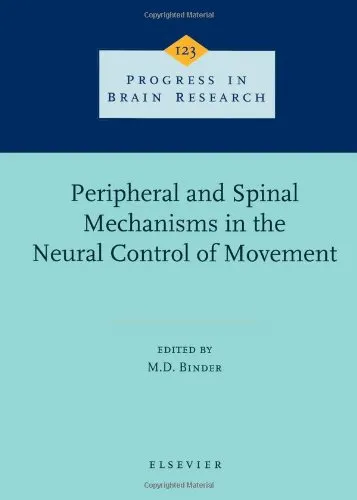
M.D. Binder (Eds.)
0 reviews
Published
pages
views
Welcome to 'Peripheral and Spinal Mechanisms in the Neural Control of Movement', an in-depth exploration of the complex neural processes that govern movement. This book delves into the sophisticated interactions between peripheral and spinal mechanisms, offering insights into h
Before you read
Welcome to 'Peripheral and Spinal Mechanisms in the Neural Control of Movement', an in-depth exploration of the complex neural processes that govern movement. This book delves into the sophisticated interactions between peripheral and spinal mechanisms, offering insights into how they contribute to motor control.
In 'Peripheral and Spinal Mechanisms in the Neural Control of Movement', readers are taken on a journey through the intricate workings of the nervous system as it pertains to movement. The book dissects the neural circuits involved in motor control, examining both the peripheral nervous system and spinal cord's roles. Emphasizing the latest research, the text provides a comprehensive overview of the neurobiological underpinnings that facilitate movement.
We begin with an analysis of the basic anatomy and physiology of the motor systems, progressing to detailed discussions on sensory-motor integration, reflexes, and the modulation of motor outputs. The contribution of sensory feedback to motor precision and error correction forms a crucial component of the narrative, highlighting the body’s ability to adapt and refine movement in real time.
Advanced chapters focus on pathological conditions that affect motor control, offering insights into how diseases disrupt normal neural functioning. These sections provide a foundation for understanding the therapeutic approaches aimed at alleviating such conditions. The book also explores technological advancements, including neuroprosthetics and robotics, in aiding individuals with motor impairments.
The book is designed to serve as a crucial resource for students, researchers, and clinicians interested in the neurological basis of movement, offering both theoretical foundations and practical insights for future research and clinical applications.
"The elegance of movement belies the complexity of the underlying neural mechanisms."
"In understanding the orchestra of movement, the spinal cord plays the role of a conductor, ensuring harmony and coordination."
This book is instrumental in bridging the gap between fundamental neuroscience and clinical application. By elucidating the intricate connections and pathways that regulate movement, it serves as an essential guide for developing a deeper appreciation of the neurological aspects that underlie everyday actions. The insights provided are not only academically enriching but also vital for advancing clinical practices that address motor dysfunctions.
Through its structured approach and detailed analysis, 'Peripheral and Spinal Mechanisms in the Neural Control of Movement' equips readers with the knowledge to comprehend and engage with the dynamic field of motor neuroscience. It highlights the importance of continued research and innovation, ultimately aiming to improve the quality of life for individuals affected by motor disorders. By fostering a better understanding of the neural control of movement, the book charts a path towards more effective therapeutic strategies and technologies.
Your question is answered in the context of this title and author. Each answer uses 2 points.
0 reviews, 4.3 average out of 5
Sign in to publish a review.
Ask a focused question and learn from the community.
Related references that continue this learning path.
Maya Gotz,Dafna Lemish,Amy Aidman,Hyesung Moon

Alan Miller,Kimberly Heckert,Brian Davis