Out of the Present Crisis : Rediscovering Improvement in the New Economy
Terence T Burton
2012
View book
Book guide and evaluation
Shari Garmise
0 reviews
Published
pages
views
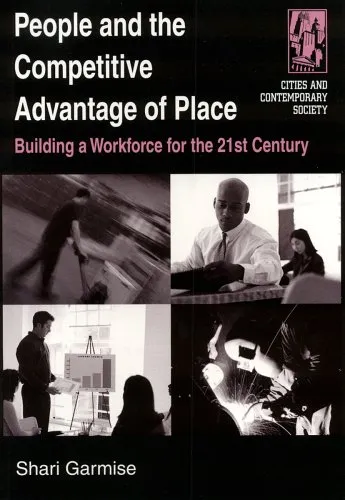
Introduction to "People and the Competitive Advantage of Place: Building a Workforce for the 21st Century" In today’s globalized economy, the success of regions and cities relies on more than just infrastructure, location, or technology—it depends on people. "People and the
Before you read
In today’s globalized economy, the success of regions and cities relies on more than just infrastructure, location, or technology—it depends on people. "People and the Competitive Advantage of Place" bridges the gap between workforce development and economic development strategies, offering a compelling argument on why investments in people are vital to securing a competitive edge for communities in the 21st century.
Shari Garmise explores how regions can leverage their workforce to become hubs of innovation, productivity, and opportunity. The book provides a roadmap for policymakers, educators, and practitioners to rethink the way we build talent ecosystems. By seamlessly integrating the role of place and people, Garmise challenges conventional norms in workforce development while emphasizing the importance of collaboration among public, private, and civic sectors. This book is not just about the theory of change; it’s a call to action for communities to invest in their most significant resource: their people.
The book begins by addressing the changing dynamics of the global workforce. Garmise explains how rapid technological advancement and globalization have redefined what it means to be competitive. She emphasizes the role of “place”—how the unique attributes of a specific region can attract, retain, and nurture a talented workforce.
In the first half of the book, the author dissects traditional labor market strategies, pointing out their inefficiencies and limitations. Garmise suggests that workforce development cannot be approached in isolation; it must be integrated with economic and community development efforts. By providing case studies from cities such as Raleigh-Durham and Austin, she demonstrates how some regions have successfully transformed their economic landscapes by focusing on talent attraction and skills development.
In the latter half, Garmise outlines actionable strategies to build resilient and adaptive workforce systems. These strategies include developing partnerships between employers and educational institutions, fostering lifelong learning opportunities, and creating inclusive environments that support diverse talent pools. Equally important is the idea that workforce systems should be forward-looking, preparing individuals and communities for jobs of the future rather than those of the past.
The book closes with an impassioned plea for regions to prioritize people as their central asset, providing a framework for communities to assess and measure their progress toward becoming competitive talent hubs.
"The true competitive advantage of any region lies not in its infrastructure, but in its people. A skilled and adaptable workforce is the foundation of all economic growth."
"Collaboration is no longer optional. It is the lifeline for creating workforce systems that prepare not only for today's demands but also for tomorrow's opportunities."
"People and the Competitive Advantage of Place" is more than just a book—it’s a vital resource for anyone concerned about the economic vitality of their community. Garmise provides a fresh perspective on workforce development, challenging outdated paradigms and inspiring readers to think differently about economic success. The book matters because it shifts the focus to building inclusive, adaptable, and future-ready workforce systems. With actionable insights and compelling case studies, it serves as a guide for leaders in government, education, and industry who are looking to cultivate sustainable growth in their communities.
In a world characterized by constant change, this book offers a beacon for those seeking to prepare their regions for an uncertain but opportunity-filled future.
Your question is answered in the context of this title and author. Each answer uses 2 points.
0 reviews, 4.0 average out of 5
Sign in to publish a review.
Ask a focused question and learn from the community.
Related references that continue this learning path.
Terence T Burton
Quamrul Alam,Robert Grose