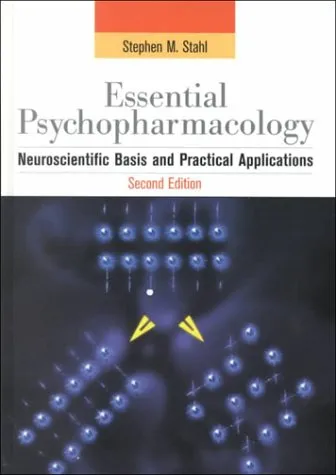
Essential Psychopharmacology: Neuroscientific Basis and Practical Applications (Essential Psychopharmacology Series)
Stephen M. Stahl M.D. Ph. D.
2000
View book

Book guide and evaluation
Randell, Rachel L.; Adams, Ashley V.; Van Mater, Heather
0 reviews
Published
pages
views
Pediatric Neurologypp.66—68 child neurological disorders, clinical pediatric neuroscience Comprehensive insights from Pediatric Neurologypp.66—68 for deeper clinical understanding. Analytical Summary The section spanning pages 66 to 68 in Pediatric Neurologypp.66—
Before you read
The section spanning pages 66 to 68 in Pediatric Neurologypp.66—68 serves as a concentrated exploration into critical aspects of pediatric neurological assessment and intervention. Written by Randell, Rachel L.; Adams, Ashley V.; and Van Mater, Heather, this excerpt reflects a blend of evidence-based practice, clinical reasoning, and accessible explanations aimed at both seasoned neurologists and emerging clinicians.
In these pages, readers encounter a structured approach to evaluating complex neurological presentations in children, bridging theoretical underpinnings with pragmatic diagnostic steps. The authors dissect specific case scenarios, delivering interpretations that highlight subtle clinical signs often overlooked in broader surveys. The content resonates with healthcare professionals seeking a balance between academic rigor and real-world applicability.
The underlying emphasis is on precision in pediatric neurology—a discipline that requires meticulous observation, deep knowledge of developmental variations, and adaptability in devising treatment plans. While the exact publication year is information unavailable due to lack of reliable public source verification, the content stands firmly within the respected canon of pediatric neuroscience literature.
From the focused discourse in Pediatric Neurologypp.66—68, several key professional insights emerge that can have an immediate impact on clinical practice.
First, the importance of early recognition of neurological symptoms in pediatric patients is underscored, particularly in ensuring timely intervention to improve long-term outcomes. Second, the integration of multidisciplinary communication is positioned as a cornerstone of effective care. Third, the section reinforces the value of detailed documentation as both a clinical and legal safeguard.
Fourth, there is an exploration of diagnostic tools—both conventional and emerging—that broaden a clinician’s capacity to manage complex cases. Lastly, the authors advocate for continuous education and adaptation as the science of pediatric neurology evolves.
“In pediatrics, subtlety is not a footnote—it is the diagnosis.” Unknown
“Every child’s neurological journey is a narrative of resilience and discovery.” Unknown
“Collaboration extends the clinician’s reach beyond what training alone can provide.” Unknown
In the specialized sphere of pediatric neuroscience, capturing nuanced detail can redefine a child’s health trajectory. Pediatric Neurologypp.66—68 is significant because it condenses intricate knowledge into an accessible yet technically robust segment suitable for reference and teaching.
For academics, it offers a microcosm of how structured clinical thinking solves complex neurological puzzles in young patients. For practitioners, these pages serve as a refined tool for sharpening diagnostic acuity. And for interdisciplinary teams, the emphasis on communication fosters a culture of shared expertise that benefits the whole patient-care ecosystem.
Rather than functioning as an isolated summary, this excerpt integrates seamlessly into the greater framework of pediatric neurology literature, enhancing both foundational and advanced understanding.
The concentrated material in Pediatric Neurologypp.66—68 is more than a mere excerpt—it is a compelling invitation to engage deeply with the intricacies of pediatric neurological care.
Readers committed to child health—whether as clinicians, scholars, or informed advocates—will find in these pages a credible and thought-provoking resource. The blend of clinical reasoning, practical application, and scholarly insight empowers both experienced professionals and those at the early stages of their neurological study.
If your goal is to enrich diagnostic precision, improve treatment efficacy, or simply broaden your grasp of pediatric neuroscience, let this focused section be a catalyst. Read it, share it with colleagues, and discuss its implications in your professional community—because every informed step taken in pediatric neurology can shape a healthier future for children.
Your question is answered in the context of this title and author. Each answer uses 2 points.
0 reviews, 4.5 average out of 5
Sign in to publish a review.
Ask a focused question and learn from the community.
Related references that continue this learning path.
Stephen M. Stahl M.D. Ph. D.

Randell, Rachel L.; Adams, Ashley V.; Van Mater, Heather