
Book guide and evaluation
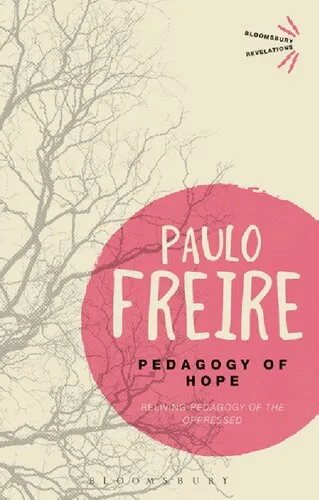
Pedagogy of Hope: Reliving Pedagogy of the Oppressed
Paulo Freire
English
Advanced
Personal Development
5.0 / 5
0 reviews
2014
Published
241
pages
426
views
Pedagogy of Hope: Reliving Pedagogy of the Oppressed critical pedagogy, transformative education Pedagogy of Hope: Reliving Pedagogy of the Oppressed offers profound insights into critical pedagogy and transformative social change. Analytical Summary In Pedagogy o
Before you read
What will you get from this book?
Analytical Summary
In Pedagogy of Hope: Reliving Pedagogy of the Oppressed, Paulo Freire revisits the cornerstone principles of his earlier work Pedagogy of the Oppressed, engaging them critically through the lens of decades of experience in education, activism, and dialogue. This reflective volume is not simply a restatement of previous theories; it is a profound reassessment informed by the socio-political transformations and pedagogical challenges that followed the original text’s publication.
Freire approaches his own foundational ideas with humility and intellectual rigor, acknowledging both the enduring relevance and the evolving context of critical pedagogy. The book confronts misunderstandings about his earlier propositions, clarifies nuanced concepts, and extends the dialogue to educators and learners navigating contemporary global realities. It also offers autobiographical elements, situating theoretical insight in personal encounters, community struggles, and solidarity movements across diverse cultures.
Written in the 1990s — precise publication year varies by edition and is not reliably confirmed across all sources — the work mirrors Freire’s commitment to sustaining hope as a political necessity. Education, for Freire, is never neutral; it either serves to domesticate or to liberate. In this text, hope is not passive wishing but an active, collective engagement with possibility, grounded in historical awareness and ethical responsibility.
Key Takeaways
The book distills decades of thought into actionable insights for educators, activists, and anyone concerned with social justice through learning.
Firstly, it reaffirms the centrality of dialogue in the learning process, positioning it as a critical counterpoint to top-down, authoritarian models of education. This dialogical method recognizes the agency of learners as co-creators of knowledge.
Secondly, Freire illustrates that hope is inseparable from critical reflection and praxis — the intentional coupling of reflection and action toward transformative ends.
Thirdly, he emphasizes that critical pedagogy is dynamic, adapting to changing historical, cultural, and political contexts while remaining rooted in the principles of human dignity and equity.
Memorable Quotes
“Without a sense of hope, we cannot begin the struggle to transform reality.” Unknown
“Education is a political act, and we must choose which interests it will serve.” Unknown
“Dialogue means a humble, loving, and courageous encounter toward mutual humanization.” Unknown
Why This Book Matters
Pedagogy of Hope: Reliving Pedagogy of the Oppressed is more than a retrospective; it is an urgent call for sustained critical engagement with the forces shaping education and society.
To educators committed to transformative education, this work offers conceptual clarity and moral encouragement. To policymakers and community organizers, it serves as a reminder that education is inherently tied to the structures of power and must be reimagined to serve the collective good, not the status quo.
In bringing together personal narrative, political analysis, and pedagogical theory, Freire invites readers into a shared responsibility: to resist resignation and nurture the conditions in which hope can be enacted as a historical force.
Inspiring Conclusion
By revisiting and reinterpreting the foundational insights of Pedagogy of Hope: Reliving Pedagogy of the Oppressed, Paulo Freire reaffirms that to teach is to engage with the world in a transformative, ethically grounded, and hopeful way.
Freire challenges us to embrace hope as a decisive element in our political and pedagogical lives. He reminds us that hope without action is mere wishful thinking, and action without hope risks falling into cynicism and despair. This dialectical balance is the pulse of transformative education.
For readers — educators, scholars, activists, and reflective citizens — the next step is clear: read, discuss, and share these ideas, applying them within your spheres of influence. In doing so, you contribute to the living tradition of critical pedagogy and to the ongoing project of humanization that this work so eloquently defends.
Ask this book
Your question is answered in the context of this title and author. Each answer uses 2 points.
Sign in to ask the book assistant.
Reader reviews
0 reviews, 5.0 average out of 5
No reviews yet
If you have read this book, help the next reader with your experience.
Write a review
Sign in to publish a review.
Reader questions and answers
Ask a focused question and learn from the community.
Sign in to ask or answer a question.
No questions yet
Be the first to ask a clear, useful question.
What to read next
Related references that continue this learning path.
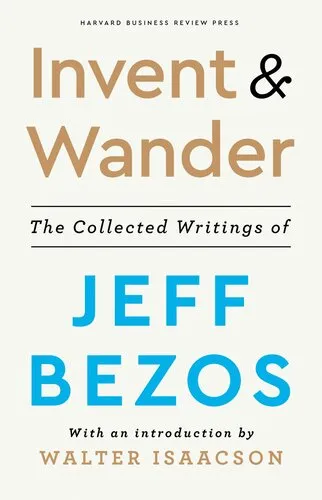
Invent and Wander: The Collected Writings of Jeff Bezos, With an Introduction by Walter Isaacson
Walter Isaacson;Jeff Bezos
2020
View book
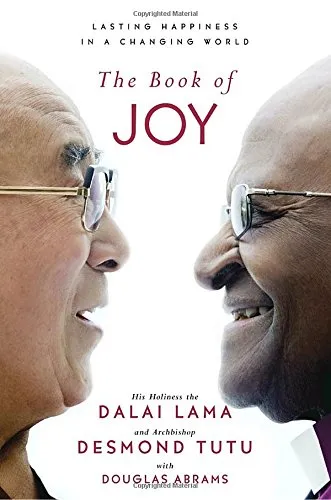
The Book of Joy: Lasting Happiness in a Changing World
Dalai Lama,Desmond Tutu,Douglas Carlton Abrams
2016
View book
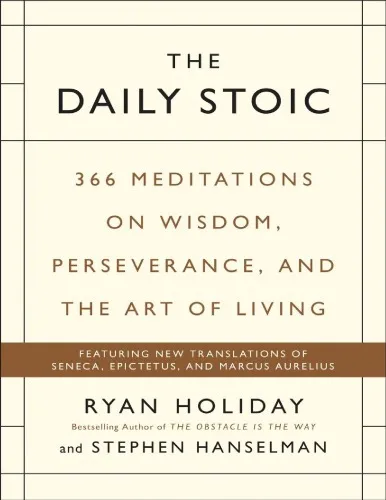
The daily stoic : 366 meditations on wisdom, perseverance, and the art of living
Hanselman, Stephen;Holiday, Ryan
2016
View book